
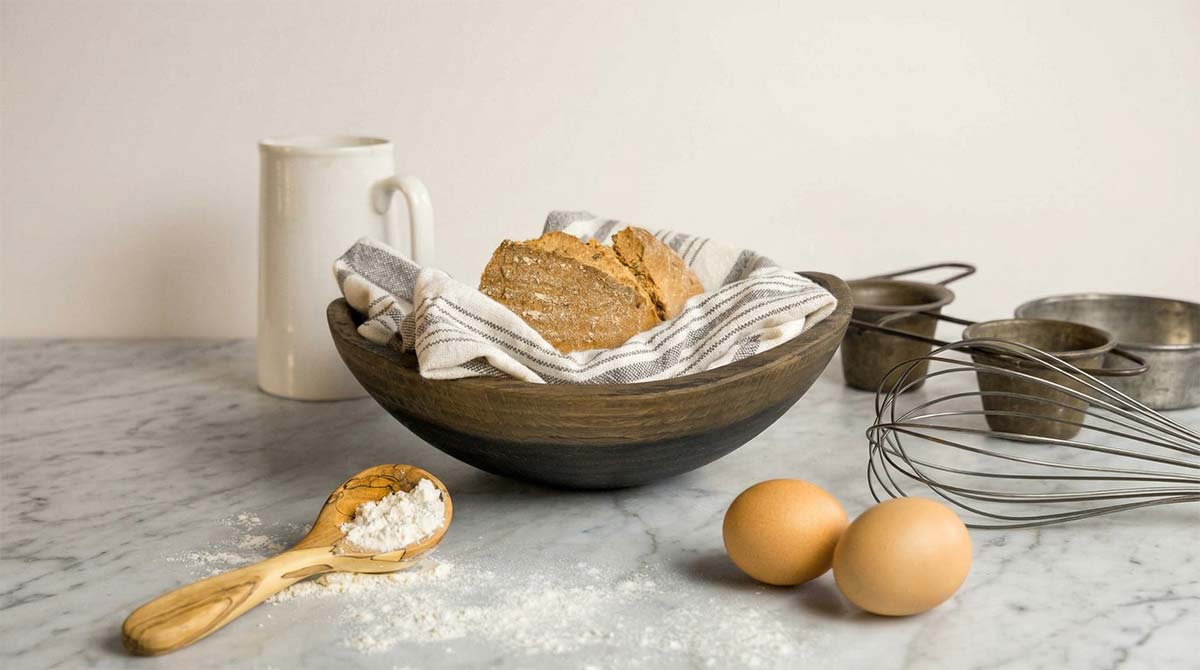
A small wooden bowl doesn’t take up much space. That is part of its appeal.
It can sit on a table without crowding plates. It can live on a narrow shelf by the door. It can share a corner of the counter beside a cutting board and a knife.
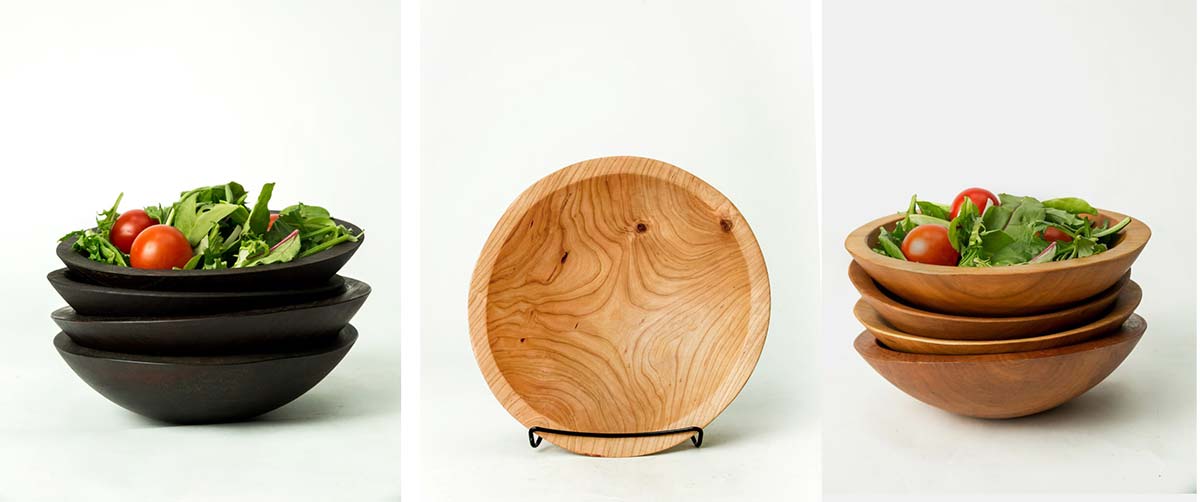
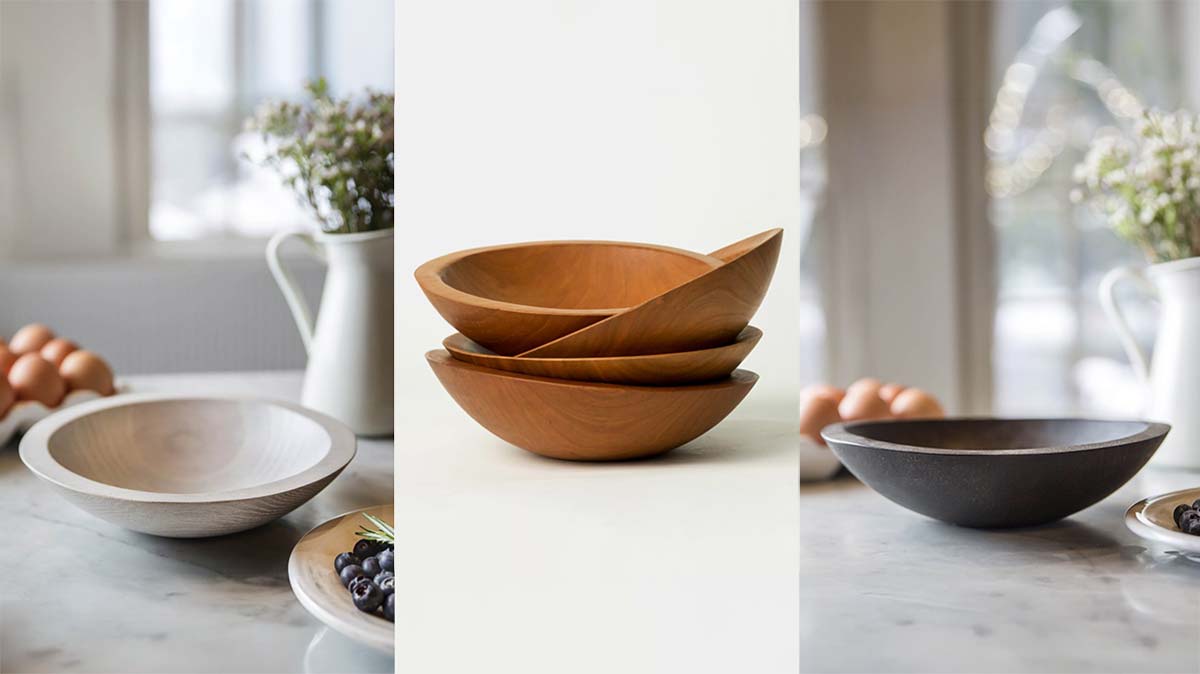
In our collection, a small bowl is usually 10 inches across. We turn each one by hand from reclaimed hardwoods from this region. Cherry and black walnut. Spalted and ambrosia maple. Oak, finished in white pearl, driftwood, or black ebony so the grain still shows through. Some bowls are classic rounds. Others hold onto more of the original edge of the tree.
Because the wood comes from real trees with their own history, no two bowls read the same. A line of spalting here. A darker band in the walnut there. Over time, those details start to feel familiar, the way a favorite mug does.
Here are six ways we see small wooden bowls finding a place in everyday life.
1. A Small Salad Bowl for Simple Meals
Most people first meet a 10 inch bowl at the table.
It is an easy size for a side salad, or a generous salad that stands in for lunch. There is room for greens and a few things on top, roasted carrots, toasted nuts, cheese, without building a tower that tips when you start to toss. Dressing can be worked through with a fork or small salad servers. The rim stays clean.
On a small kitchen table, a large serving bowl can feel out of place. One small bowl in front of each person keeps things relaxed. Everyone can season their own plate, add a little more vinegar, leave out the onions.
We hear from customers who keep a single small bowl for this purpose. It sits near the plates. It comes out for quick lunches, quiet dinners, and the nights when only one person wants salad.
Need some Inspiration? Easy Salad Recipes for Every Season
2. A Fruit Bowl That Fits the Kitchen
Every kitchen seems to need one place for fruit to land.
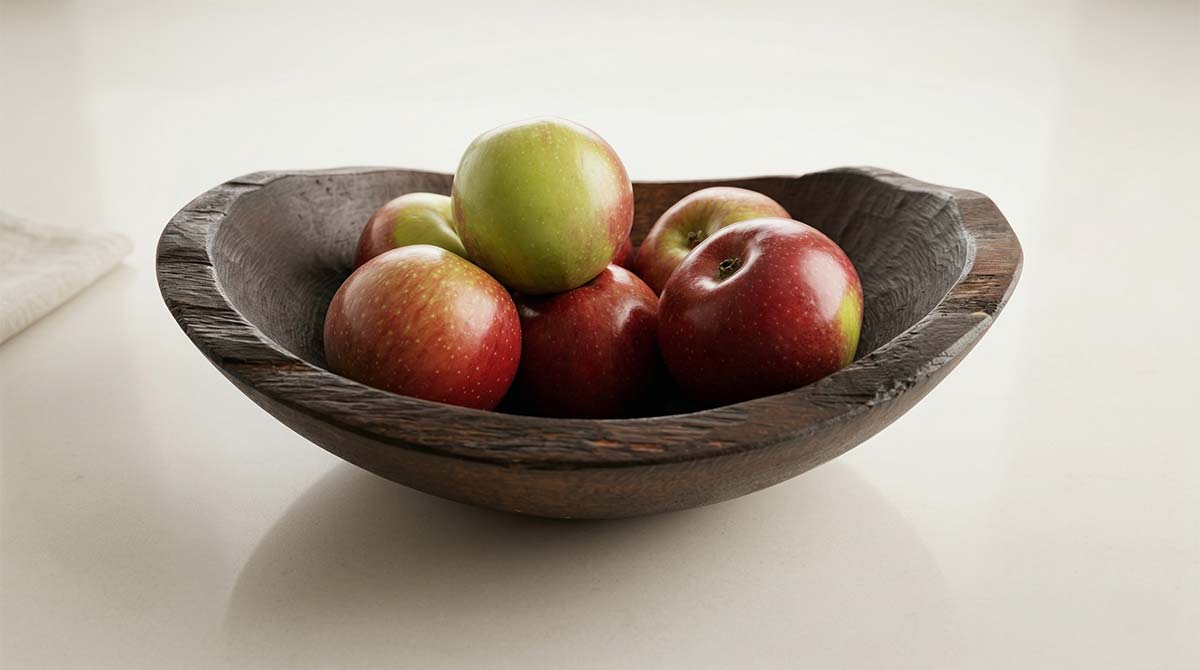
On a counter, a 10 inch bowl can hold a few apples, a couple of lemons, maybe an avocado ripening at the edge. Enough to see at a glance what is on hand, without spilling into the space you need for chopping and mixing. In smaller kitchens, that balance matters. A very large fruit bowl can take over the whole surface.
The wood changes how this looks and feels. Cherry slowly deepens in tone, so the bowl gains color as the years go on. Black walnut sets off citrus and green apples with a darker field. Spalted and ambrosia maple carry fine lines and shifting tones that stay visible even when the bowl is full.
Set under a window, the bowl starts to mark the seasons. Winter citrus piled higher in January. Local berries in June. Late tomatoes in September, still warm from the sun.
3. A Small Wooden Bowl for Candy and Snacks
A small wooden bowl has a way of drawing hands toward it.
Filled with wrapped chocolates, mints, or caramels, it becomes a quiet invitation. It can sit on a coffee table, a sideboard, or a corner of the kitchen island. People walk by, pause for a moment, and reach in.
The bowl itself often becomes part of the conversation. Someone picks up a piece of candy, notices the grain, and runs a thumb along the rim. They ask what kind of wood it is. You tell them it is cherry, or black walnut, or a piece of spalted maple that came from a downed tree not far from here.
When the snacks are gone, the bowl does not feel out of place. It might move to another table, or wait empty for the next gathering. It still earns its spot.
4. A Catch‑All Bowl by the Door
There is usually a small pile that forms near any entrance. Keys. Coins. Earbuds. A folded receipt that should have been tossed out last week.
A small bowl near the door gives those things a home. Placed on a narrow shelf or a small table, it quietly sets the rule: this is where things land when you walk in. After a while, people stop thinking about it. Keys find the bowl before jackets come off.
Wood feels right in this spot. It can handle metal and daily contact. Over time, the rim may pick up a softer shine where fingers brush it. A few light marks might show on the interior. Those signs line up with the work the bowl is doing.
For many homes, this is one of two small bowls that stay out all the time. One at the door. One in the kitchen. Both doing simple, steady jobs.
5. A Decorative Bowl for Shelves and Tables
Some bowls are used mostly for looking. That is a use in itself.
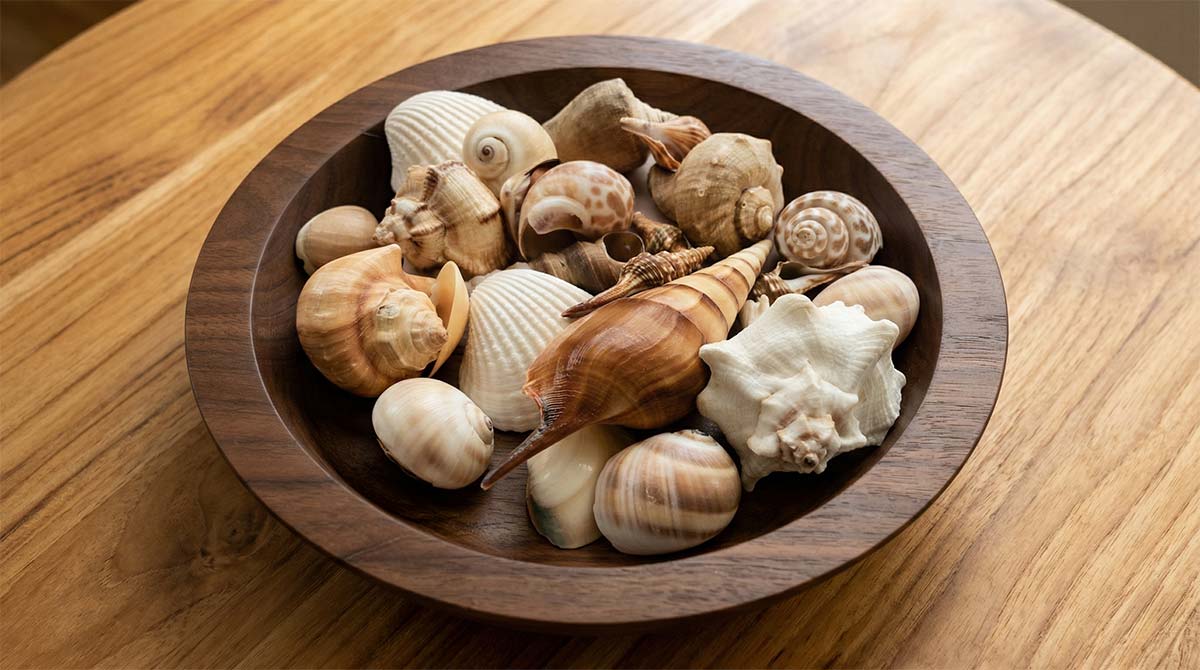
On a bookshelf, a small wooden bowl breaks up straight lines of spine and shelf with curve and grain. On a coffee table, it can sit beside a stack of books or a lamp and give the eye a place to rest.
Some people leave the bowl empty so the wood can carry the whole scene. Others fill it with a few objects that mean something: stones picked up on a walk, shells from a beach trip, a bundle of matches next to a favorite candle. The contents change; the bowl stays.
Live edge bowls often stand out in these spots. The rim still follows the contour of the tree, so every angle looks a little different. Round bowls feel more traditional and measured on a shelf.
6. A Small Wooden Bowl as a Gift That Finds Its Own Job
A small bowl is an easy thing to hand to someone, and it rarely ends up in storage.
It works as a housewarming gift when someone is building a kitchen from scratch. It fits into a wedding registry that already has plenty of glass and metal. It can be given on its own, or paired with something small, a handful of wrapped sweets, a bag of nuts, a note tucked inside.
Because our bowls are turned from reclaimed and storm-fallen hardwoods, there is already a story in the material. A line of spalting that shows where a fungus once moved through the wood. A darker streak that marks a branch. The way cherry darkens most where it is touched.
The person who receives the bowl decides what it becomes. A fruit bowl in a small kitchen. A place for jewelry on a dresser. A snack bowl by a favorite chair. Once it finds that job, it tends to stay in motion rather than on a high shelf.
A Small Bowl That Stays in the Story of the House
What keeps a small wooden bowl in use is not any single job. It is the way it keeps finding new ones.
It might spend most of its time at the table, then move to the counter for a season, then later settle by the door. The bowl itself does not change. The house does.
In the Spencer Peterman workshop, we turn small bowls with the same care and attention we give to our largest pieces. Each one begins as reclaimed hardwood, shaped to highlight the grain and meant to stand up to daily handling. Over time, that mix of usefulness and material is what lets a small bowl feel less like an object and more like something the home relies on.