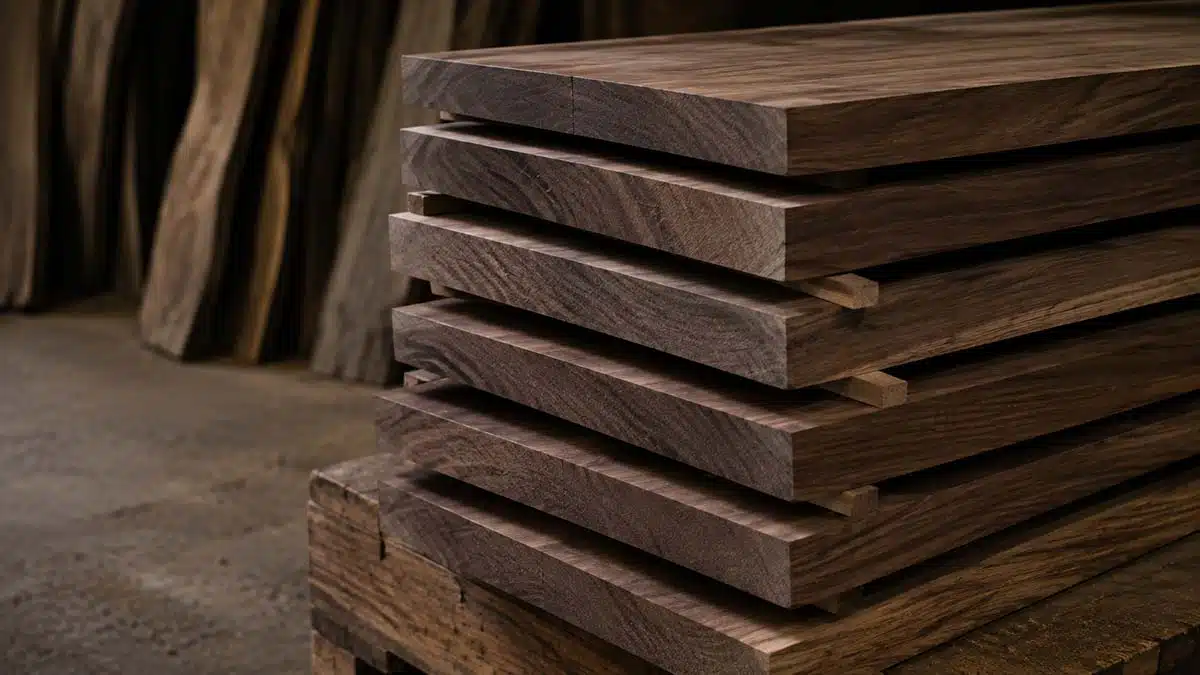
Most of the wood that moves through our shop is pale. Maple, oak, ash, birch, the light-colored trees of the New England woods. Then a walnut log comes in, and it looks like it wandered in from somewhere else.
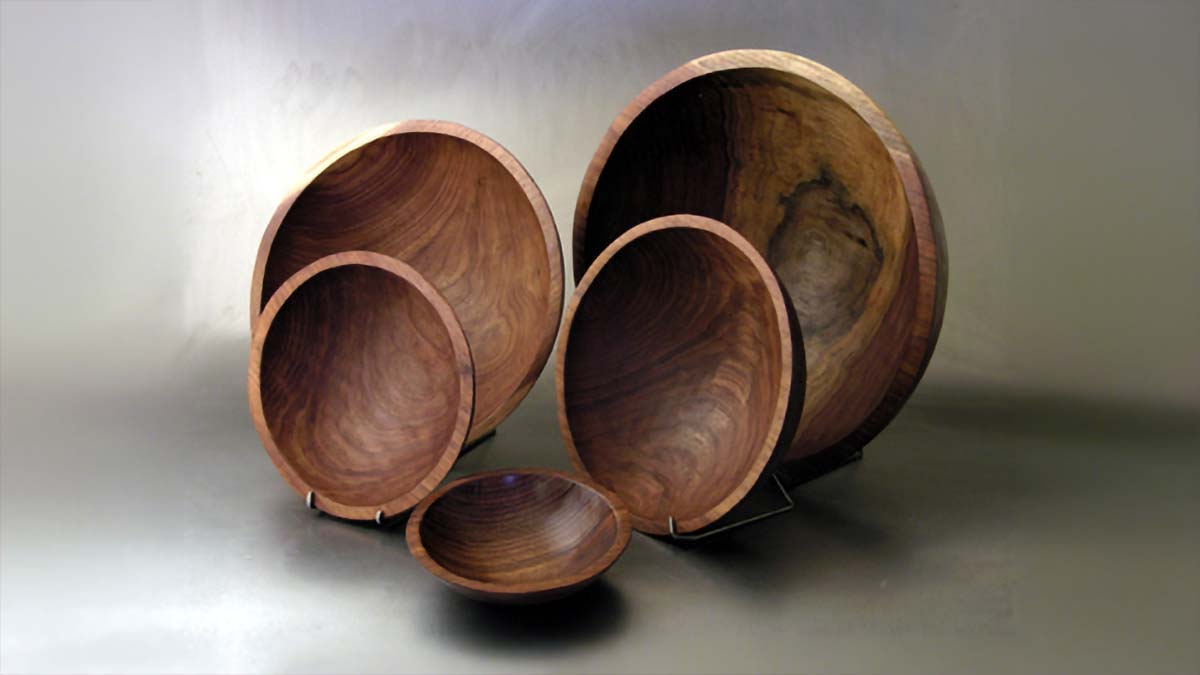
Black walnut is the one dark wood we turn. Not stained, not scorched, not dyed. The heartwood grows that deep brown on its own, somewhere between strong coffee and bittersweet chocolate, with a faint purple cast when the light catches it. Split a walnut log open and the color is already there.

One of the only dark woods that grows here
North America doesn’t give us many naturally dark hardwoods. Walnut is the main one. Nearly everything else in our woods runs pale or reddish, which is part of why a black walnut bowl stands out on a table without trying.
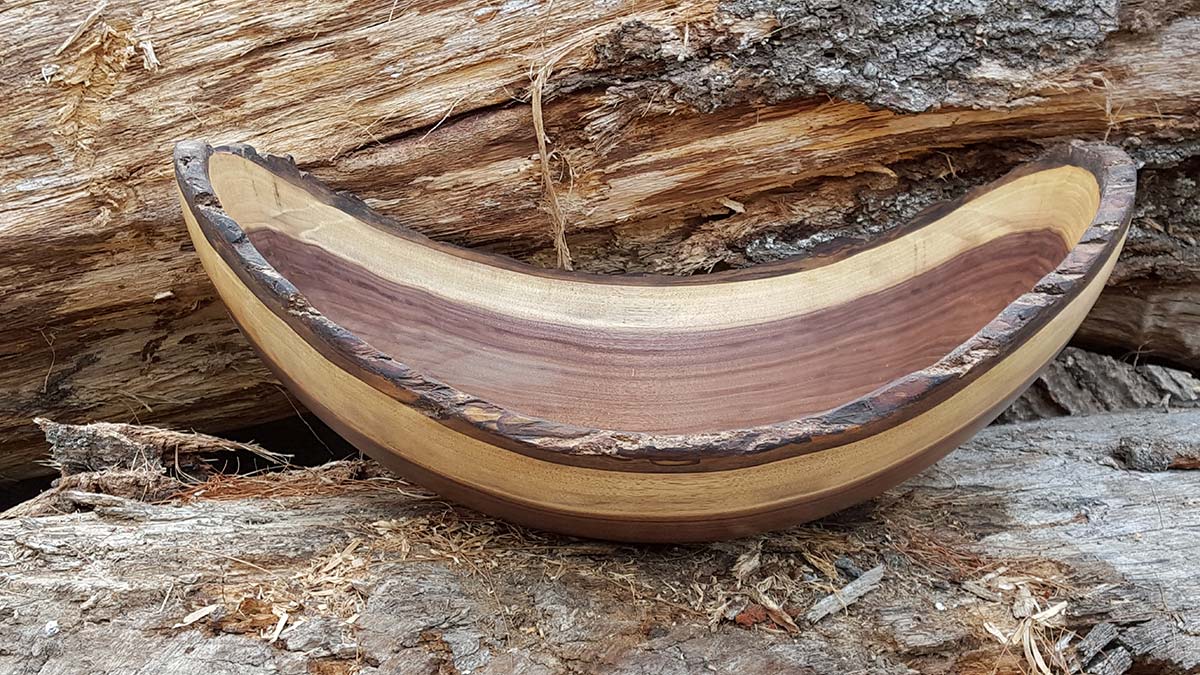
The color lives in the heartwood, the older wood at the center of the tree. The sapwood around it stays pale, close to cream. On a lot of our walnut pieces you can see both, a dark center feathering out to a light rim. Some shops trim the pale wood off for a uniform look. We often keep it. That line between heart and sap is the tree telling you where it grew.
Not really a New England native
Here’s the odd part. Walnut barely belongs up here.
Black walnut grows across much of the eastern United States, but New England sits at the cold northern edge of its range. The soil leans too acidic and the winters run too long for it to spread easily on its own. Most of the walnut in this region was planted by somebody, a shade tree in a backyard or a marker along an old field line, sometimes a hundred years ago.
So a walnut log usually arrives with a story. It shaded a porch. It dropped nuts on a driveway every autumn that somebody complained about. When a storm finally brings it down, that is often when the phone rings. This is the same way we come by most of our wood, and you can read more about that in From Fallen Trees to the Table.
There is an older chapter, too. When the national armory opened in Springfield in 1795, an hour south of Gill, its gunmakers prized walnut for the way it took a shape and held it. Within a few years they had cut through most of New England’s good walnut and were hauling it in from Pennsylvania. The trees we work with today grew up long after that.
What walnut is like to turn
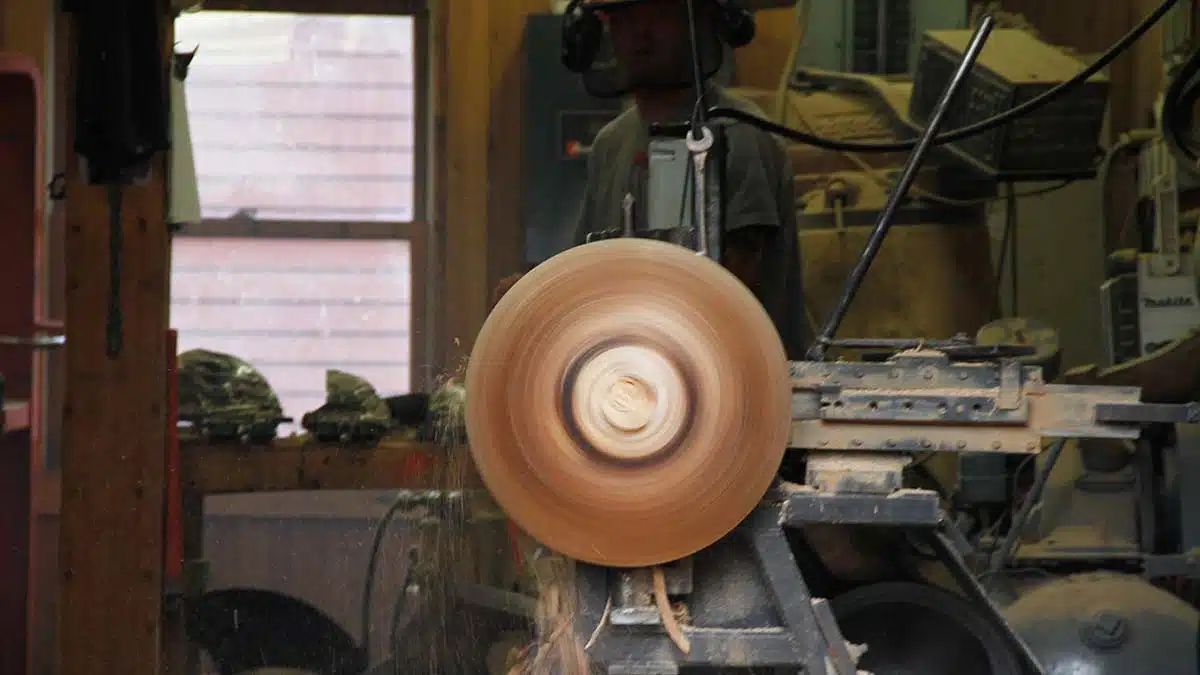
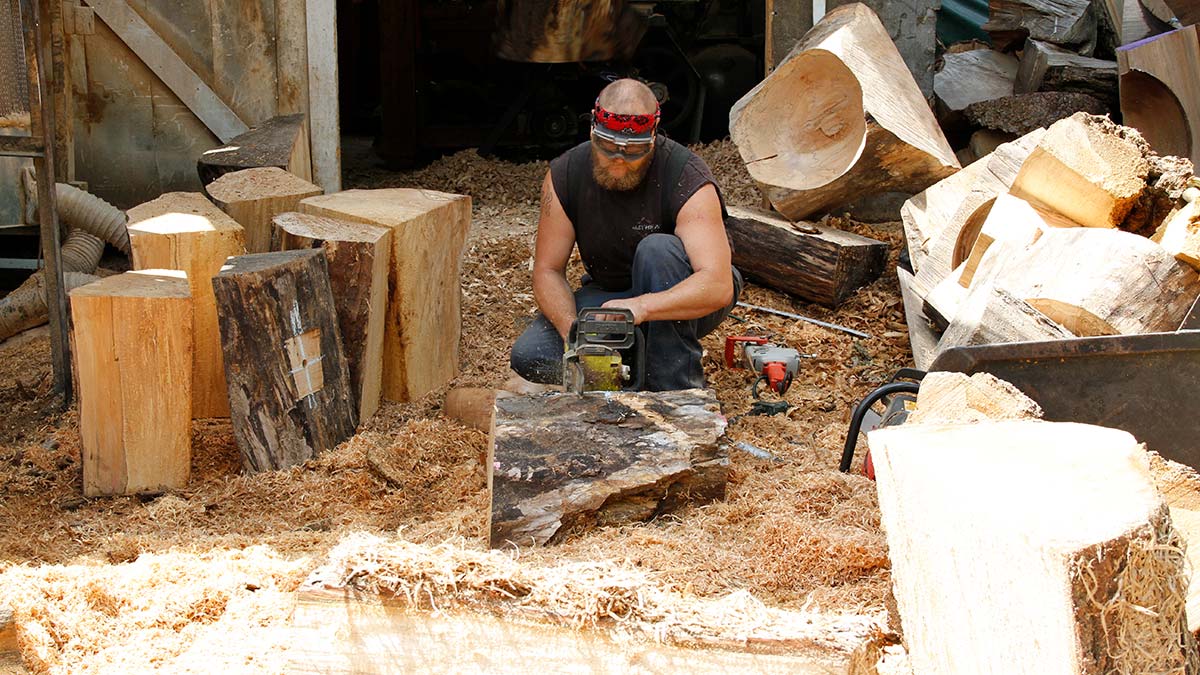
On the lathe, walnut behaves. It cuts cleanly and holds fine detail without tearing. Sand it down and the surface goes almost soft under your hand. The grain is usually straight and even, though every so often a log hands us something wilder, a ripple of curl or the swirl where two big limbs once met.
It is a hard wood, too, around 1,010 on the Janka scale, which is the number woodworkers use to talk about dents and wear. That hardness is why a walnut bowl takes daily handling and keeps its shape for decades.
Walnut ages backward
Most wood darkens with time. Cherry deepens toward red. Maple warms into honey. Walnut goes the other way.
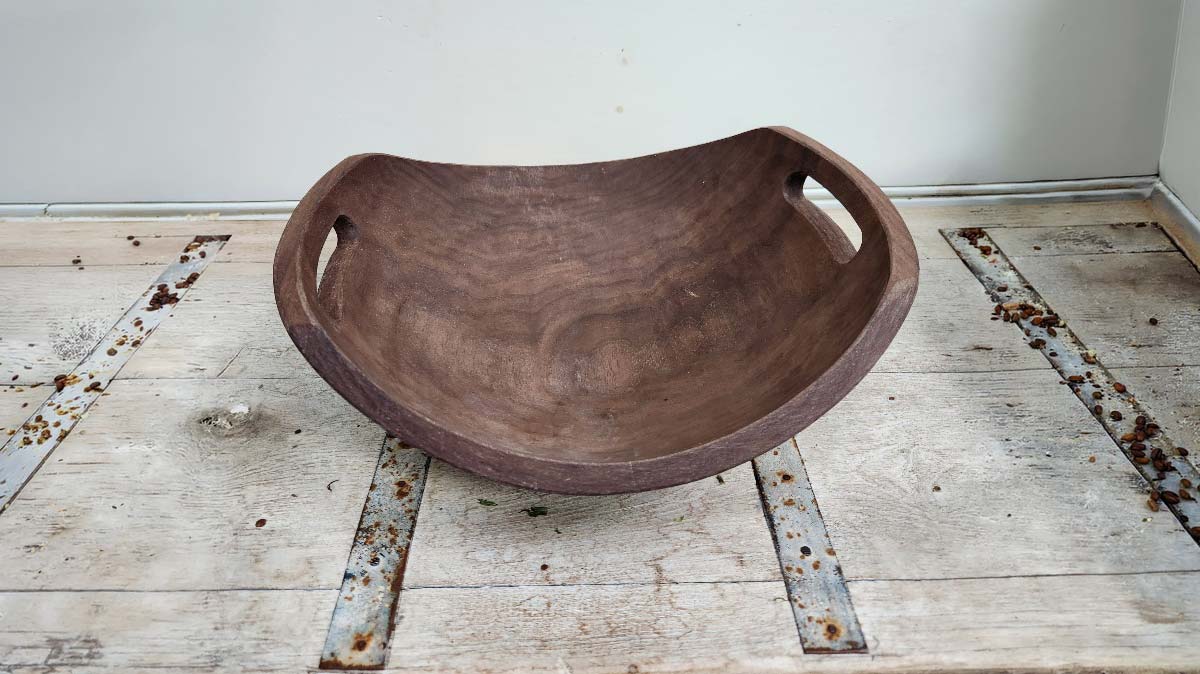
Left in ordinary daylight, a walnut bowl slowly lightens. The near-black eases into a warmer, softer brown over the years, so the piece you pass down looks a little different from the one you first set on the shelf. Sunlight speeds it along. Keep a bowl near a south-facing window and the side toward the glass will mellow first. A wipe of our beeswax and mineral oil feeds the grain and slows the change, though it won’t stop the wood from living. We don’t think it should. A good bowl earns its patina.
Living with a black walnut bowl
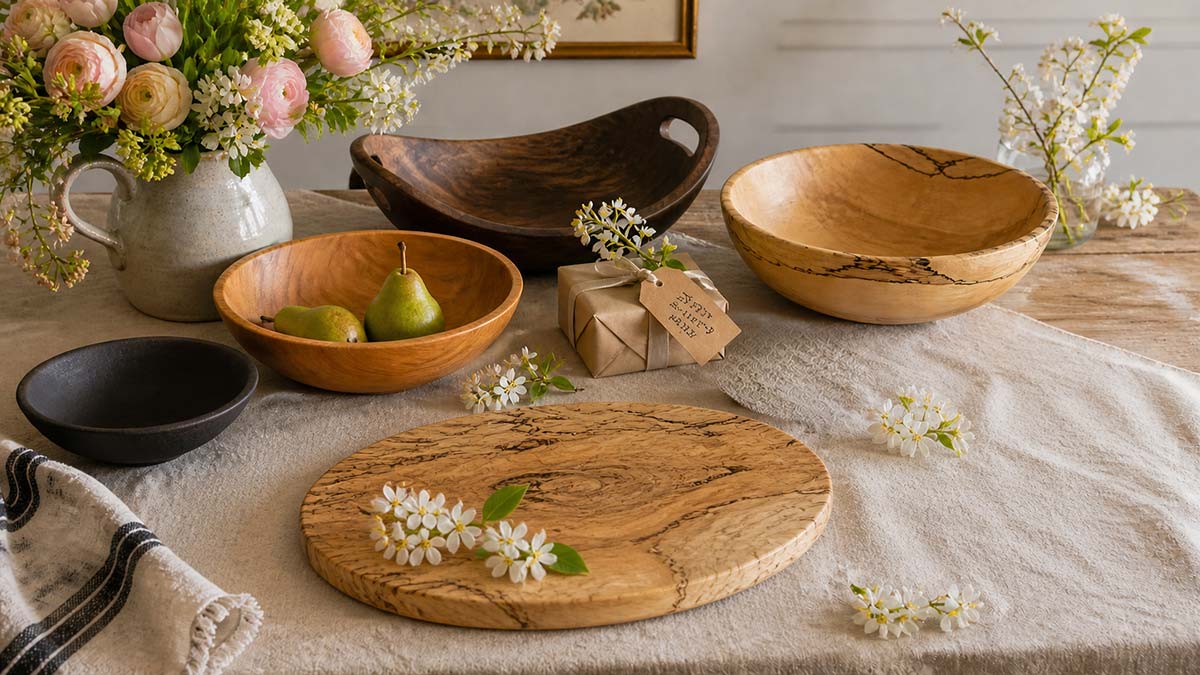
Walnut holds up to everyday use. It makes a fine salad bowl, and it is just as happy holding fruit on the counter or bread at the table. Our finish is a food-safe blend of beeswax and mineral oil, nothing you wouldn’t want near what you eat.
Care is simple. Wipe it clean by hand, keep it out of the dishwasher and the microwave, and give it a fresh coat of oil when the wood starts to look dry. Treated that way, a black walnut bowl will outlast the person who bought it. For the full routine, see our wood care guide.
If you want to see the color for yourself, our black walnut bowls and black walnut cutting boards are turned and shaped right here in Gill, most of them from trees that came down within a few hours’ drive. No two match. The tree already made sure of that.