
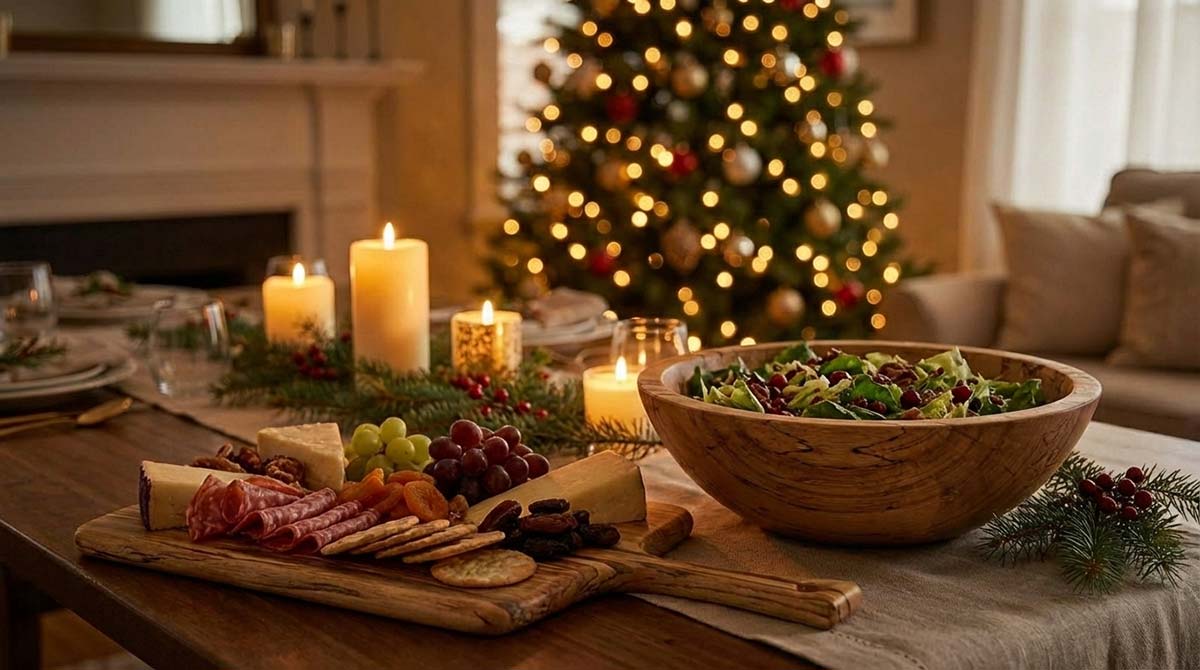
By the time we’re a week out, the holiday pressure usually changes shape. The tree’s up. The calendar is packed. And the kitchen becomes the place where everything lands at once.
I make bowls and boards for a living, so I’m biased. But I’ve also learned something simple over the years: a calmer kitchen isn’t about having a bigger kitchen. It’s about making fewer decisions when the house is full and the stove is hot.
Here’s how I’d do it.
Pick a Menu That Behaves
Most holiday stress comes from one move: trying something brand new while guests are already in the house.
If you want hosting to feel lighter, choose dishes you’ve made before. If you really want to try one new thing, make it a side, not the main event. Your future self will thank you.
If you’re cooking for people with sensitivities, this approach helps even more. Keep the menu clean. Fewer ingredients. Fewer surprises. More confidence.
Set Up “Stations” So You’re Not Fighting Your Own Countertops
A kitchen runs better when each surface has a job.
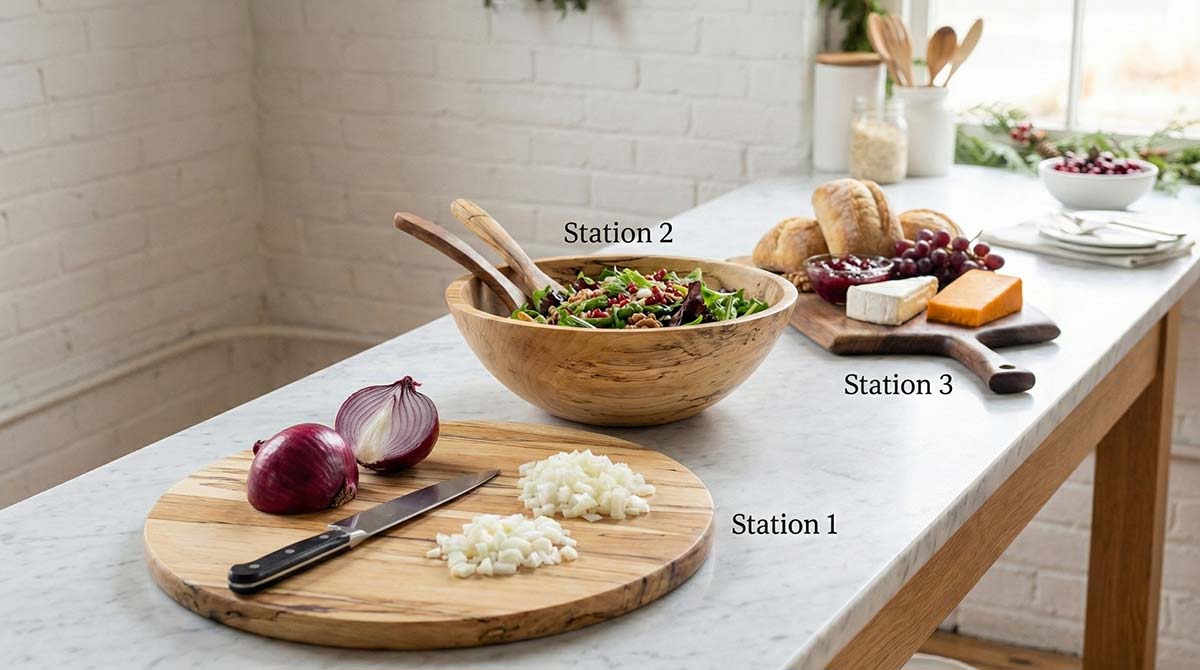
Your three zones
Cutting zone: where all the chopping happens
Mixing zone: where bowls, measuring, tossing, and prep live
Landing zone: a clear space for finished food and “this is ready to go out” items
When you do this, you stop doing that frantic shuffle where you move the same spoon around six times because there’s nowhere to put it.
This is also where wood shines in a very practical way. A large bowl becomes the home base for citrus, rolls, or a salad you can toss and leave on the table. A board becomes a staging surface that can move from kitchen to table without feeling like you’re carrying a science experiment.
If you’re tempted to grab plastic bowls this week because they’re “easy,” it’s worth knowing what actually holds up better in a real kitchen. We wrote a quick, plain look at the tradeoffs in Plastic vs. Wooden Serving Bowls: What Actually Matters.
Do the Work Early That Nobody Claps For
The unglamorous stuff is what makes hosting feel easy.
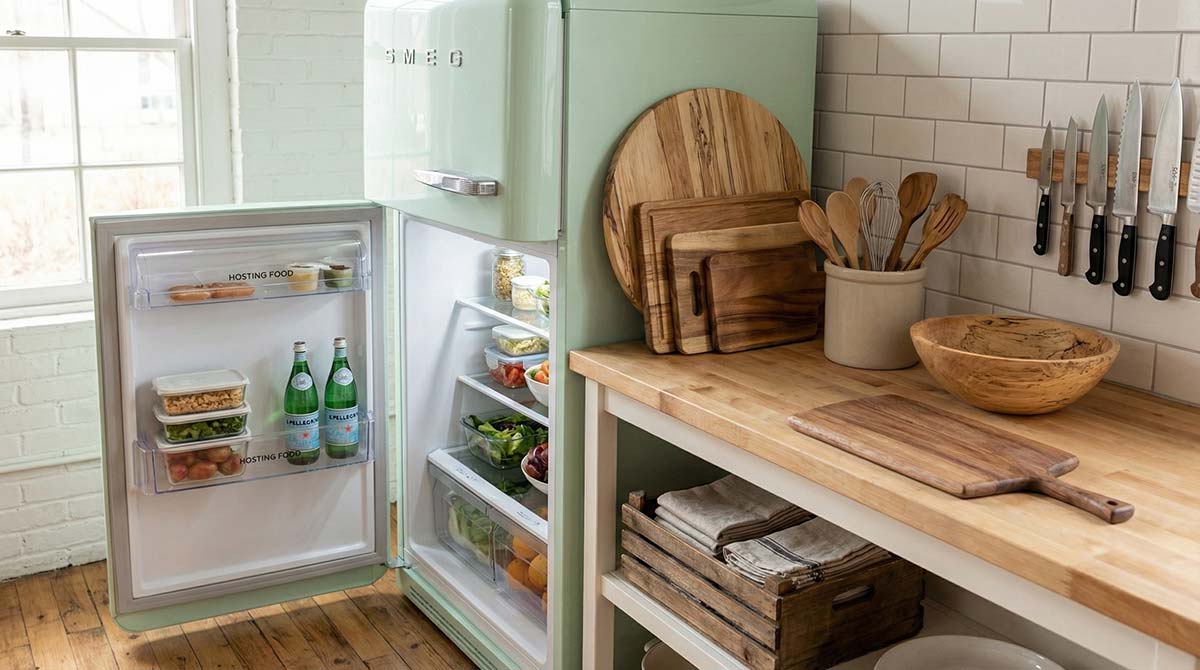
Three or four days before you host, do a quick reset:
- Clear one shelf in the fridge for “hosting food”
- Put the tools you’ll actually use where you can grab them fast
- Decide what platters and serving pieces you’re using so you’re not digging mid-recipe
If you’re using a wooden board or bowl heavily during holiday week, get it ready now. Wash it, dry it fully, and if it looks thirsty, condition it with a food-safe oil.
And for conditioning tips (including what oils to avoid), University of Maine Extension lays out an easy routine that’s actually realistic.
Clean As You Go, So You Don’t Drown After
There are two kinds of cooks.
The first one finishes cooking, then turns around and realizes the kitchen looks like a food tornado hit it. The second one wipes and resets as they go.
I’m not saying you need to be neat. I’m saying you need to protect your momentum.
My rule is simple: don’t start the next step with yesterday’s mess still sitting there.
Wipe, rinse, reset. It keeps your brain clear.
Give Trash and Dishes a System Before Guests Arrive
You cannot host calmly if you’re hunting for a trash bag with wet hands.
The counter scrap bowl
Put a small bowl on the counter for peels, wrappers, and scraps. Dump it as needed. This one move keeps your cutting zone clean.
Decide what “dish flow” you’re using
Either:
- Fill the sink with hot soapy water early and wash in waves, or
- Keep the sink empty and plan to run the dishwasher more than once
No perfect option. Just don’t improvise it midstream.
Put Snacks Away From the Stove
People gather where the action is, which is exactly why the stove area becomes a traffic jam.
Move snacks somewhere else.
A board in the dining room. A bowl of nuts and mandarins on the coffee table. Drinks in a different corner. It doesn’t have to be fancy. It just needs to be not under your elbows while you’re cooking.
Keep Food Safety Simple and Non-Negotiable
When the house is warm and people are grazing, it’s easy to lose track of time.
Here are two rules that keep things straightforward:
The “2-hour rule”
Don’t leave perishables out for more than 2 hours at room temperature (and only 1 hour if it’s above 90°F).
The danger zone
Bacteria grow fastest between 40°F and 140°F.
This isn’t meant to make you anxious. It’s meant to stop the guessing.
Wood Care, Holiday Week Edition
If you’re using wooden boards or bowls a lot this week, keep it basic.
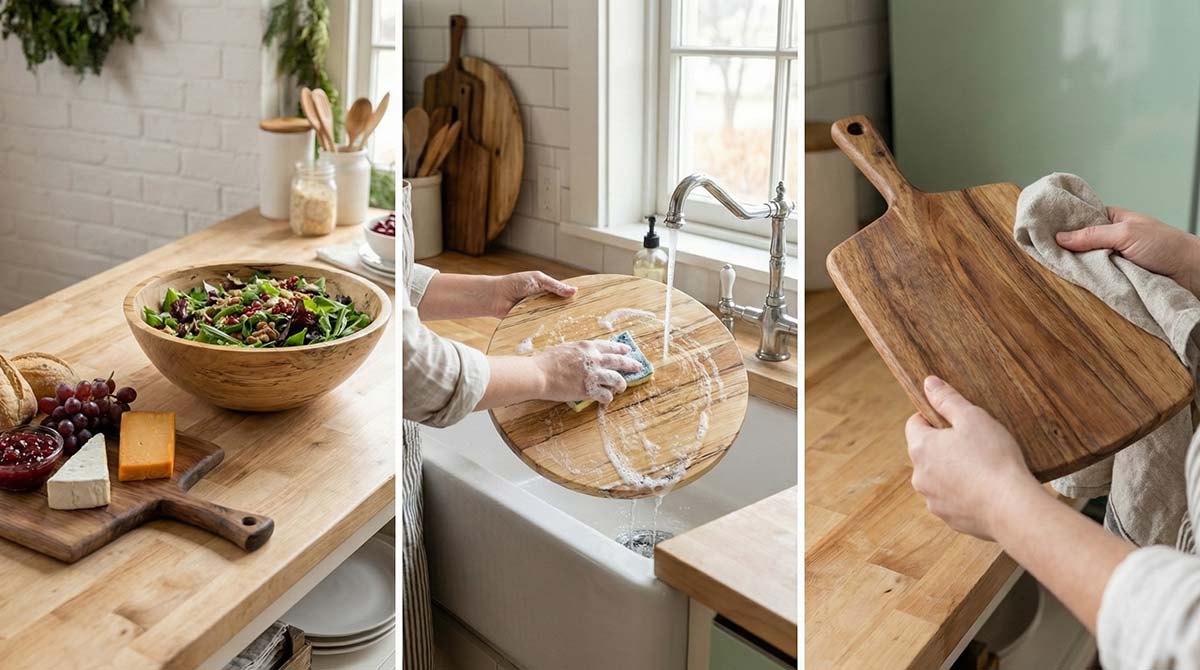
Cleaning
If you’re putting your boards and bowls to work all week, the best thing you can do is keep the routine simple and consistent. Wash with hot, soapy water after you use it, rinse, then dry it right away. Wood doesn’t love long soaks, and it definitely doesn’t belong in the dishwasher.
One small habit that helps a lot: don’t stack a damp board in a pile of dishes “for later.” Let it dry out in the open so it can fully air out.
Sanitizing (if you need it)
Most days, a good wash is all I bother with. If the board’s touched raw meat, poultry, or seafood, though, I like to give it a quick sanitize before it goes back in the drawer, especially during that week-before-Christmas “everything lives on the counter” stretch.
The simple mix is 1 tablespoon of unscented liquid chlorine bleach in 1 gallon of water. Wipe the board down with that solution, let it sit for a minute or two, then rinse and stand it up to dry completely. Drying is where wood really wins, because you’re not leaving moisture trapped.
A couple common-sense guardrails that make the whole thing easier without turning it into a project:
If you can, keep one board that’s your “raw protein” board, and another that stays in the safe lane for bread, fruit, and ready-to-eat foods. That one decision prevents most kitchen cross-contamination headaches.
And if a board gets deep grooves or cracks that you can’t really clean well anymore, retire it from heavy prep. At that point it’s not about wood versus anything else. It’s just wear and tear.
Conditioning
A light coat of food-safe mineral oil (or a beeswax blend) goes a long way. Also, avoid cooking oils that can turn sticky or rancid.
The goal isn’t museum care. The goal is a piece that’s ready to work.
Make It Smell Like December With Almost No Effort
There’s a reason the house feels more “holiday” the second you bring a real tree inside, even before you hang a single ornament. The scent does a lot of the heavy lifting. It’s not imaginary, either. Pine, fir, and spruce give off natural aroma compounds that become more noticeable once the tree warms up indoors. That’s why the smell hits you when you walk in the door, and why it fades over time. If you want the quick, easy-to-read science behind it, NC State breaks it down here: Why Christmas Trees Smell Good
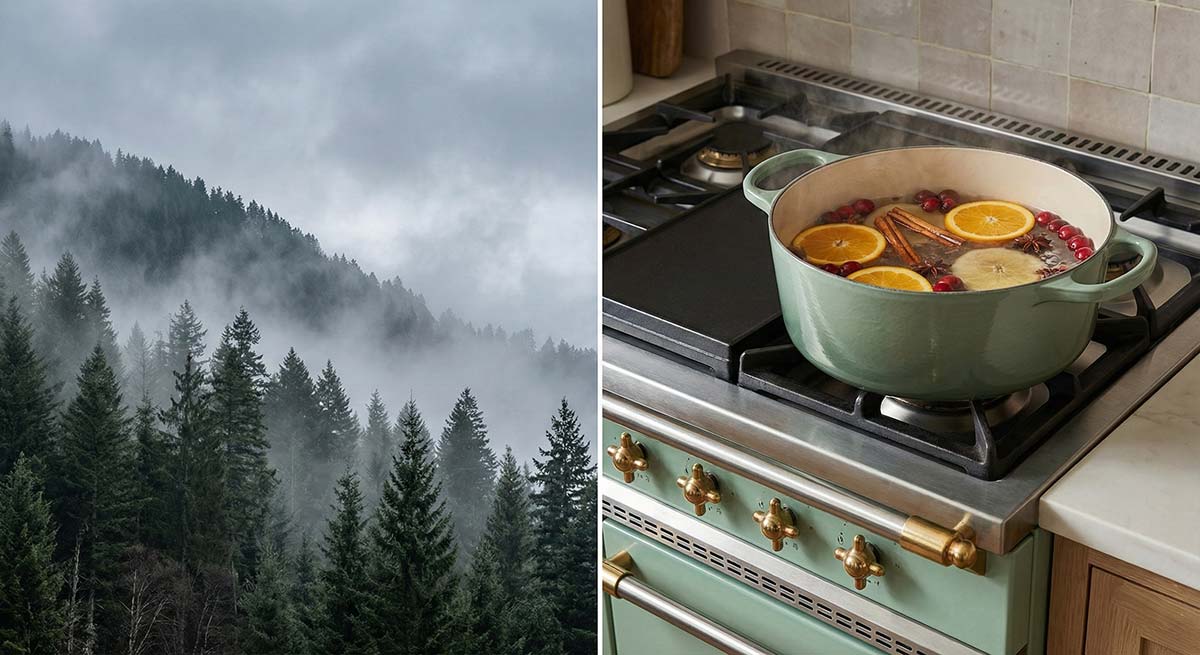
Now here’s the cheat code for the kitchen, especially the week before Christmas when you’re busy and the house is going a hundred different directions.
Put a small pot on the stove, fill it with water, and let it sit on low heat. Add a few orange peels or slices. Then throw in whatever you’ve already got that smells like winter. Cinnamon sticks. A couple cloves. If you have a little clipping of evergreen from the tree lot or your yard, that’s the part that makes the whole thing feel like December in about ten minutes.
It’s not “cooking,” so it doesn’t feel like another task. It’s more like setting the mood while you’re already doing what you’re doing.
If you want an example to follow (with ingredient ideas you can steal and adjust), this one is solid: Stovetop Simmer Pot (Stove Top Potpourri) from Our Best Bites.
One small note, because it matters: keep it on low, keep an eye on the water level, and don’t walk away and forget it’s on. Treat it like you’d treat a pot of soup that’s barely bubbling in the background.
The Mindset Shift That Makes Hosting Easier
The week before Christmas is not the time to prove anything.
If the food is good and people feel welcome, you’ve done the job. The rest is noise.
So pick a menu that behaves, give your counters roles, keep your sink from turning into a swamp, and move the snacks away from the stove. That’s most of it.
And if a wooden bowl or board makes the whole thing feel warmer and more grounded, that’s exactly why I make them.