
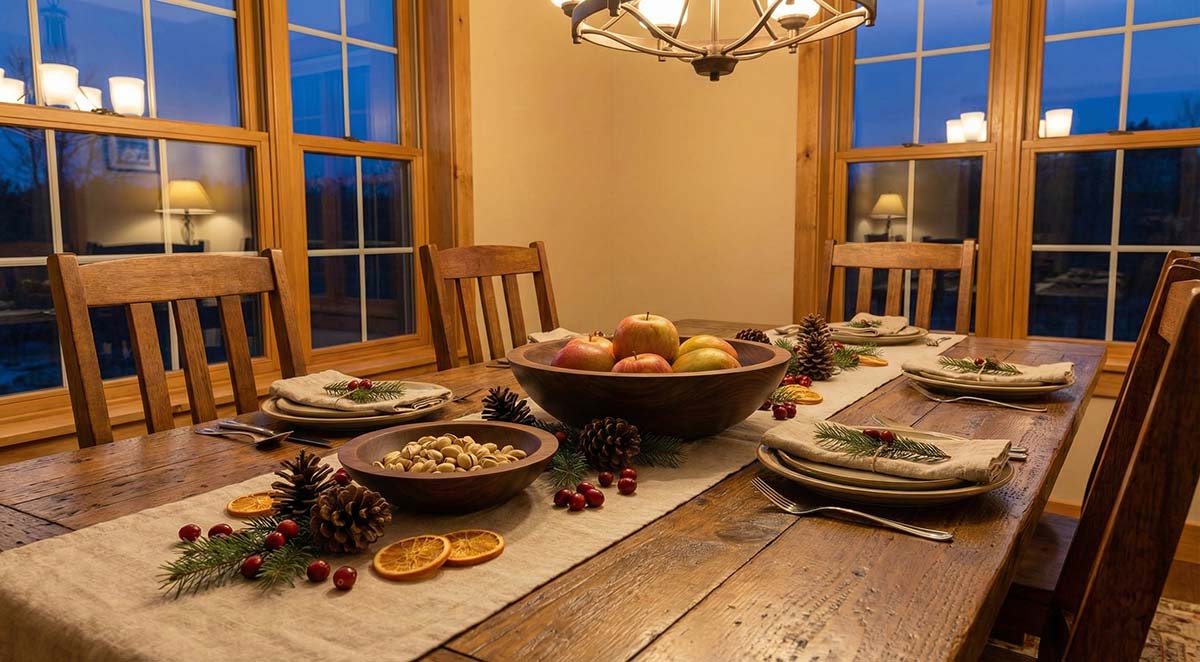
Holiday tables tend to get overbuilt.
Too many decorations. Too many matching pieces. Too much attention paid to how the table looks before anyone sits down, instead of how it works once people do.
A lot of the best “table people” are saying the same thing lately: keep it simple, leave room, and let the meal carry the mood. That’s true whether you’re into the current minimalist holiday trend (neutral palettes, natural textures, fewer objects) or you’re just trying to get dinner on the table without turning your dining room into a craft project.
Start With One Piece That Sets the Table
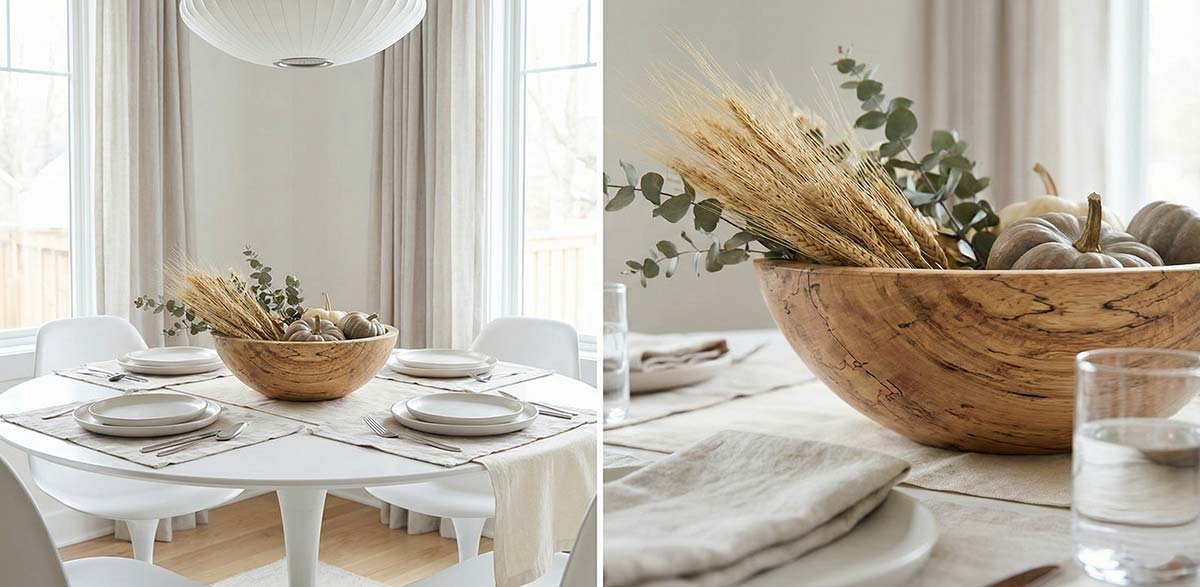
Most tables look better when there is one clear starting point. Not a centerpiece in the traditional sense, but a piece that naturally draws the eye and gives the rest of the table something to organize around.
Design writer Devon Liedtke calls this an “inspiration point” and she’s right about what happens when you start there: once you choose the anchor, the rest of the table stops feeling like a pile of separate decisions. She even suggests letting produce and flowers lead the way, paying attention to texture and earthy color as you build the rest.
A large wooden bowl does that job well.
It might hold salad. It might hold citrus or bread. Sometimes it holds whatever showed up last minute. What matters is that it has presence. It gives the table a sense of intention without trying to decorate it.
A 15-inch bowl is often the right size here. Substantial enough to feel settled. Not so large that it crowds everything else out.
Once that piece is in place, the rest of the table tends to make more sense.
Let the Food Do the Work
Holiday tables don’t need separate decoration when the food itself has a place to land.
Entertaining blogger Erica (Eating With Erica) puts it plainly: keep the table simple and cohesive, don’t overcrowd it, and make sure there’s enough space for serving dishes and comfortable dining. That’s not a style opinion as much as it’s a hosting truth.
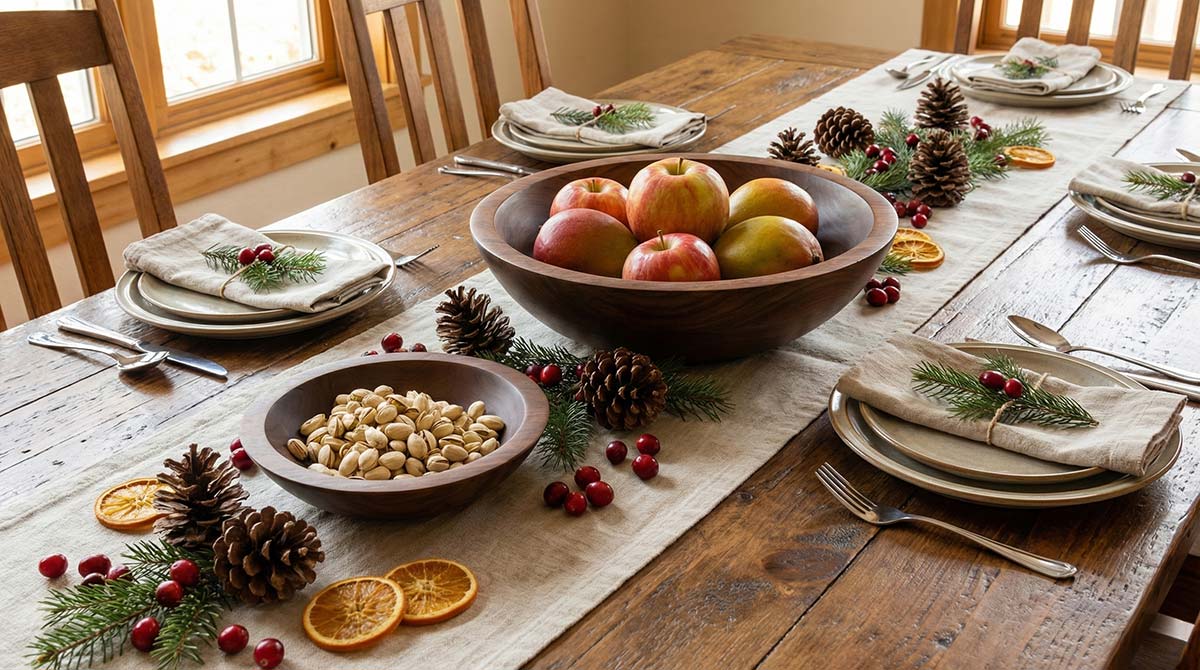
Medium bowls are useful here. Ten-inch and thirteen-inch bowls are easy to live with on a table. They hold enough to share. They can be moved without clearing space first.
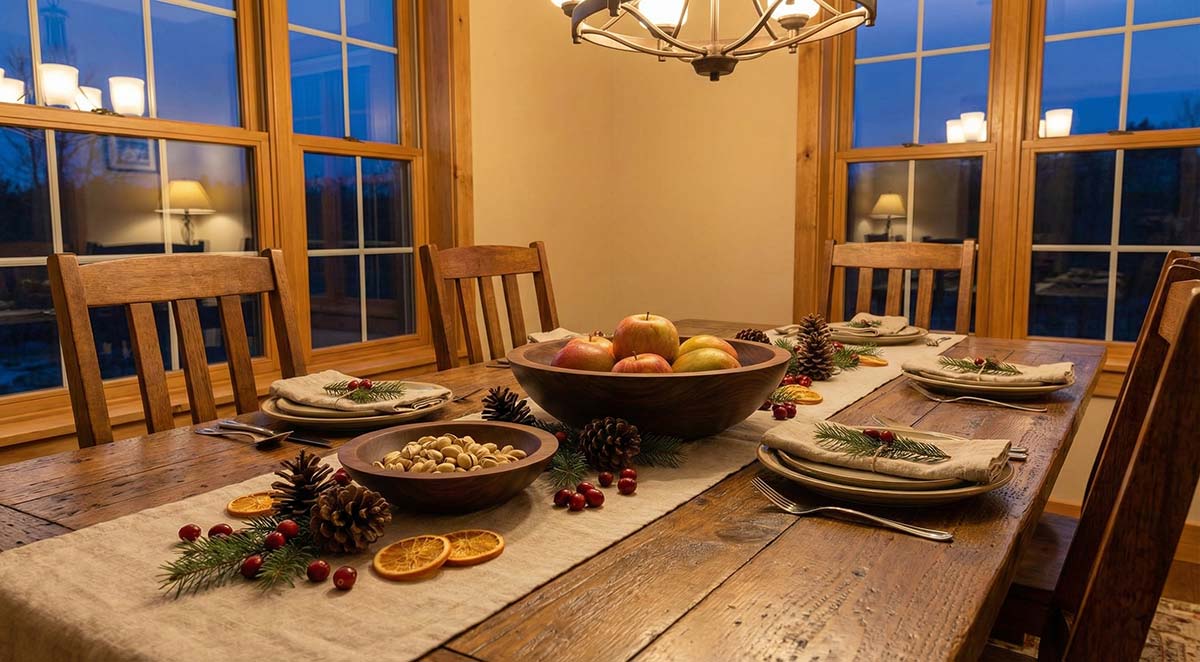
These bowls are well suited for things people reach for more than once. Nuts. Apples. Pears. Rolls. Crackers.
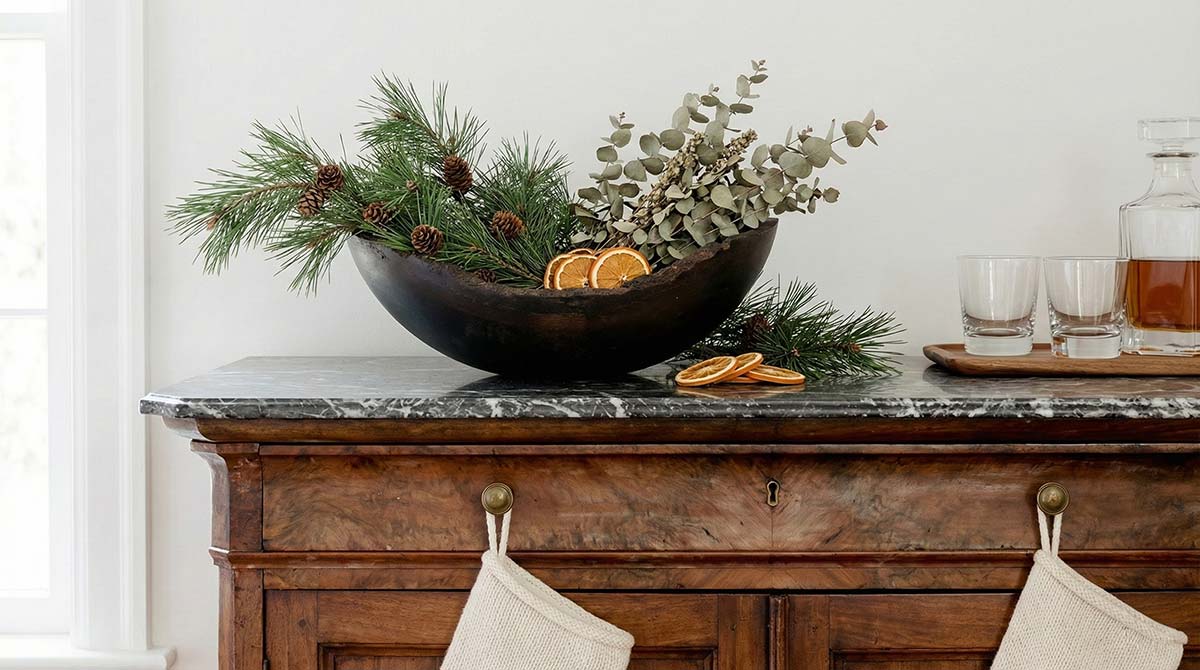
If you want the table to feel festive without adding “decor,” borrow one move from the minimalist crowd: use natural elements as part of the food story. Citrus, pomegranates, evergreen clippings, even a few pinecones near the bowl. It reads as seasonal without turning into clutter.
When food is placed directly on the table, rather than lined up off to the side, people settle in faster. They serve themselves. They stay put longer. The table feels less like a display and more like a gathering.
Boards That Earn Their Spot
Serving boards are most useful when they are treated as tools, not props.
Bread needs a place to land. Cheese needs somewhere to be sliced. Dessert needs a surface that does not require rearranging half the table to make room.
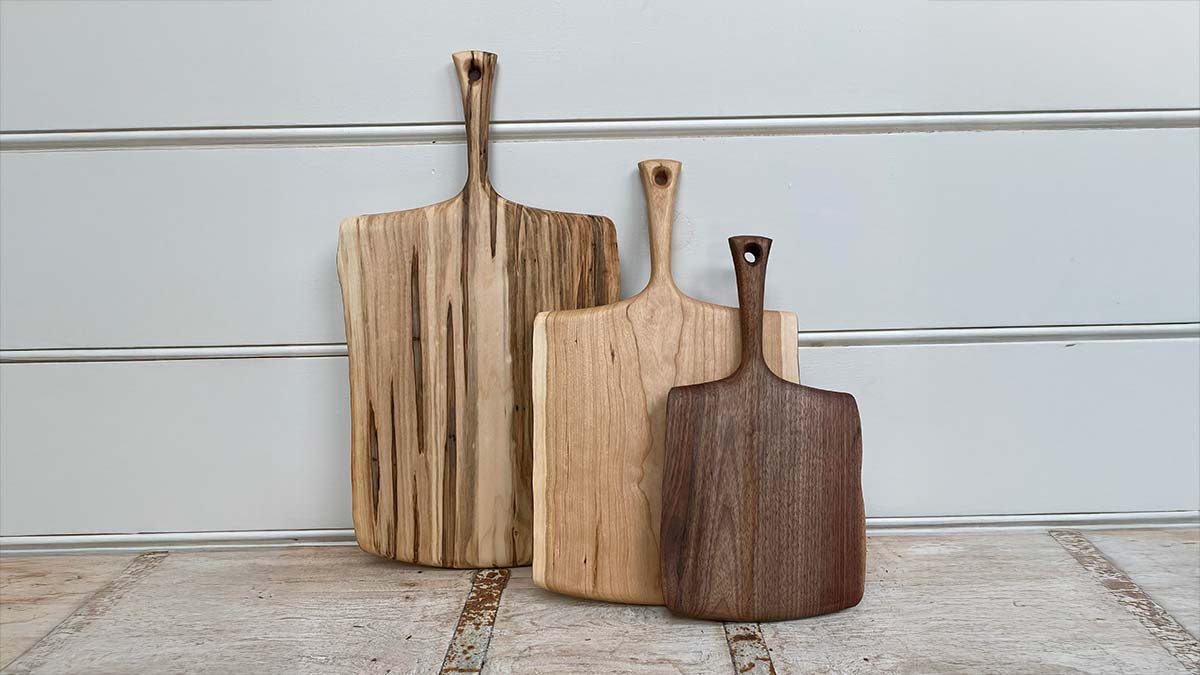
Boards with handles work well for this kind of use. They can be carried easily from kitchen to table and set down without much thought. They do not ask for a specific arrangement. They simply do the job they are meant to do.
A board like that can come out early in the evening, leave the table for a while, and return later without interrupting anything.
If you’re lighting the table, keep it in the same spirit: warm, simple, and not competing with dinner. Multiple sources make the same point for a reason, skip scented candles at the table, because strong fragrance can clash with the food. Unscented candles give you the glow without hijacking the meal.
Small Pieces That Solve Small Problems
Not everything on the table needs to be large to be useful.
A bowl for butter. A bowl for salt. A bowl for sauce or dressing.
These are small decisions that prevent the table from feeling cluttered later. A ten-inch bowl is often enough. It keeps things contained without looking cramped.
Liedtke also talks about carrying your palette through the whole table once you’ve chosen it. You don’t need matching sets to do that. You just need a few repeats—linen, clay, wood, a quiet ribbon or a simple napkin tie—so the table feels like one story instead of a bunch of separate chapters.
When these details are handled early, people stop stacking things on plates or passing items back and forth. The table stays orderly without anyone noticing why.
Leave Space Where People Sit
A table works better when it is not completely full.
One minimalist holiday table post described the win perfectly: there’s “plenty of space left for food, glasses, elbows.” That’s the whole point.
Ina Garten has a version of the same rule: keep centerpieces low enough that people can see each other across the table. Conversation is part of the meal, and tall arrangements quietly ruin it.
Space is what allows plates to shift, glasses to move, and elbows to rest without knocking into something. It also makes the table easier to reset as the meal goes on.
Choosing fewer pieces, and choosing them well, leaves room for people to actually use the table.
That is usually what makes a holiday table feel right. Not how much is on it, but how easy it is to sit down and stay.