
The Cherry Wood Bowl You Buy Isn’t the One You’ll Keep
Buy a cherry wood bowl in the spring and set it on the counter. By the time the leaves turn, it won’t be the same color. That isn’t a flaw. It’s the whole reason people love cherry.
Cherry comes off the lathe pale. Soft pink, a little gold, closer to the inside of a peach than to anything you’d call red. Then light gets to it. Over the first few months, and then for years after, the wood deepens on its own into a warm reddish-brown. Sunlight does most of the work. A bowl left near a window will darken faster on the side that faces the glass, and if you leave something sitting on it for a few weeks, you’ll lift the object later and find a paler ghost underneath, already catching up. No stain does this. It’s the wood reacting to daylight and air, and there is no real way to stop it. Most of us who work with cherry stopped wanting to.
A tree that’s always been here
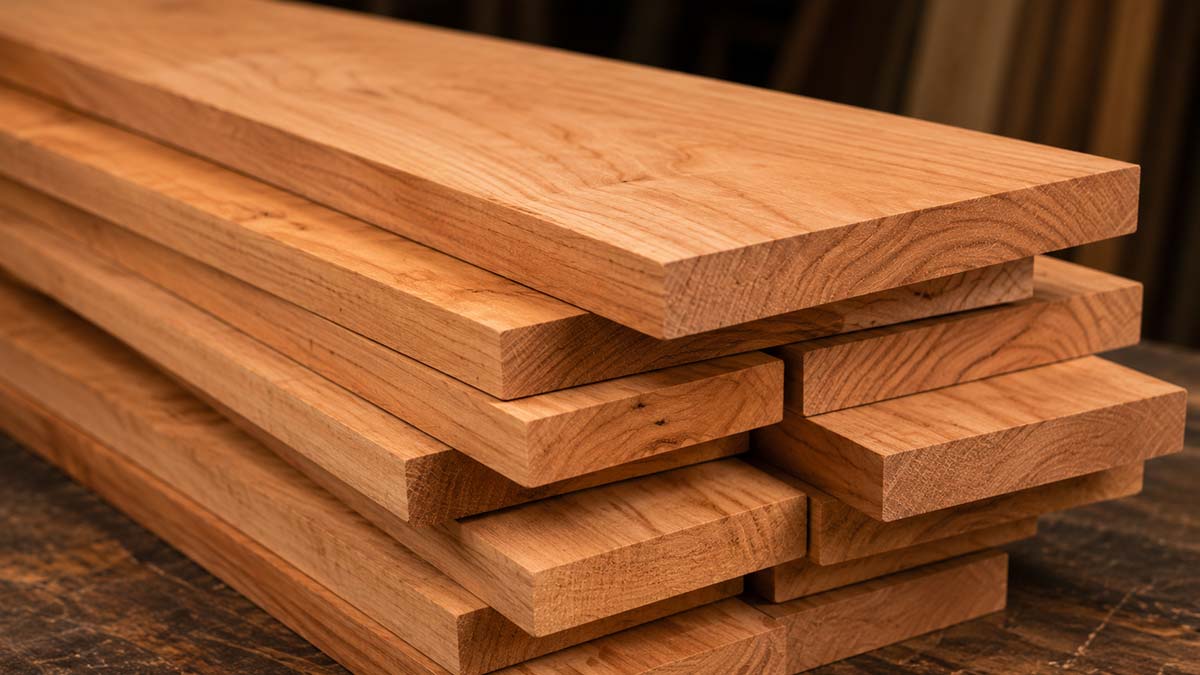
Unlike a lot of the wood we turn, cherry belongs to this part of the country without an asterisk. Black cherry, Prunus serotina, has grown across the eastern woods since long before there was a Massachusetts to grow in. Colonists knew it well. They built furniture from it and soaked its small, bitter fruit in rum for a cordial they called cherry bounce. The trees in our region come down in the same storms that bring us everything else, and cherry is usually the one we’re gladdest to find on the truck.
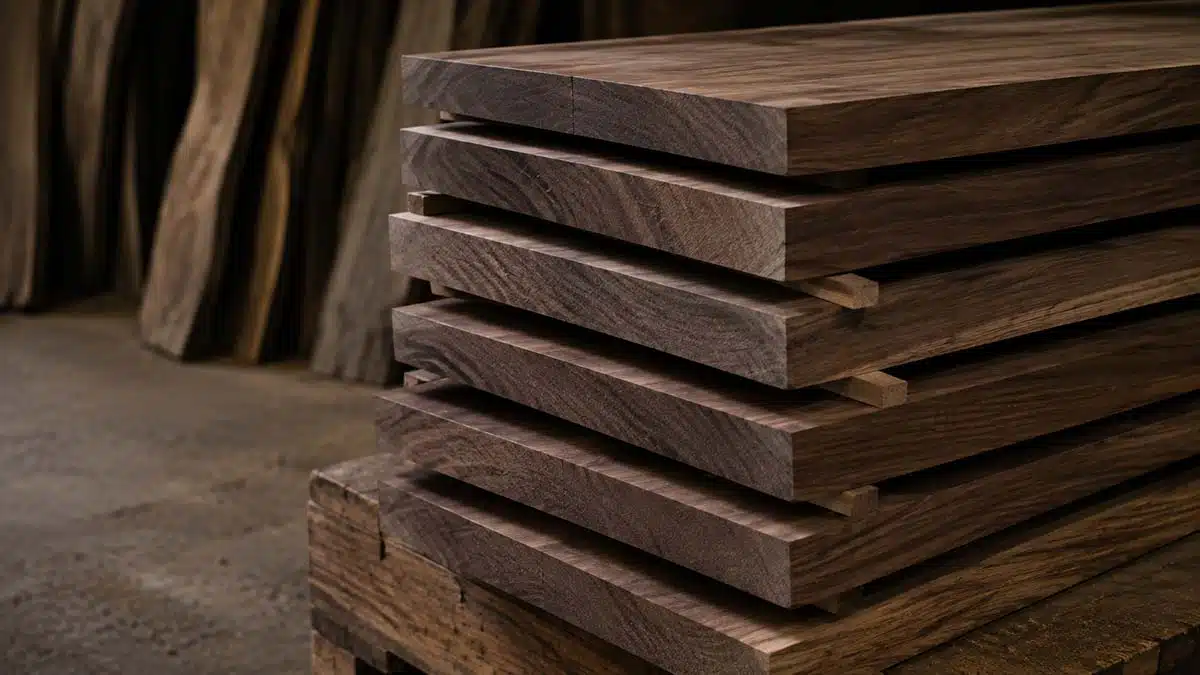
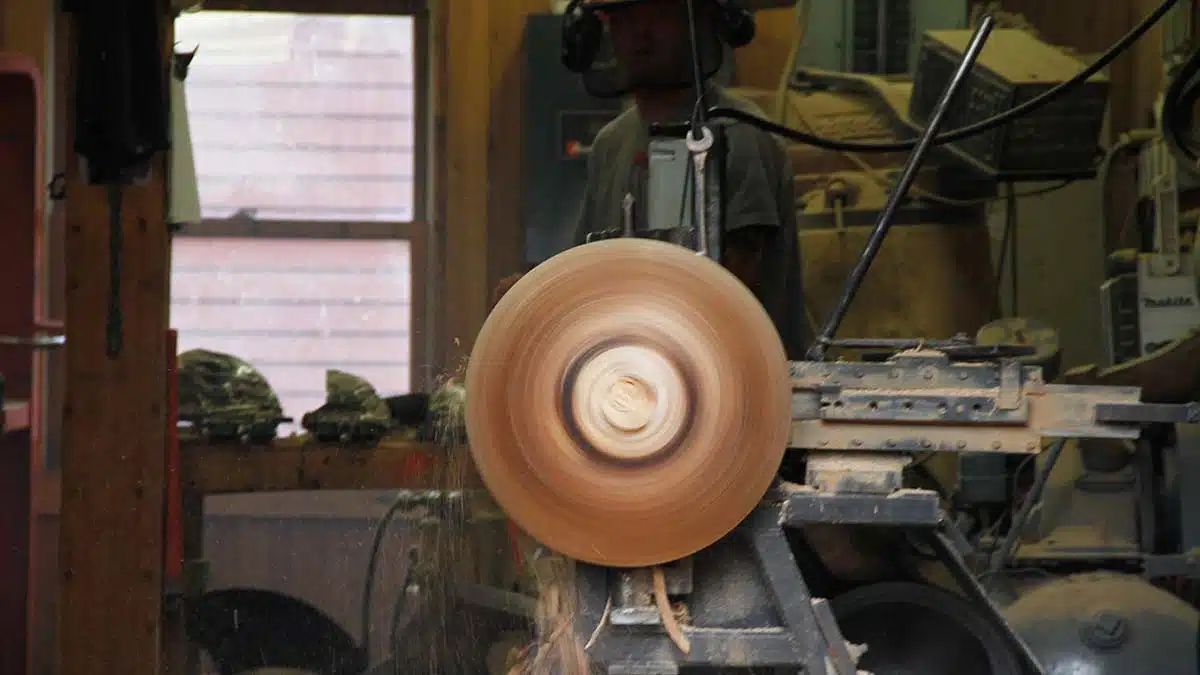
It’s a pleasure to turn, though it keeps you honest. Cherry sits on the softer side of the hardwoods, and it cuts with a clean, quiet shear that denser woods don’t give you. It also scorches if your tool is dull or you linger too long in one spot, so it rewards a sharp edge and a light hand. The grain runs fine and straight, satiny under sandpaper, now and then rippling into a gentle wave. Here and there you’ll meet a small gum pocket or a pin knot, a fleck of the tree’s history left in the wood. We keep those. They aren’t defects to us. They’re the difference between a board and a tree.
When cherry gets strange
Every so often a cherry tree does something odd. Somewhere on the trunk or a heavy limb, under stress from an injury or an infection or something nobody can quite name, the grain stops growing in orderly rings and knots itself into a swirling, blistered lump. That’s a burl.
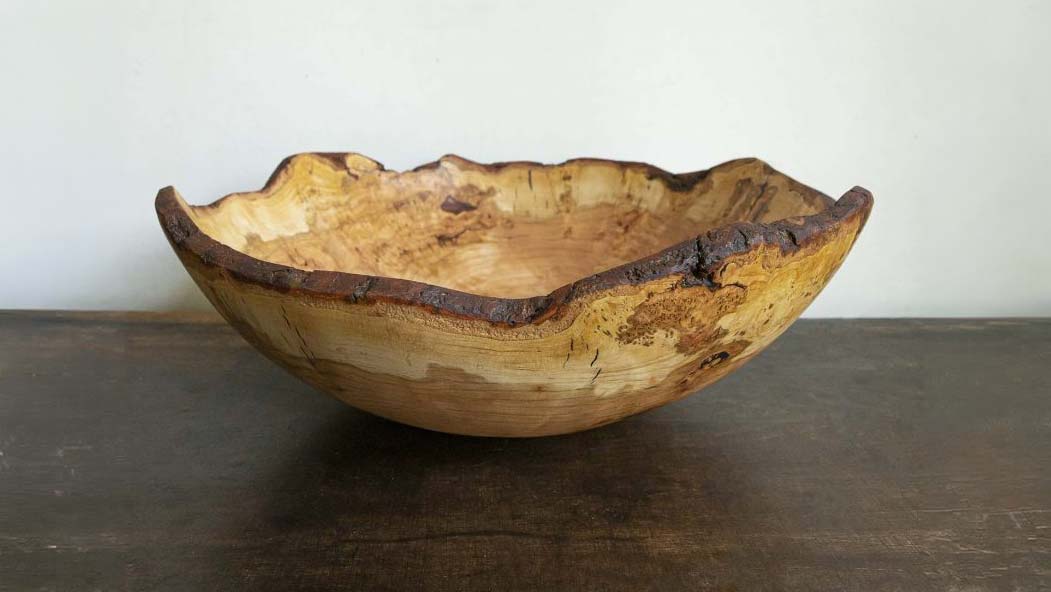
From the outside a burl looks like a wart on the tree, gnarled and homely. Cut it open and it’s the most figured wood you’ll ever see. The grain inside runs in every direction at once, full of little dormant buds that read as eyes and swirls. No two burls grow the same way, which means no two burl bowls can either. There’s nothing to copy from. The tree already decided.
Spencer turns these into one-of-a-kind bowls. A cherry burl is rare, and it’s slow, unpredictable work, because the wild grain wants to tear and the shape fights a clean line. He turns the inside smooth and often leaves the rim raw, following the natural edge of the burl the way it grew, bark and all in places. Set one on a table and it carries the room on its own. You don’t really fill it. You let it sit there. Each one starts as the part of the tree most mills would throw out, which is the part of the story we like best. You can see whatever we have on hand among our one-of-a-kind burl bowls, and because of what they are, that selection is never the same twice.
Living with cherry
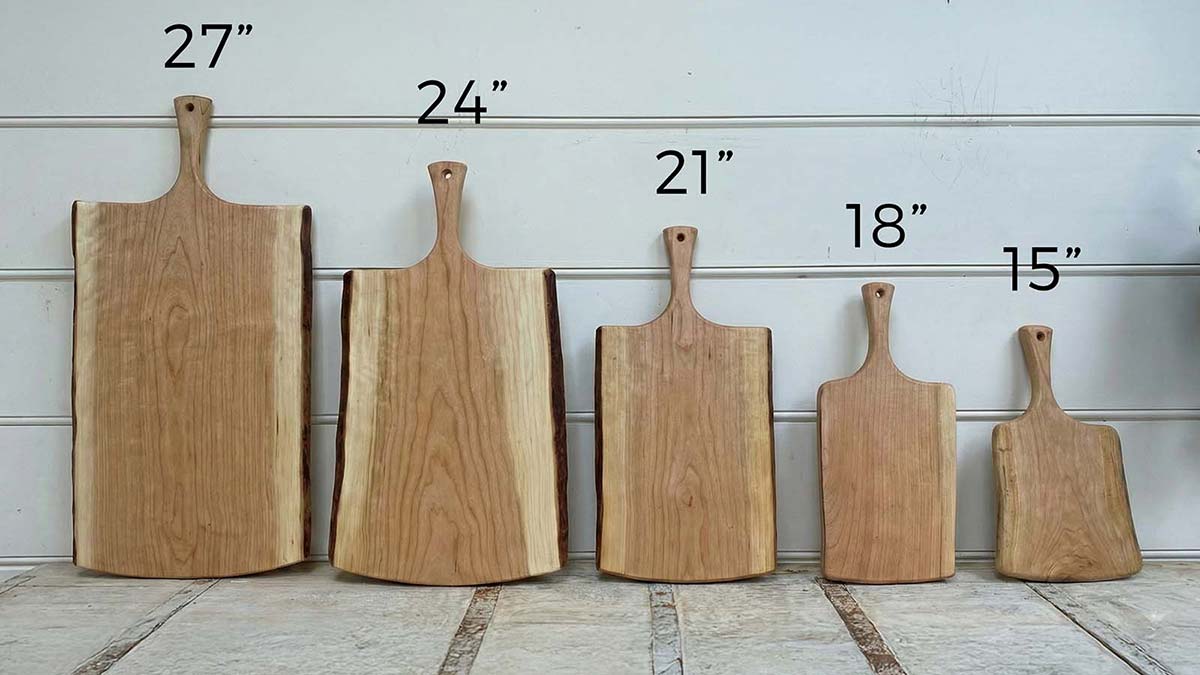
If you bring a cherry piece home, give it a little light and let it do its thing. The color you fall for on the first day is only the first version of it. Keep it out of the dishwasher, wash and dry it by hand, and rub in a coat of our beeswax and mineral oil when the surface starts to look dry. The oil feeds the grain and brings up that deepening red.
That’s the quiet argument for cherry. A cherry bowl or cutting board isn’t finished when it leaves the shop. It keeps going, on your shelf, in your light, for as long as you keep it. Years from now it will be deeper in color and more yours than the day it arrived.