
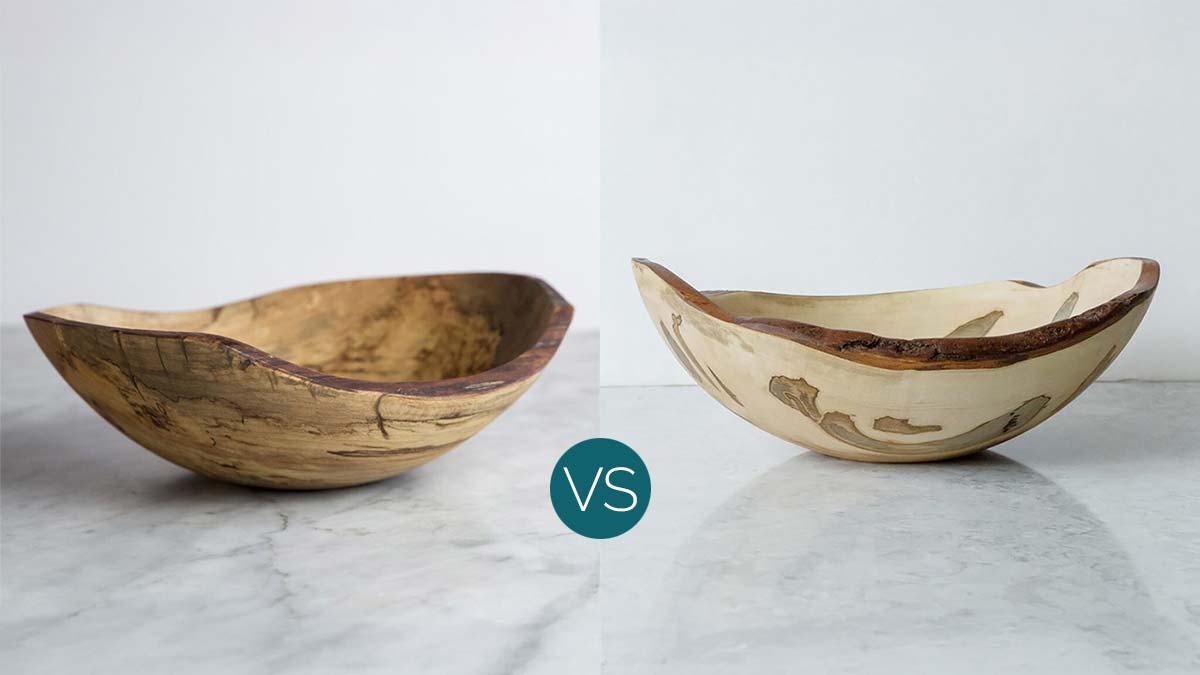
Spalted Maple vs. Ambrosia Maple: Understanding Maple Wood Markings, Streaks, and Grain
Maple doesn’t behave the same from one tree to the next. Anyone who works with maple lumber learns that fast.
One board might come off a sugar maple. Clean. Pale. Almost no discoloration. Another board from red maple or silver maple might look completely different. Worm holes. A stain that cuts across the sapwood. Maybe a streak from an ambrosia beetle running through the timber.
Woodworkers run into this every day in the shop. You break down a log, send a piece across the planer, and the wood grain suddenly shows something unexpected. Sometimes it’s a soft wavy pattern. Other times you hit a patch where fungus started moving through the fibers, the early stage of spalting.
Not all of these markings mean trouble. A little discoloration tells you where moisture sat. Dark lines usually mean fungus reached the right point but didn’t weaken the hardwood. It’s a balance. Catch it too late and the structural integrity of the wood drops fast. Catch it at the right moment and you get something one-of-a-kind.
Different species of maple react differently, too. Soft maple shows these changes more often than dense sugar maple. Curly maple, birdseye maple, and quilted maple all add their own quirks before you even get to spalting or beetle activity.
For anyone in woodworking — carpentry, furniture design, cabinetry, even people making musical instruments — it’s worth understanding what these markings mean. Ambrosia maple and spalted maple are two of the most common “changed” forms of solid wood, and each offers a different kind of visual interest.
What Makes Ambrosia Maple Unique: Beetle Tunnels, Gray Streaks, and Soft Maple Color
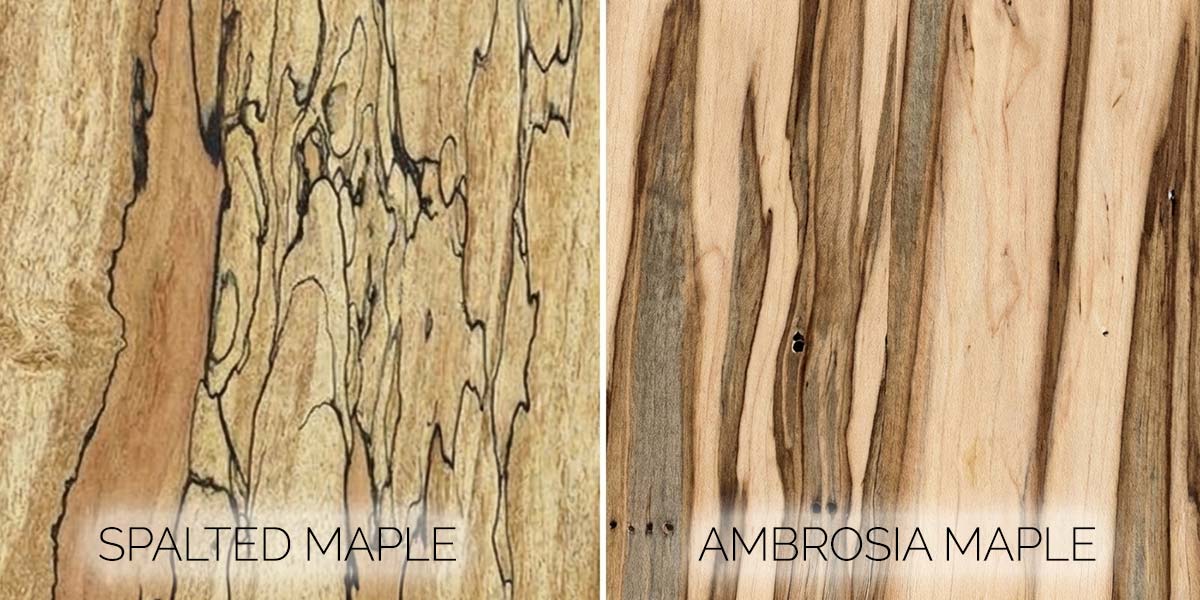
Ambrosia maple starts when an ambrosia beetle settles into the sapwood of a maple tree. The beetle carries a fungal spore, and that spore leaves a mark the tree can’t cover. Once the log is cut and the lumber begins to dry, the grain shows the trail. Sometimes it’s a narrow stain. Other times the line spreads into a soft, striped patch. The color depends on the moisture in the wood and the type of maple the beetle moved through. No two pieces react the same way.
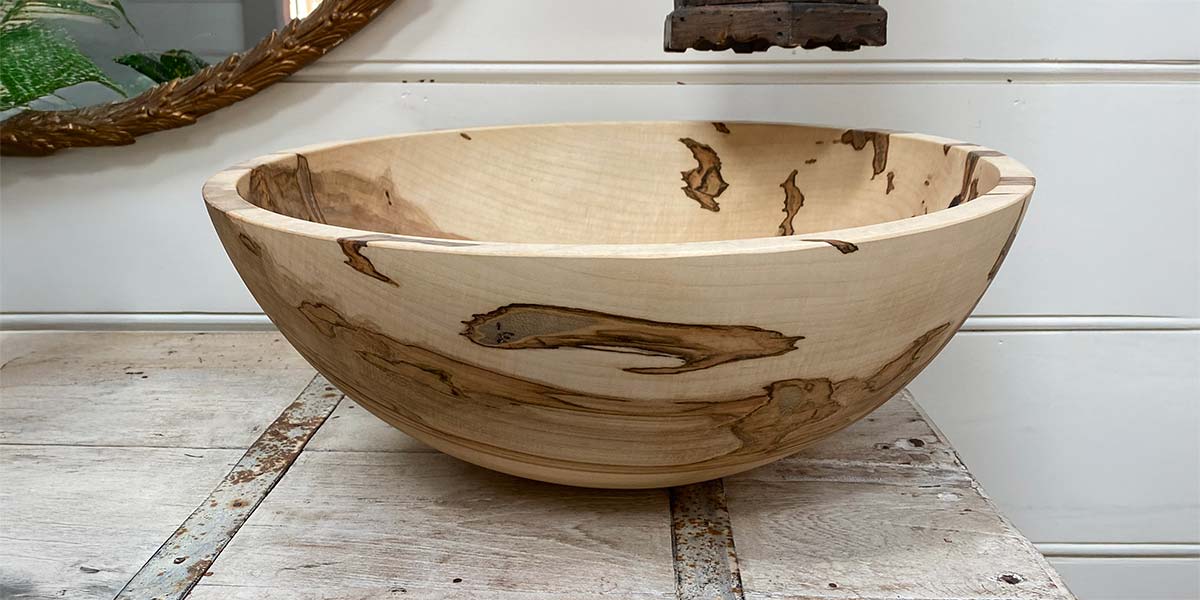
Some pieces of ambrosia maple are faint. Others show long gray lines that stand out the moment the planer touches the surface. The hue shifts a little from one board to the next. That depends on the type of maple — soft maple, silver maple, and red maple tend to show these markings more often than dense sugar maple or acer species used for veneer.
Even when you see a tunnel from the beetle, the hardwood itself holds together. There’s no real rot in most of these boards. The decay hasn’t taken over. Woodworkers trust ambrosia maple because it stays easy to work. It’s easier to handle on the lathe, and power tools cut cleanly without grabbing.
One bowl blank might open with streaks running across the sap. Another might have only a single line. The uniqueness of each piece is part of the natural beauty. Grain patterns shift around the staining, creating shapes you wouldn’t get in plain maple lumber. It’s the kind of wood that makes simple woodworking related topics — cutting boards, small wood furniture pieces, even live edge slabs — feel more personal.
Ambrosia maple offers those subtle changes that show up only when the tree has lived long enough for the beetle to pass through but not long enough for decay to take hold. Easy to work. Full of character. Every board looks a little different, and that’s the appeal.
What Creates Spalted Maple: Fungal Lines, Dark Veining, and Spalted Wood Patterns
Spalted maple begins long before the board reaches the shop. A maple tree falls or stands just long enough in damp soil for fungus to find its way into the fibers. The fungus moves through the wood slowly, leaving thin boundaries where one colony meets another. These are the dark lines you see in a finished bowl or board. They’re sharp in some places and faint in others. It’s almost like they were drawn by hand.
As the fungus spreads, the maple starts to change color. The pale tone shifts here and there, sometimes warming, sometimes turning almost shadowed. None of this happens evenly. One side of a log might show heavy lines, while the other barely reacts. A woodworker won’t know what they’re looking at until the first cut exposes the grain. That moment tells you how far the spalting reached and whether the wood is still strong enough to use.
Spalted maple sits in a strange middle ground between decay and durability. When the process stops at the right time, the wood keeps its hardness. A section that looks delicate on the surface might still be solid underneath. If the fungus goes too far, the fibers weaken and the piece won’t hold up under tools. But when the balance is right, the board shows a pattern that no other wood can match, one of those rare natural changes that adds its own story.
These lines — the dark veining, the odd curves, the edges where the fungus slowed down — give spalted maple its unique characteristics. No two patterns repeat. Even pieces from the same log can look unrelated once they’re milled. That unpredictability is a big part of why woodworkers search for it, especially when they want something that feels genuinely one-of-a-kind.
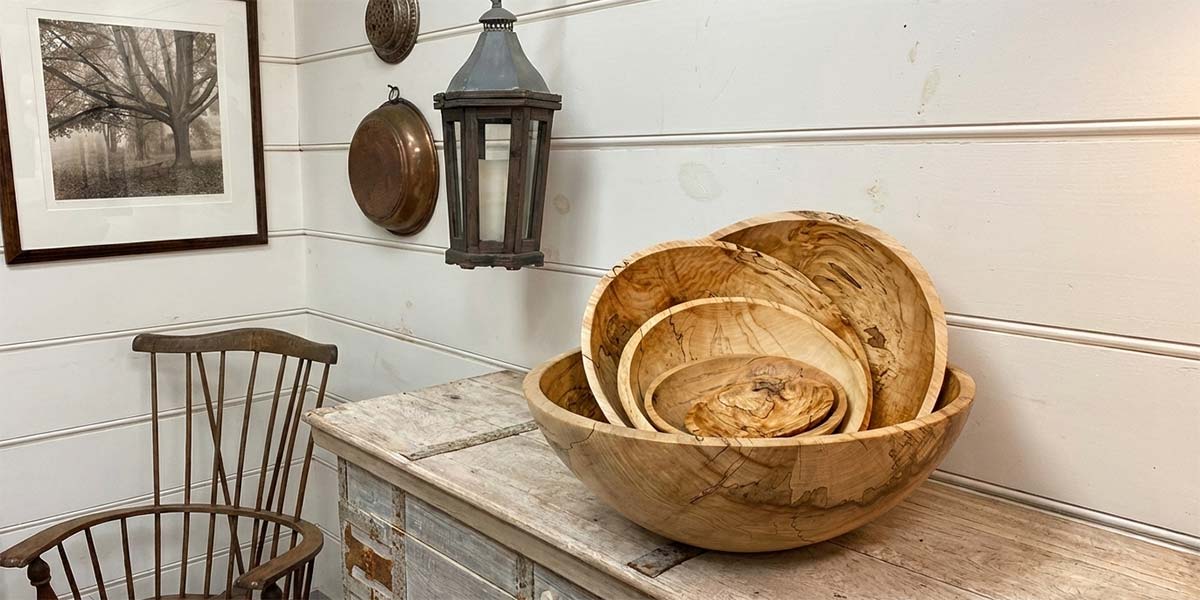
Spencer Peterman’s best-selling wooden bowls are made from spalted maple. The contrast draws people in. The lines sit differently on every bowl, and the grain often reveals details you couldn’t plan for. It’s a wood that stands out on its own, whether you’re turning a simple round form or shaping something a little more unusual.
Maple vs. Maple: The Differences in Grain, Color, Durability, and Workability
Ambrosia maple and spalted maple share a name, but that’s about where the similarities end. Ambrosia usually keeps the soft look you see in lighter maples like silver maple. The streaks run with the wood grain, almost like the tree grew right around them. Spalted maple goes in another direction. The fungus draws its own path, cutting across the grain wherever it happened to travel.
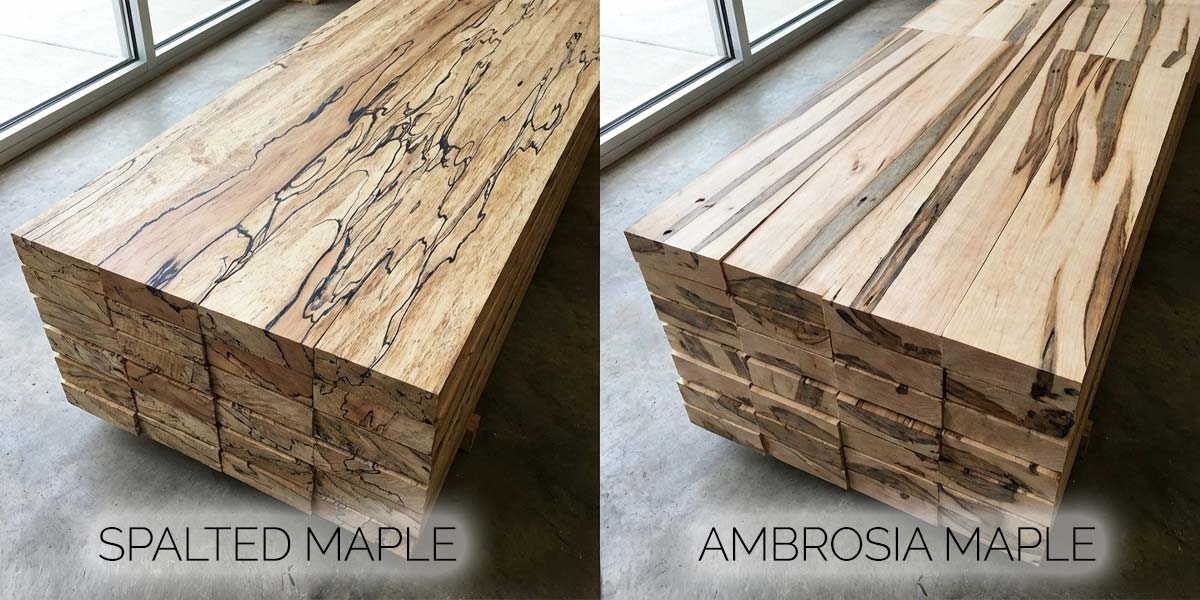
When you’re working in the shop, the two woods don’t behave the same. Ambrosia maple feels familiar on most tools. It cuts cleanly and doesn’t surprise you much. Spalted maple can shift from firm to slightly soft in a few inches, so a woodworker pays a little more attention while shaping a bowl or trimming an edge. You get used to checking the surface as you go.
Once the finish goes on, each type shows its personality. Ambrosia has a quieter look — soft shifts in color, the occasional streak, nothing too loud. Spalted maple jumps out more. Dark lines, sharper contrasts, small patterns that show up only in certain lighting. They’re both solid choices. The right one depends on the style you want and what the grain happens to do in the piece you’re making.
Choosing Between Ambrosia Maple and Spalted Maple for Bowls, Boards, and Live Edge Pieces
Most people first notice the difference between these two woods when they pick up a bowl. Ambrosia maple gives you a softer look — the gentle streaks move with the curve, and the wood feels familiar under your hands. It works well for round bowls you use every day. Smooth, practical, easy to keep in rotation.
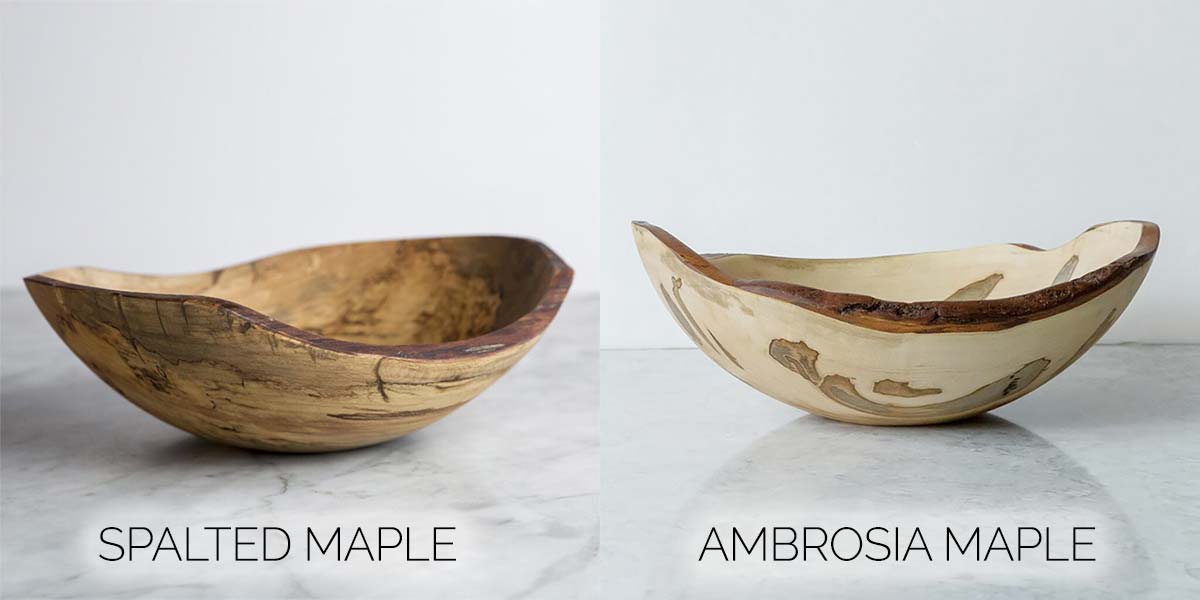
Spalted maple bowls are another thing entirely. The lines show up in places you don’t expect, and the contrast pulls your eye right in. Some bowls open with one bold line running along the grain. Others reveal smaller marks once the finish goes on. It’s the kind of wood people reach for when they want something that feels personal or a little surprising.
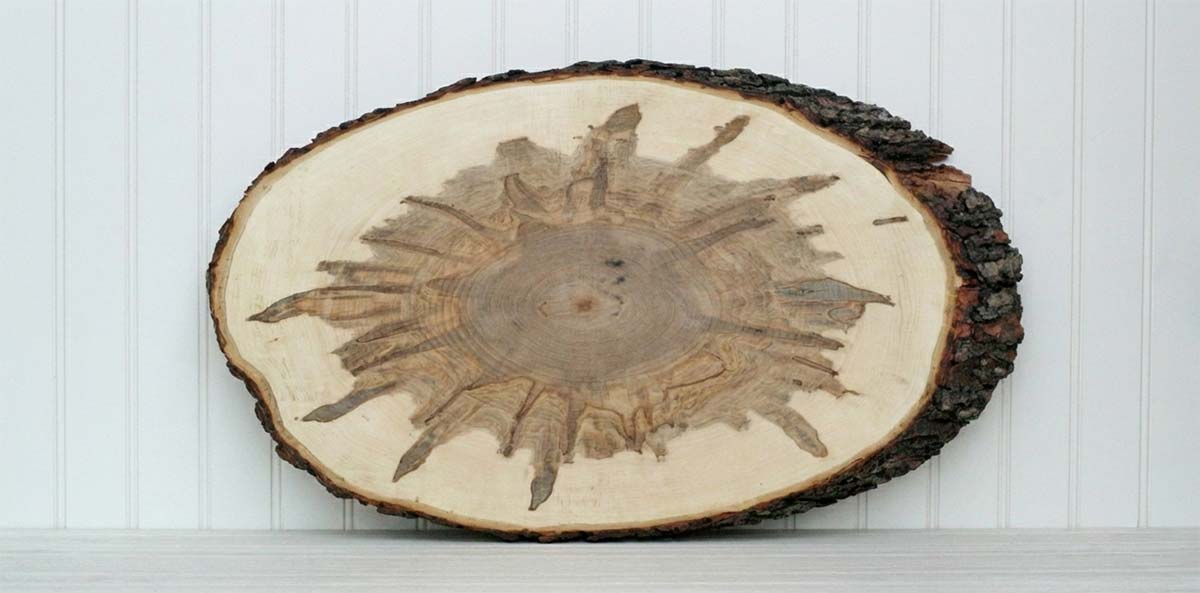
The same is true for boards. Ambrosia maple makes dependable cutting boards and charcuterie boards with just a touch of variation. Spalted maple boards are better suited for serving. The dark veining looks beautiful on a table, especially in a long board with a bit of live edge left in place.
Live edge pieces fall somewhere in the middle. Ambrosia maple keeps the natural shape of the tree without overwhelming it. Spalted maple adds a bit more drama. Either one can work — it just depends on the mood you want in the final piece and how the grain moves through the slab.