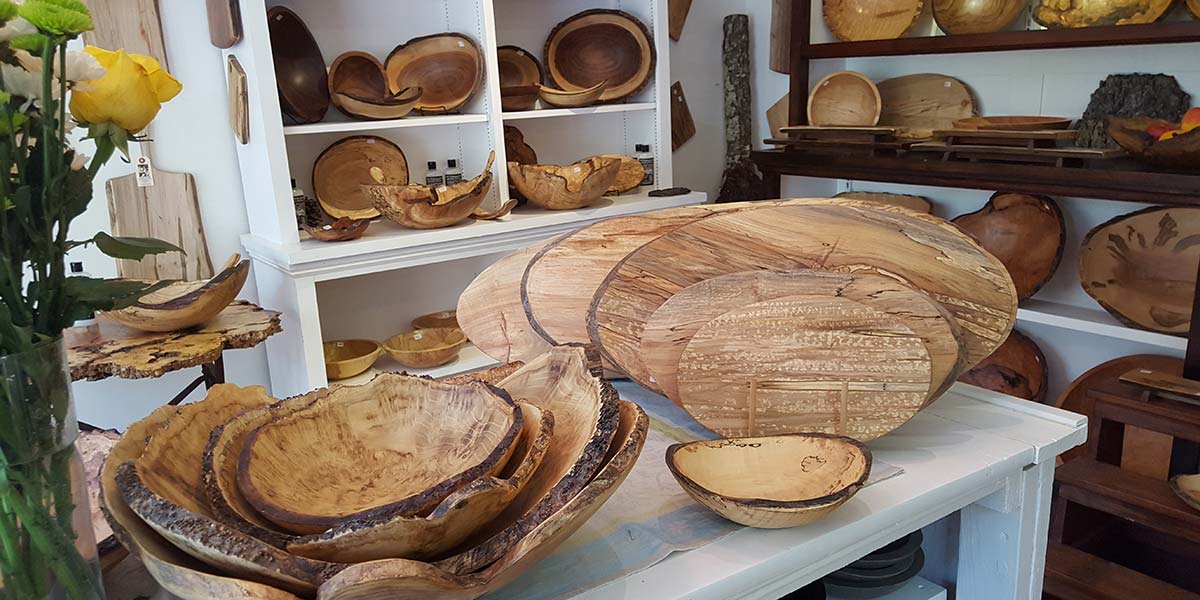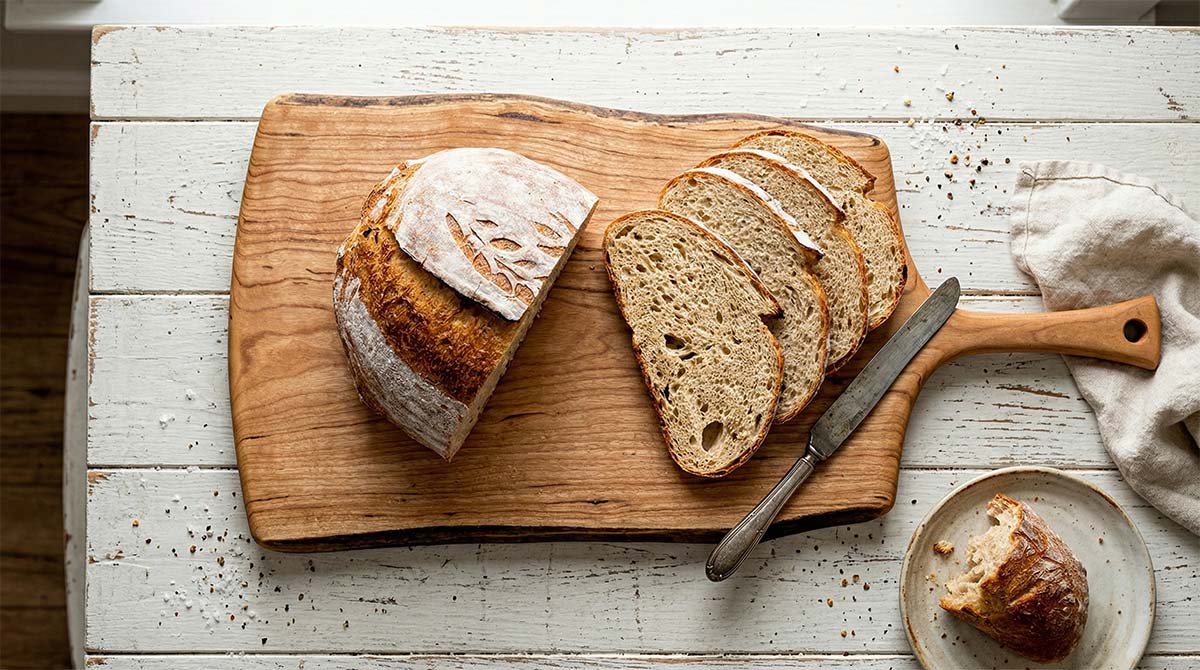
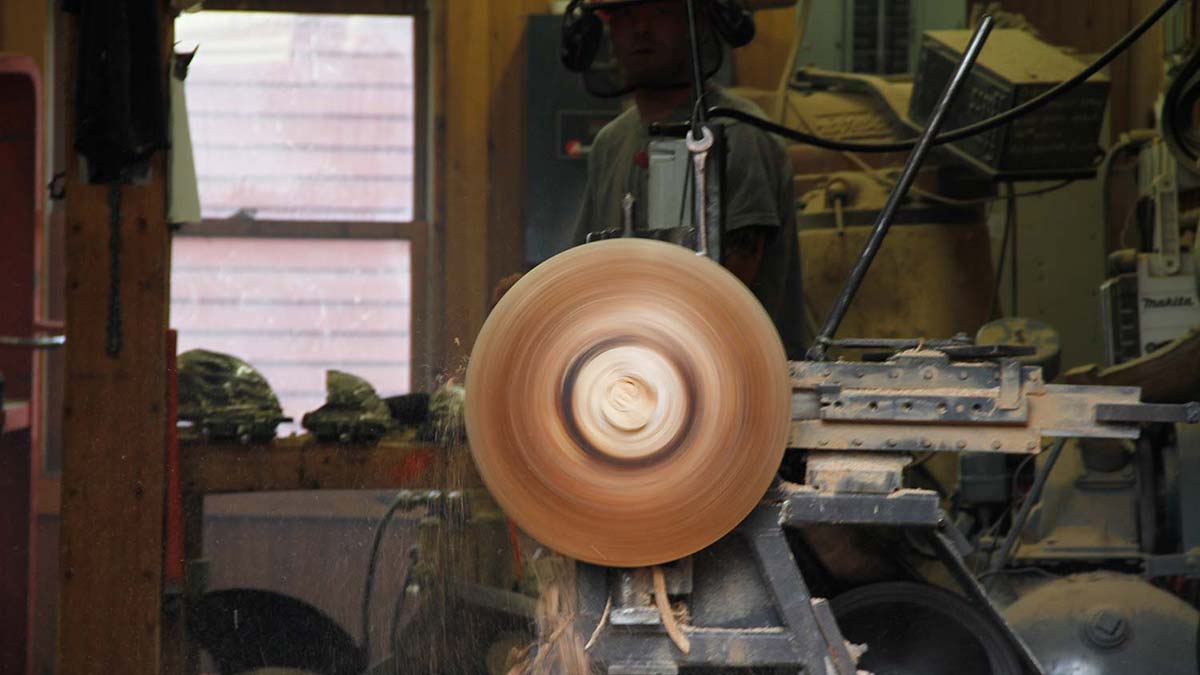
What Is a Hand-Turned Wooden Bowl?
A hand-turned wooden bowl begins with a real piece of wood, not a molded form or factory-cut blank designed to look uniform. At Spencer Peterman, most of the trees we work with come from New England yards, old properties, and local tree services. Many were storm-fallen or already headed for the chipper before they found their way into the workshop.
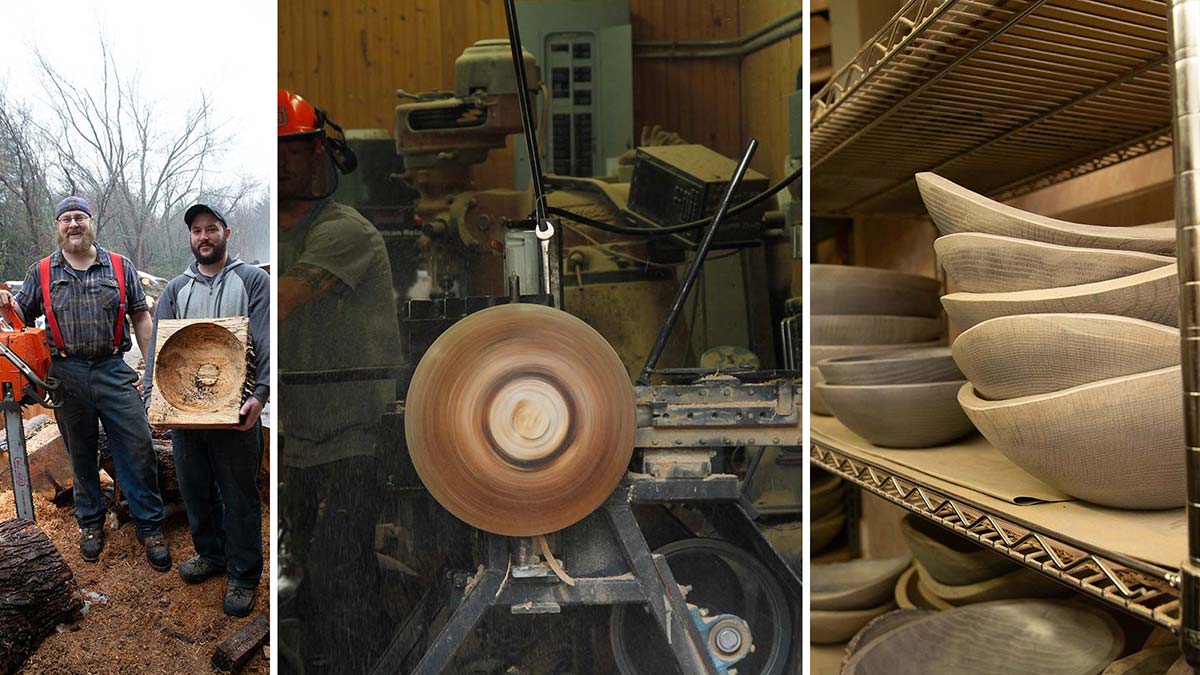
Once a section of the log is cut and prepared, it’s mounted on a lathe and shaped by hand as the wood spins. Every cut changes the form a little. The grain shifts. A spalting line appears. A curve in the tree reveals itself halfway through the turning process. The bowl tells you where it wants to go.
That unpredictability is part of why handmade bowls hold people’s attention.
No two pieces turn out the same, even when they come from the same tree. Walnut cuts differently than maple. A section taken lower on the trunk might reveal darker grain or stronger figuring than wood farther up.
Some bowls stay round while they dry. Others move a little as the moisture leaves the wood.
You usually find out somewhere in the middle of the process.
How hand turning differs from machine-made bowls
Factory-made wooden bowls are designed for consistency. The goal is usually to produce the same shape, size, and finish over and over again with as little variation as possible.
Hand turning works differently.
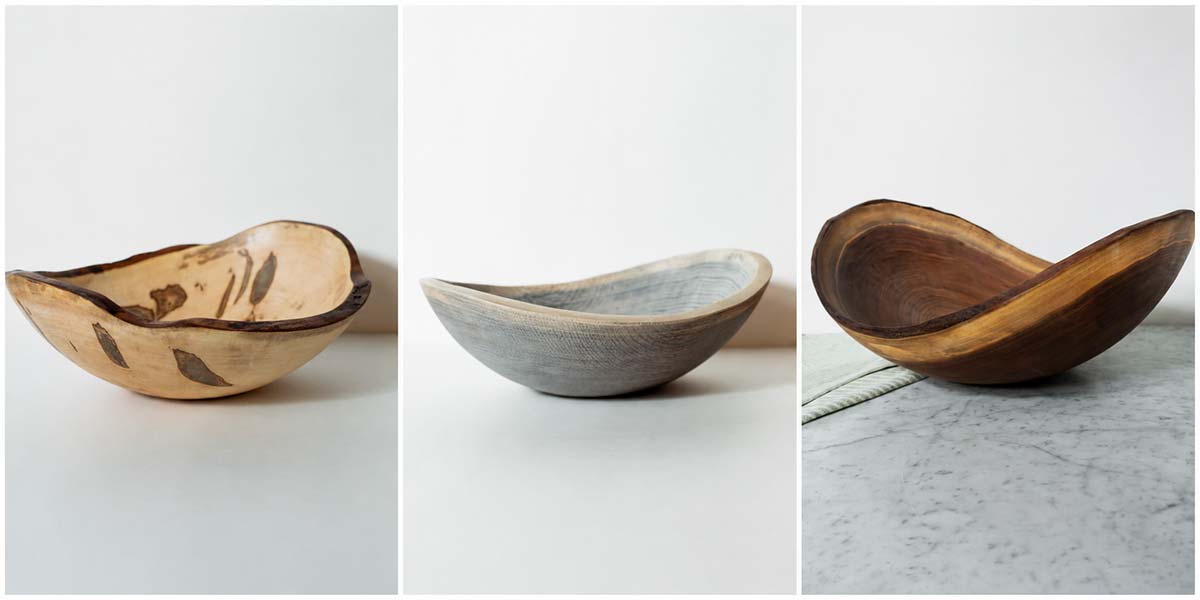
When a bowl is shaped by hand, the person at the lathe responds to the material in front of them. A knot, curl in the grain, bark inclusion, or spalting pattern may change the final shape entirely. Some pieces call for a thinner edge. Others need a heavier wall to preserve the character of the wood.
You can feel the difference in the finished bowl. The surface has life to it. The grain moves naturally across the form instead of looking stamped or repeated. Small variations become part of the piece rather than flaws to remove.
That’s especially true with woods like spalted maple and burl, where the natural markings are impossible to duplicate.
Why we still turn bowls by hand in a modern workshop
There are certainly faster ways to make wooden bowls.
But speed is not really the point.
Turning bowls by hand allows us to work with irregular pieces of wood that larger production systems would reject outright. A storm-fallen maple with unusual spalting. A cherry tree with a twisted grain pattern. A piece of walnut with natural movement and color variation.
Those are often the most interesting bowls in the shop.
Working by hand also gives us more control over the final shape and feel of each piece. Some bowls are meant for serving salads at the center of the table. Others become fruit bowls, countertop pieces, or everyday catchalls near the front door. The shape evolves slowly as the bowl is turned, sanded, dried, and finished.
Nothing about the process feels rushed.
The connection between grain, shape, and craftsmanship
Wood has direction. It has tension, softness, density, movement, and figure. Good bowl turning depends on paying attention to all of it.
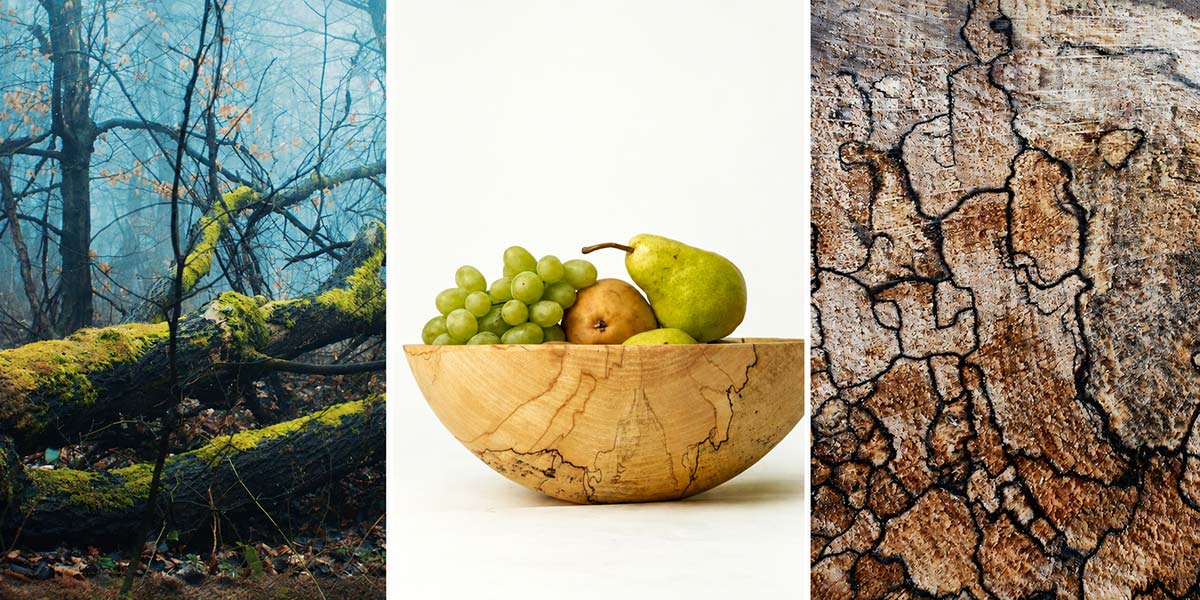
The grain pattern in a hand-turned wooden bowl does not sit on the surface like decoration. It becomes part of the form itself. A curve in the bowl may follow the sweep of the grain. A natural edge may preserve part of the tree’s original shape. Dark spalting lines might pull your eye toward the center without any carving or added detail.
That relationship between material and form is what keeps hand-turned wooden bowls from feeling manufactured.
The craft is not about forcing the wood into a perfect shape. It’s about working with what’s already there and letting the character of the tree remain visible in the finished piece.
From Fallen Trees to Bowl Blanks
Most of the wood that enters the Spencer Peterman workshop was never meant for a lumber yard.
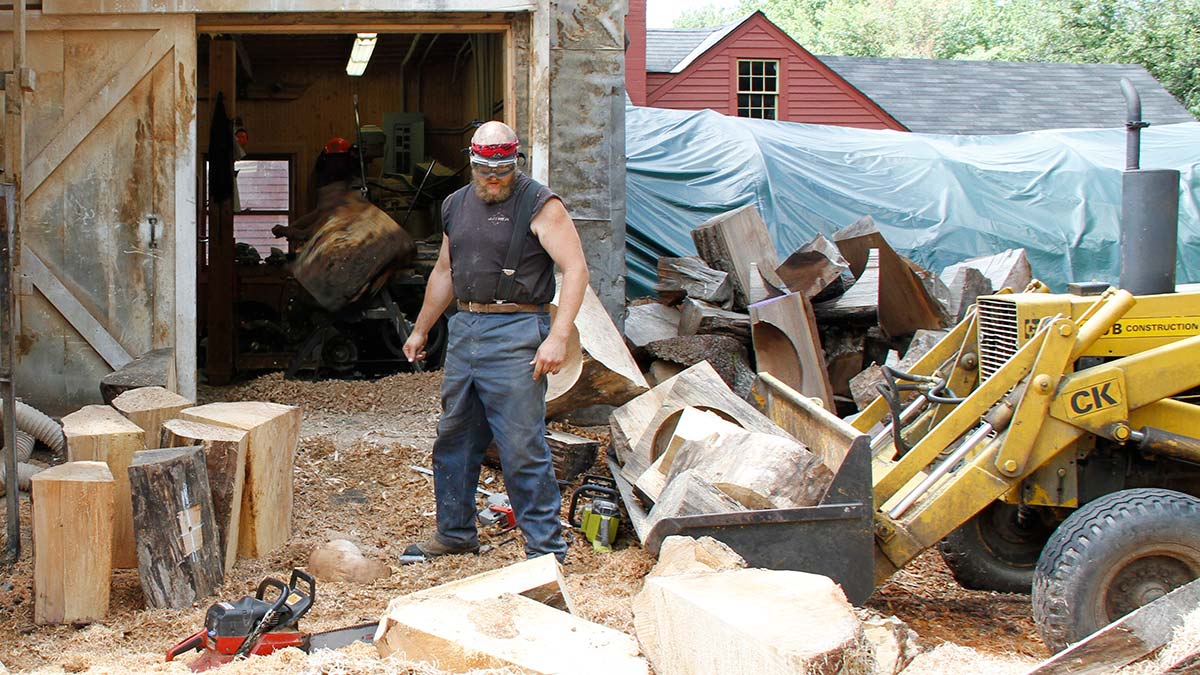
A maple comes down during a late winter storm. An old cherry tree reaches the end of its life in someone’s backyard. A black walnut splits after years of standing at the edge of a field. Local tree crews cut the trunk into sections, haul it away, and in most cases, it disappears into mulch, firewood, or burn piles.
That’s usually where the story ends.
For Spencer, it’s where the work begins.
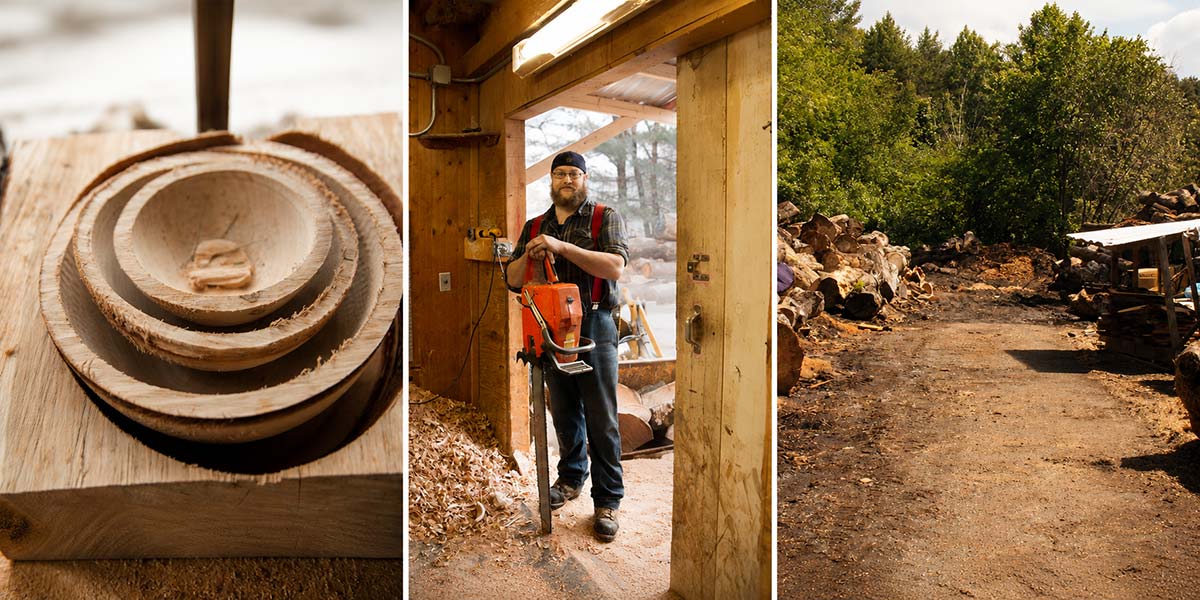
Some logs arrive rough and muddy, fresh from the ground. Others have already started to dry and crack at the ends. A few carry signs of spalting beneath the bark. Sometimes you can smell the difference before the chainsaw even touches the wood.
Not every log becomes a bowl. Some split too deeply. Others hide soft spots or internal damage that only reveals itself once the cut is made. Part of the process is learning what the tree will allow.
How Spencer Peterman sources storm-fallen New England hardwoods
The workshop relies heavily on locally salvaged hardwoods from across New England. Much of it comes through relationships built over years with arborists, tree services, property owners, and local crews who know Spencer is looking for unusual material.
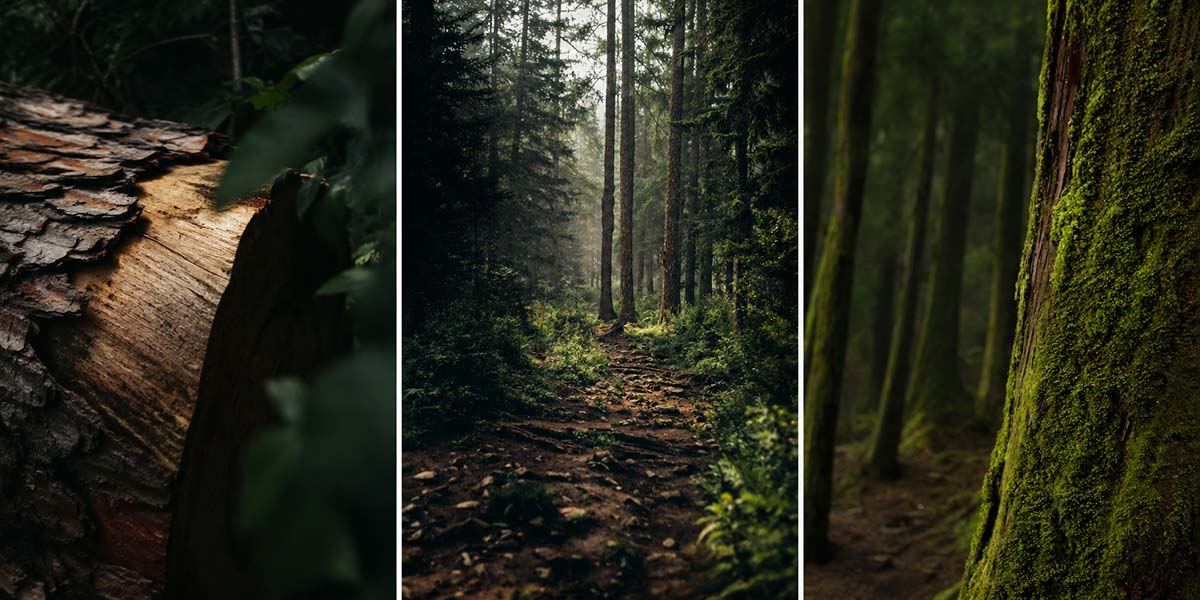
The wood does not arrive sorted into neat categories.
One week might bring in heavily figured maple. Another might bring oak darkened by weather and age. Occasionally a burl appears inside a trunk where nobody expected it. Those pieces usually stop the workshop for a minute. Everyone wants to see what’s inside.
There’s a practical side to using salvaged wood too. Working this way keeps usable hardwoods in circulation instead of sending them straight into waste streams. But the bigger draw is character. Older trees carry marks that younger commercial lumber often doesn’t.
Tight grain. Mineral streaking. Insect tracing. Weather exposure. Natural movement.
The bowls hold onto some of that history.
Why salvaged wood creates one-of-a-kind bowls
Wood changes constantly while it grows. Soil conditions shift. Seasons leave stress marks. Limbs stretch toward sunlight. Storms reshape the canopy. Even two trees growing side by side can develop completely different grain patterns over time.
That variation becomes visible once the turning starts.
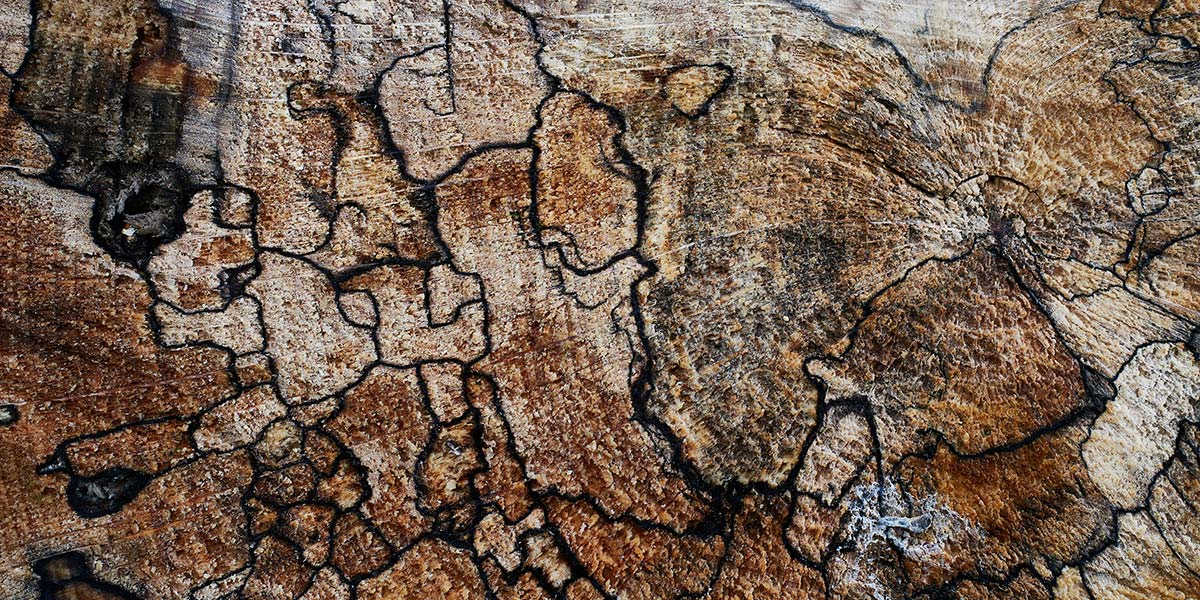
A bowl may reveal spalting lines that stayed hidden beneath the bark until the turning began. Walnut can shift from dark brown at the center into pale streaks near the outer edge. Cherry changes slowly once it leaves the workshop, especially in rooms with a lot of daylight. Oak sometimes looks fairly plain at first, then the grain sharpens during sanding and suddenly the whole surface changes.
You cannot predict all of it ahead of time.
That’s one reason handmade bowls feel different from factory-made pieces. The tree has already been through years of weather, stress, growth, and change before the turning even starts. Some of that history stays visible in the finished bowl.
The woods we return to again and again
Certain woods keep pulling us back into the same process.
Not because they behave perfectly. Usually they don’t.
Some species reveal surprising grain once the first cuts are made. Others deepen in color after finishing or develop more character as the bowl ages in someone’s home. A few simply feel right on the lathe from the beginning.
A clean maple bowl feels completely different from walnut. Cherry turns differently than oak. Some woods produce sharp contrast in the grain. Others create subtle surfaces that reveal more the longer you live with them.
Over time, certain species become favorites.
Spalted maple wooden bowls
Spalted maple is one of the most recognizable woods used at Spencer Peterman.
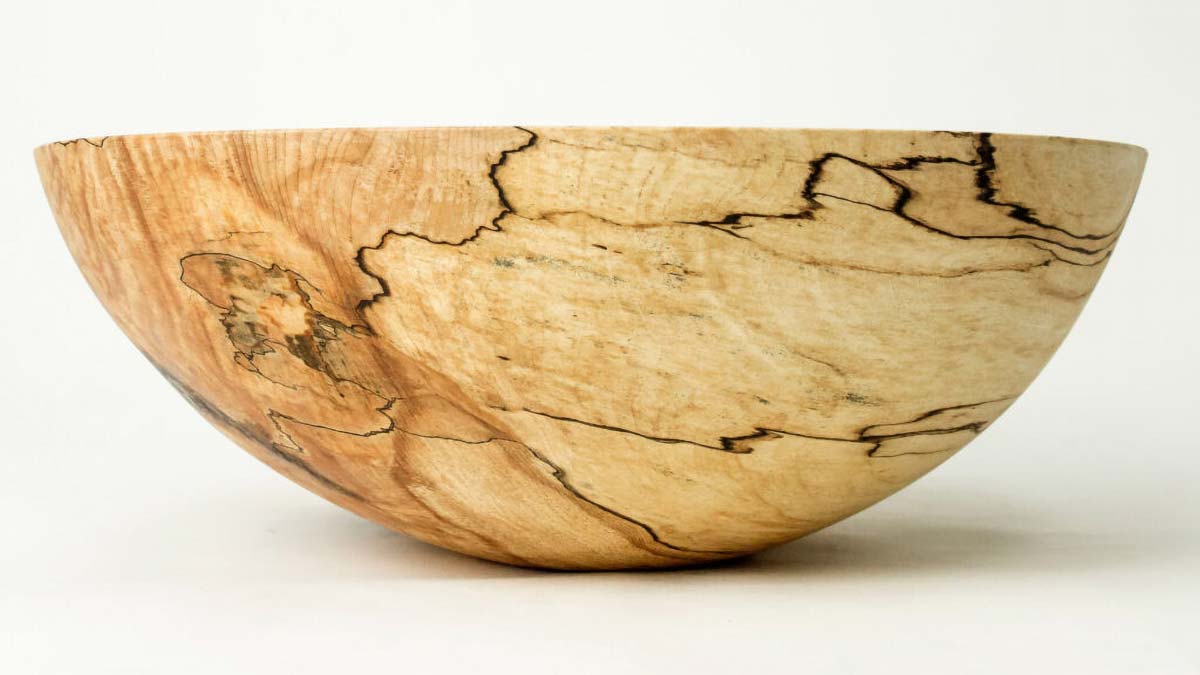
The dark lines found in spalted maple come from natural fungal activity that develops while the tree begins to break down. Those markings create dramatic contrast across the surface of the bowl, almost like ink moving through the grain.
No pattern repeats itself exactly.
Some bowls carry delicate feathering. Others develop bold black lines that cut across the entire form. The effect changes depending on where the wood came from and how far the spalting process had progressed before the tree was salvaged.
Ambrosia maple wooden bowls
Ambrosia maple carries a different kind of character.
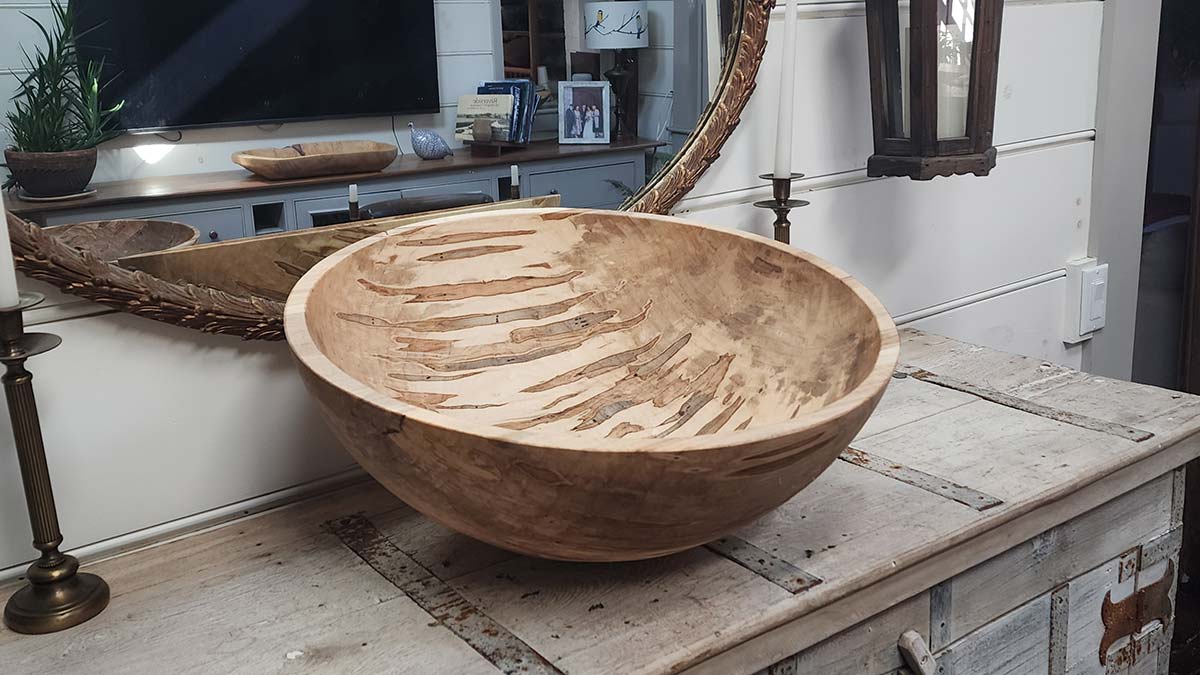
The streaks inside the wood come from ambrosia beetles, which leave narrow markings as they move through the tree. What remains after turning is subtle movement in the grain, often with gray, brown, or olive-toned tracing spread throughout the maple.
The wood still feels light and clean overall, but there’s more happening beneath the surface.
Ambrosia maple bowls tend to work especially well in kitchens and dining spaces because the grain has detail without becoming too heavy visually.
Black walnut wooden bowls
Black walnut feels different the moment it hits the lathe.
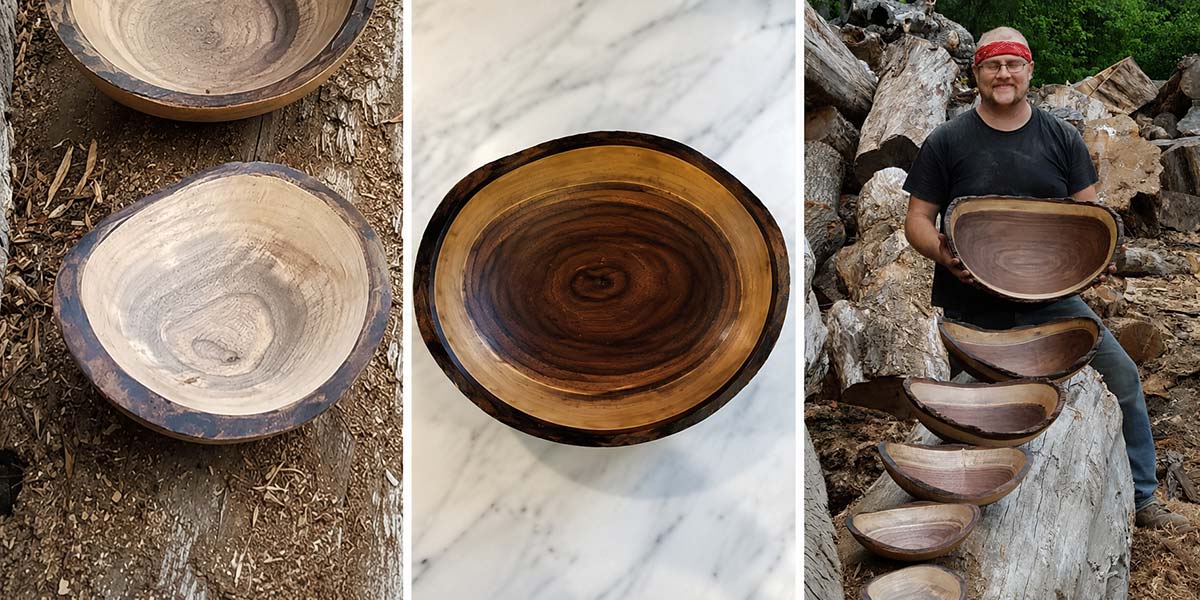
The color is deeper than maple or cherry, sometimes almost dark enough to look scorched near the center of the bowl. Then a lighter band appears near the outer edge where the sapwood stayed intact. That contrast is part of what draws people to walnut in the first place.
It has weight to it too.
The shavings fall heavier onto the floor during turning, and the grain usually reads a little bolder once the finish goes on. Some walnut bowls come out clean and uniform. Others pick up streaking or subtle movement that only becomes visible after sanding.
Walnut changes slowly in a home.
The surface softens with handling over the years. Light catches the grain differently once the bowl has been used for a while, especially larger serving bowls that stay out on a kitchen table or counter instead of tucked away in a cabinet.
Some of the larger walnut bowls end up becoming permanent fixtures in a room. Fruit bowls. Centerpieces. Catchalls near the entryway.
They tend to stay where people can see them.
Cherry and oak wooden bowls
Cherry behaves differently from almost every other wood in the shop.
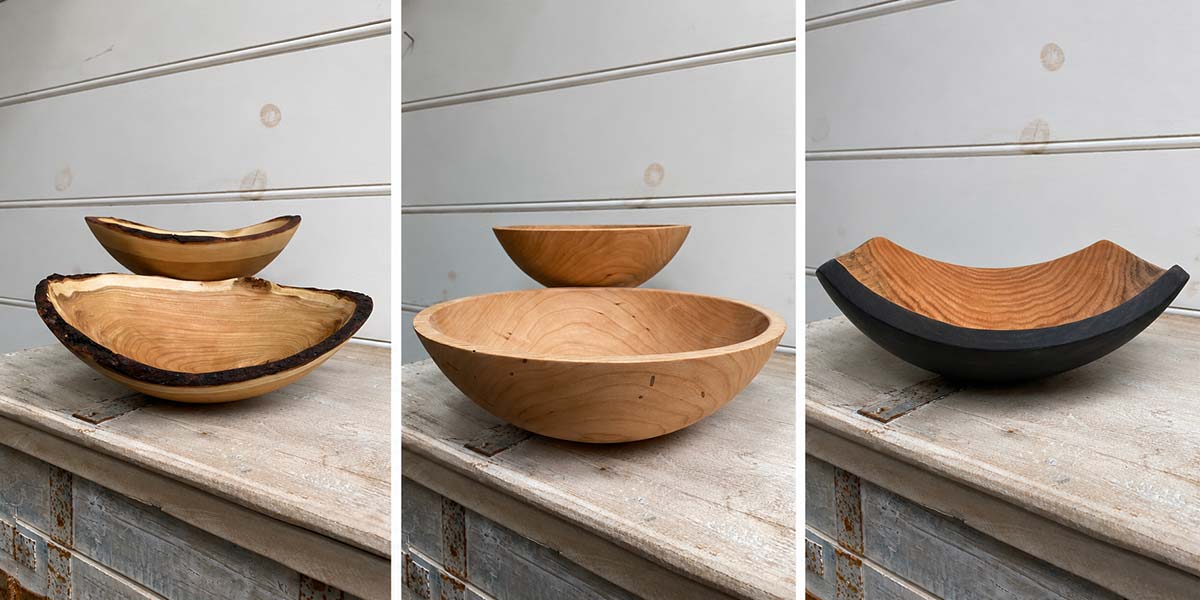
Freshly turned cherry can look surprisingly light at first. Then time starts working on it. A bowl that began with soft amber tones gradually deepens over months of sunlight and everyday use. Older cherry develops a richness that doesn’t feel glossy or artificial. The color just settles in naturally.
Oak has a little more texture to it.
Some pieces reveal strong grain lines the second the tools begin cutting. Others stay fairly hidden until the sanding stage, when the surface starts opening up and the figure becomes easier to read by hand.
Oak also carries more variation than people expect. Certain bowls feel refined and smooth. Others lean more rugged, especially pieces cut from older trees with pronounced grain movement or weather exposure.
That variation is part of what keeps bowl turning interesting. The wood never behaves exactly the same way twice.
The Bowl Turning Process
Every hand-turned wooden bowl starts out rough.
The log has already been cut down into manageable sections by the time it reaches the workshop, but at this stage it still looks more like firewood than kitchenware. Bark may still cling to the edges. The surface is uneven. Fresh cuts carry moisture and sap. Some pieces already show signs of spalting or figuring before they ever touch the lathe.
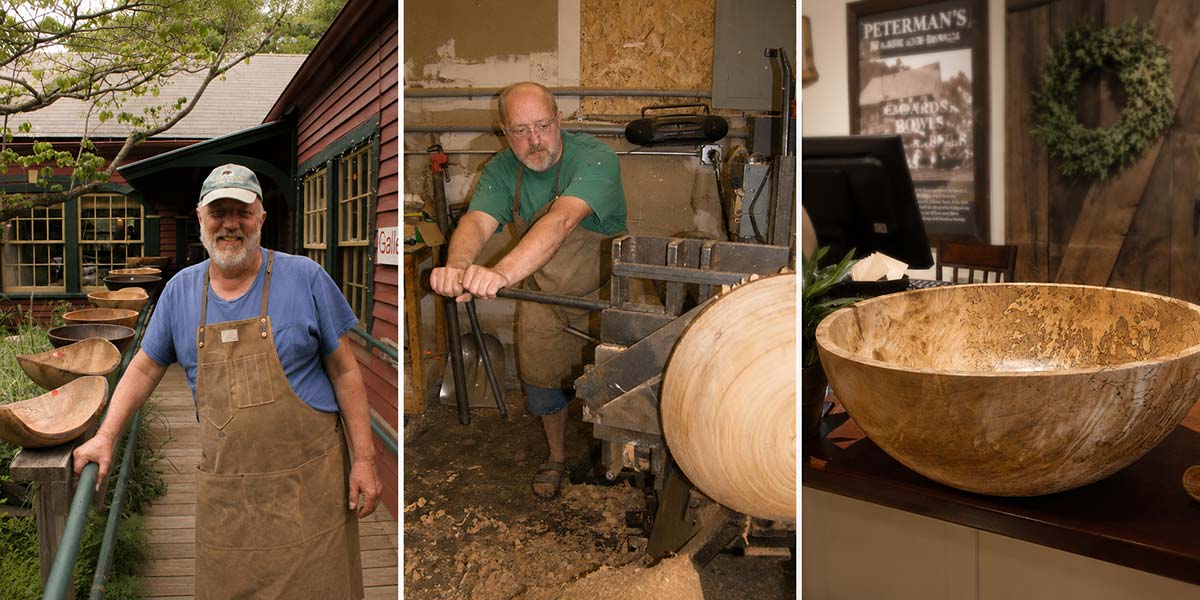
Others stay wait until the turning begins.
The process moves slowly at first. There’s weight to the wood, especially with larger maple or oak sections, and every piece behaves differently depending on species, moisture content, and where it came from inside the tree.
That unpredictability never really disappears. Even after years of turning bowls, certain logs still surprise you once the grain opens up.
Preparing the wood for the lathe
Before a bowl can be turned, the wood has to be trimmed, balanced, and inspected carefully.
Not every section of a tree is usable. Cracks sometimes travel deeper than expected. A burl may hide voids beneath the surface. Some pieces carry too much internal stress and risk splitting during the turning process. Other cuts reveal beautiful grain immediately, enough to stop the room for a minute while everyone looks at the fresh face of the wood.
Once the right section is chosen, it’s shaped into a rough blank and secured onto the lathe.
This stage matters more than most people realize.
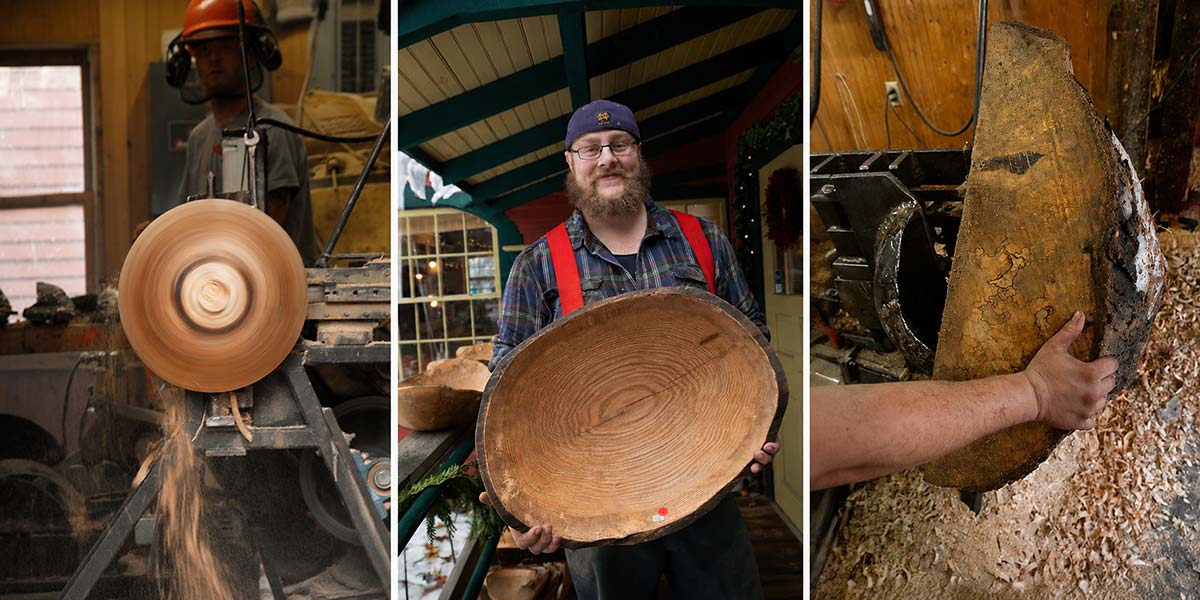
How the blank is mounted affects the balance of the bowl, the direction of the grain, and sometimes the final shape itself. A natural edge bowl, for example, may be positioned specifically to preserve part of the outer contour of the tree. Another piece may be centered tightly to highlight symmetry and grain movement across the finished form.
The first cuts are careful and deliberate. The outside shape begins to emerge before the interior is hollowed. Shavings gather quickly around the lathe. Thin ribbons of maple curl onto the floor. Walnut tends to fall heavier.
The smell changes with each species too.
Fresh cherry carries a warm sweetness. Oak smells earthier. Walnut has a richness to it that lingers in the workshop long after the turning stops.
How the bowl takes shape during turning
Once the blank is balanced and spinning cleanly, the bowl starts to reveal itself.
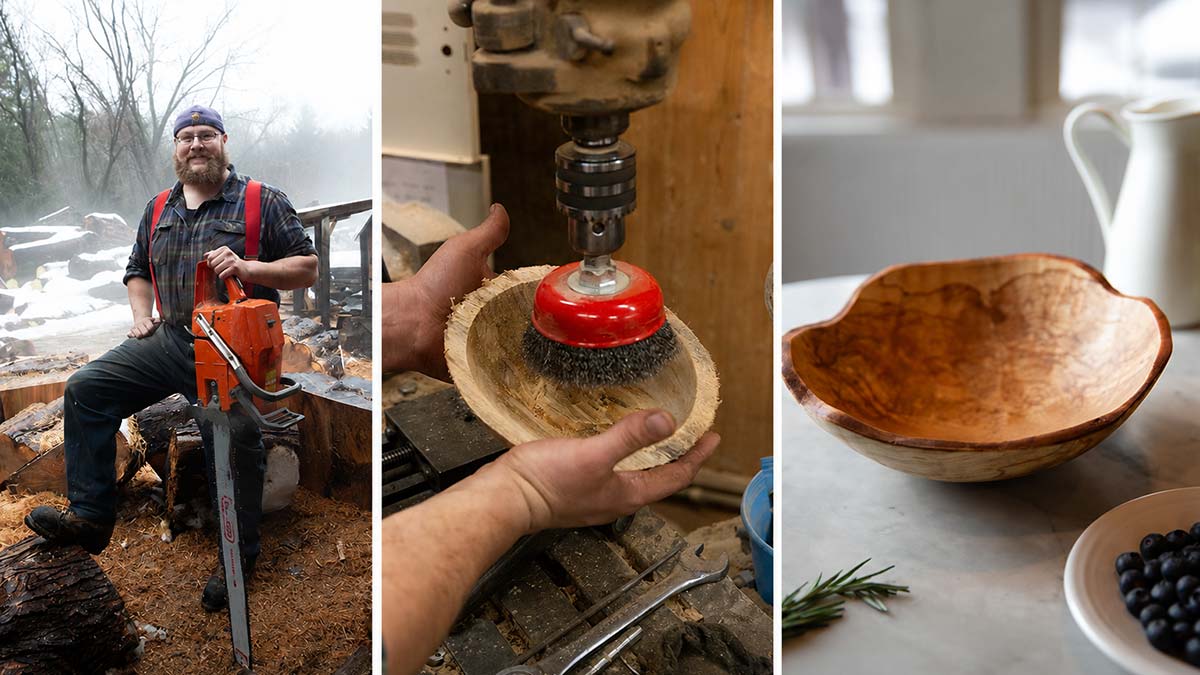
This is the stage most people picture when they think about wood turning. The lathe spins steadily while gouges and turning tools shape the form one cut at a time. Curves become smoother. The walls thin out. Grain patterns that were hidden inside the log begin moving across the surface.
There’s rhythm to it, but not repetition.
A smaller bowl may come together fairly quickly. Larger centerpiece bowls take more patience, especially when the wood has dramatic figure or uneven density. Some sections cut cleanly. Others require a lighter touch to avoid tear-out or chipping around the grain.
The shape often evolves during the process.
A bowl may begin with one intention and end somewhere slightly different because the wood suggests another direction. Maybe a spalting line becomes more dramatic than expected. Maybe the outer edge softens naturally during shaping. Sometimes preserving a small irregularity gives the finished bowl more life than sanding it away ever could.
That flexibility is part of hand turning.
The bowl is not forced into a fixed template. It develops gradually through the interaction between the material, the tools, and the person shaping it.
Reading the grain while the bowl is being formed
Wood tells you a lot once the turning begins.
Grain direction affects almost everything. Tool pressure changes depending on how the fibers move through the cut. Dense sections behave differently than softer areas. A slight shift in the grain can change the surface completely if the cut is too aggressive.
Experienced turners learn to read those changes in real time.
You can hear it sometimes before you see it. A cleaner cut produces a different sound against the tool edge. Certain figured woods create resistance that feels completely different in the hand than straight grain maple or cherry.
Spalted wood adds another layer of complexity because the density changes across the surface. One section may turn hard and clean while another becomes softer where the natural decomposition process had already begun inside the tree.
That variation is exactly what creates so much character in the finished bowl.
Why no two hand-turned wooden bowls are exactly alike
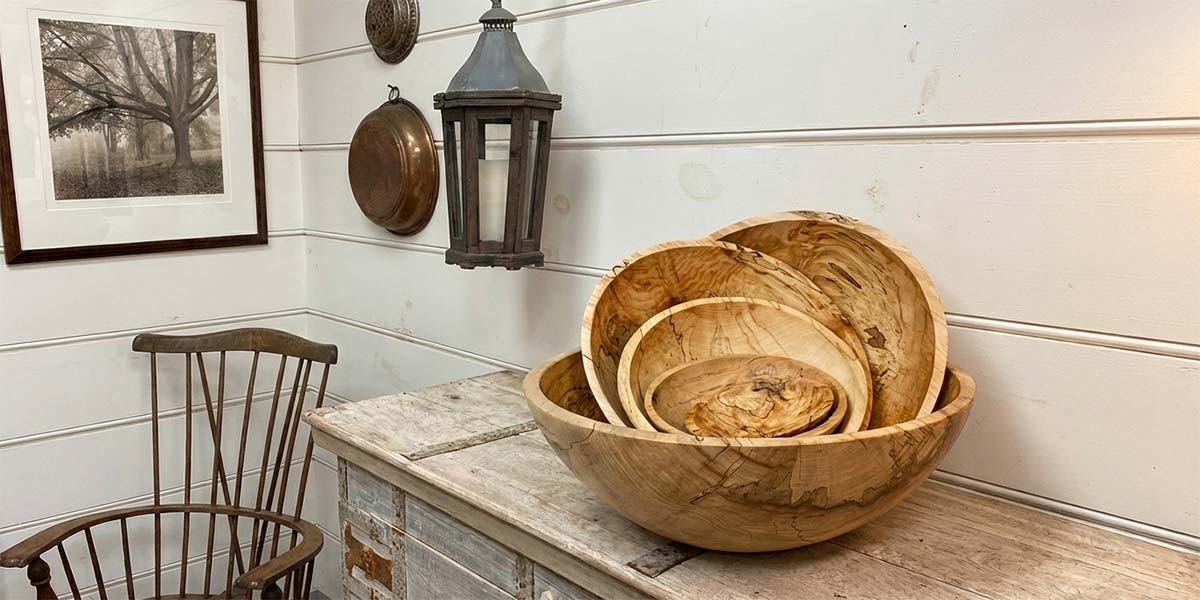
No two trees grow the same way. Even two bowls cut from the same log can end up looking completely different once they’re turned, dried, and finished.
One may hold bold black spalting lines across the center. Another reveals subtle feathering near the rim. Walnut can shift from nearly black heartwood into pale sapwood at the edge. Cherry darkens slowly over time, changing color as it lives in someone’s kitchen or dining room.
Then there’s movement.
Wood continues responding to humidity and environment long after the bowl leaves the workshop. Some bowls remain perfectly round. Others shift slightly during drying and develop softer organic curves. Those changes are normal. In many cases, they make the piece more interesting.
That’s the difference between handmade wooden bowls and factory-made pieces designed around uniformity.
The goal here is not perfect duplication.
It’s to preserve as much of the tree’s natural character as possible while shaping something useful enough to live with every day.
Drying, Sanding, and Finishing
A bowl is not finished when it comes off the lathe.
At that stage, the wood is still moving. Freshly turned bowls hold moisture deep inside the grain, especially larger maple and walnut pieces. If the drying happens too quickly, the wood can crack, split, or warp beyond recovery.
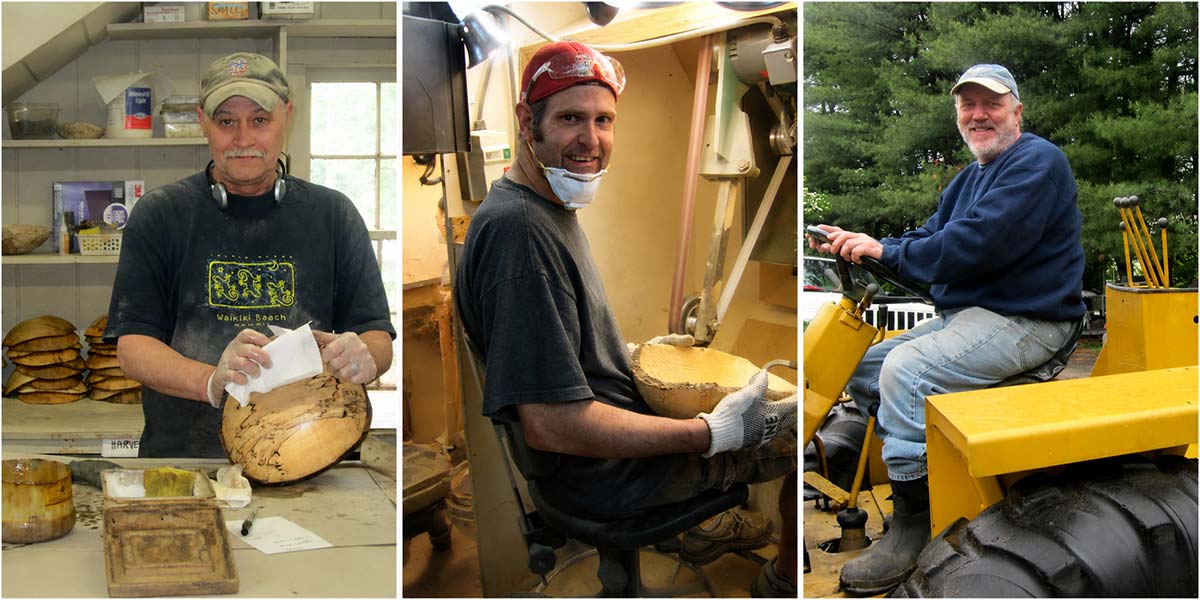
That’s why part of the process involves waiting.
Some bowls rest for weeks before they’re ready for final sanding and finishing. Others take longer depending on thickness, species, and the humidity in the shop. During that time the shape can shift slightly as the wood settles into itself.
You learn not to fight every movement.
A perfectly rigid bowl is not always the goal. Some of the most beautiful pieces develop a softer shape during drying, especially natural edge and live edge forms where the contours of the tree remain visible along the rim.
Why wooden bowls need to dry slowly
Wood reacts to its environment constantly.
Even after a tree is cut down, the fibers continue releasing moisture into the air. If that happens unevenly, stress builds inside the bowl. The outer surface may dry faster than the center, which can create checking near the rim or small cracks along the grain.
Slowing the process helps reduce that tension.
The workshop pays close attention to airflow, temperature, and timing during drying because each species responds differently. Cherry behaves differently than oak. Spalted maple can require extra care because portions of the wood may already be softer from natural decomposition inside the tree.
Larger bowls tend to demand the most patience.
There are pieces that look stable one week and shift noticeably the next. That’s normal. Wood keeps changing long after the first turning is complete.
Creating a smooth finish by hand
Once the bowl has dried properly, the sanding process begins.
This part takes time too.
Every curve has to be worked by hand, especially around the rim and interior where small imperfections become obvious once the finish goes on. A rough spot that barely shows during turning suddenly catches the light after sanding starts.
The goal is not to make the wood feel plastic or overworked.
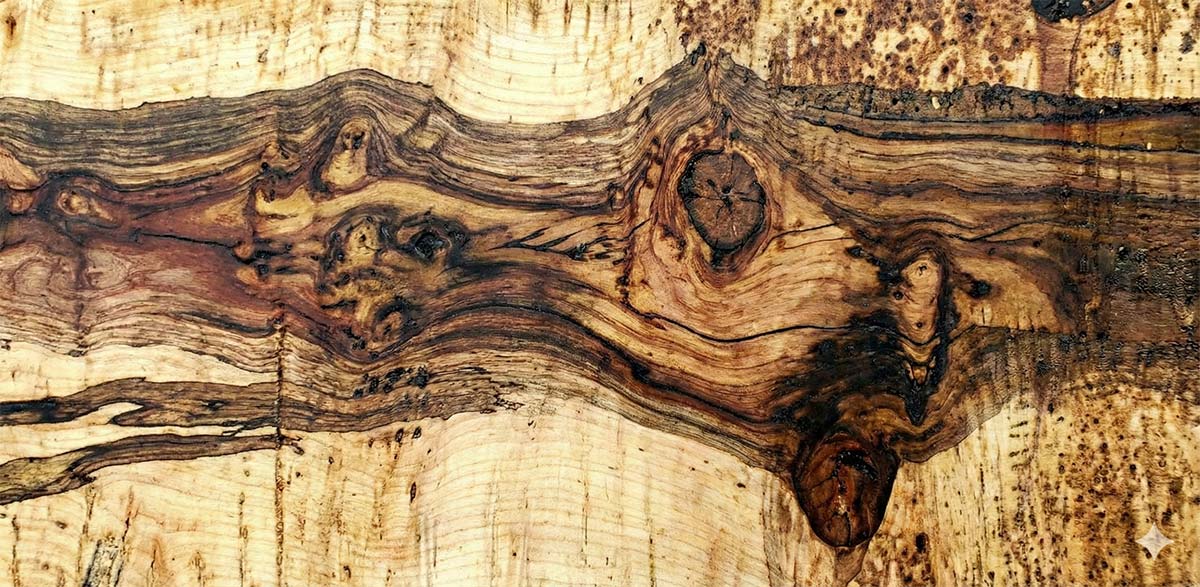
You still want the surface to feel like wood. The grain should remain visible beneath your hand instead of disappearing under a heavy coating. Some figured woods become almost silky during sanding, while others keep a little more texture depending on the density of the grain.
Spalted maple can be especially rewarding at this stage because the contrast sharpens dramatically once the surface is fully cleaned up.
Food-safe oils and finishes we use in the workshop
The finish should protect the bowl without hiding the character of the wood.
At Spencer Peterman, bowls are finished using food-safe oils and conditioners designed for pieces that will live in real kitchens and dining rooms. The oils deepen the grain slightly and help protect the surface from drying out with regular use.
Walnut darkens beautifully once the finish is applied. Cherry warms up. Maple tends to brighten and reveal more contrast in the grain.
The change can be dramatic.
A bowl that looked pale and dusty during sanding suddenly develops depth once the oil reaches the surface. Figure that was barely visible a few minutes earlier begins to stand out clearly under the shop lights.
That moment never gets old.
How a wooden bowl changes with age and use
Wooden bowls continue evolving after they leave the workshop.
Cherry deepens in color over time. Walnut softens visually as the finish settles into the grain. Areas that are handled often develop sheen from everyday use. Small shifts in humidity may change the feel of the wood slightly through the seasons.
Those changes are part of living with a handmade object.
A wooden bowl should not feel frozen in time. It carries marks from use, light, handling, and the environment around it. A serving bowl used every week at family dinners will age differently than a centerpiece bowl sitting near a sunny window.
Neither is wrong.
Over the years, the bowl gradually becomes tied to the place where it lives.
Choosing the Right Wooden Bowl
Wooden salad bowls for everyday meals
Wooden serving bowls for gathering and hosting
Centerpiece bowls that bring warmth to the table
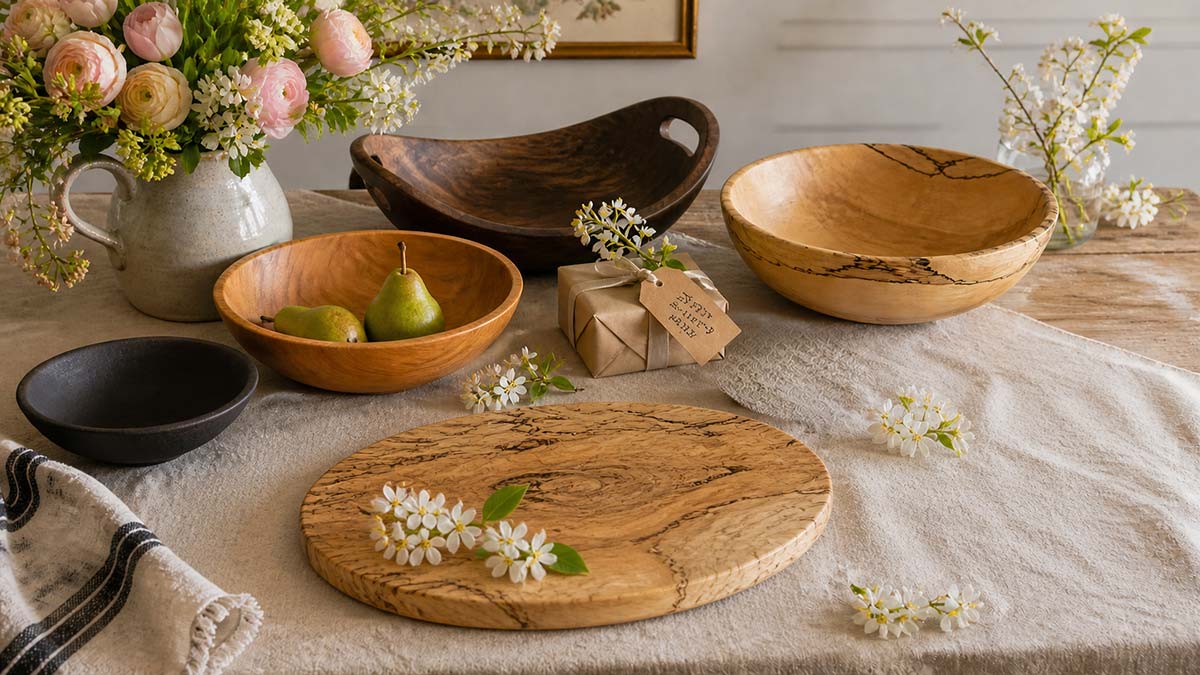
Large wooden bowls and extra large statement pieces
Round bowls, oval bowls, and live edge forms
Why People Still Choose Hand-Turned Wooden Bowls
Most people do not need a hand-turned wooden bowl.
There are cheaper options. Faster options. Factory-made bowls stacked by the hundreds in big retail stores. They all hold fruit just fine. They all technically do the job.
And yet people still gravitate toward handmade bowls.
Part of it is visual. Real wood has depth that manufactured materials struggle to imitate. Grain shifts in the light. The surface changes depending on the species and finish. A bowl made from storm-fallen maple carries markings and movement that cannot be repeated from one piece to the next.
But it goes beyond appearance.
People respond to objects that feel connected to a process. You can sense when something was shaped by hand instead of pushed through production machinery. The bowl carries small decisions inside it. The curve of the rim. The thickness of the walls. A natural edge left intact because the wood looked better that way.
Those details stay visible.
The difference between handmade and factory-made kitchenware
Factory-made kitchenware is built around consistency.
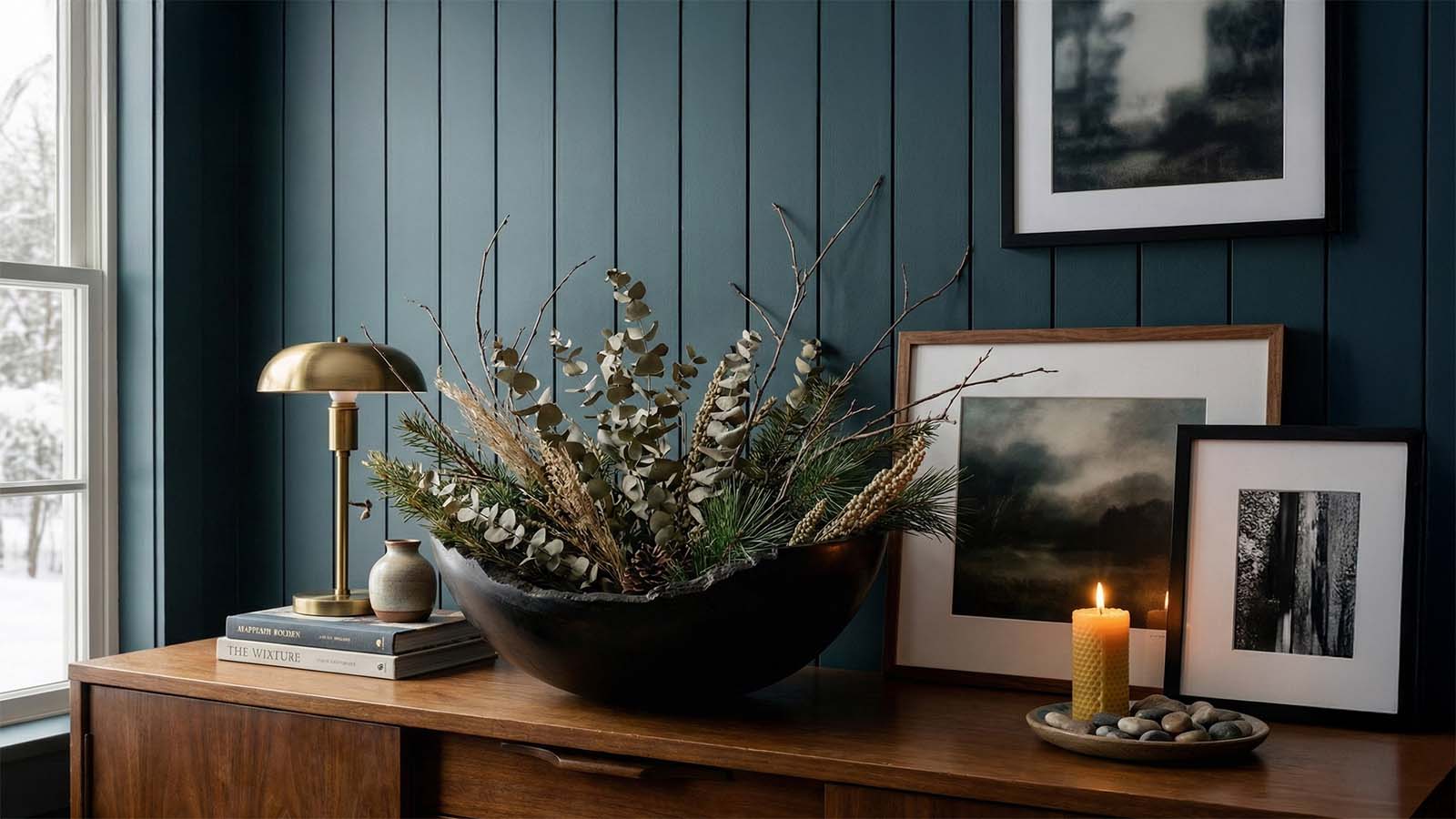
The dimensions stay identical. The finish stays uniform. Every piece is designed to match the next one as closely as possible. That approach makes sense for large-scale production, but it also removes most of the individuality from the final object.
Handmade bowls work differently.
The person shaping the bowl responds to the material in front of them. A spalting line may change the profile slightly. A section of figured grain might lead to a softer curve along the rim. Even bowls turned from the same species can end up with completely different character once sanding and finishing are complete.
That variation is not treated like a defect.
It becomes part of the appeal.
Why natural variation matters
Wood is unpredictable by nature.
Trees grow under different conditions. They react to weather, soil, insects, sunlight, and age. The grain records all of it. Once the bowl is turned and finished, those patterns remain visible across the surface.
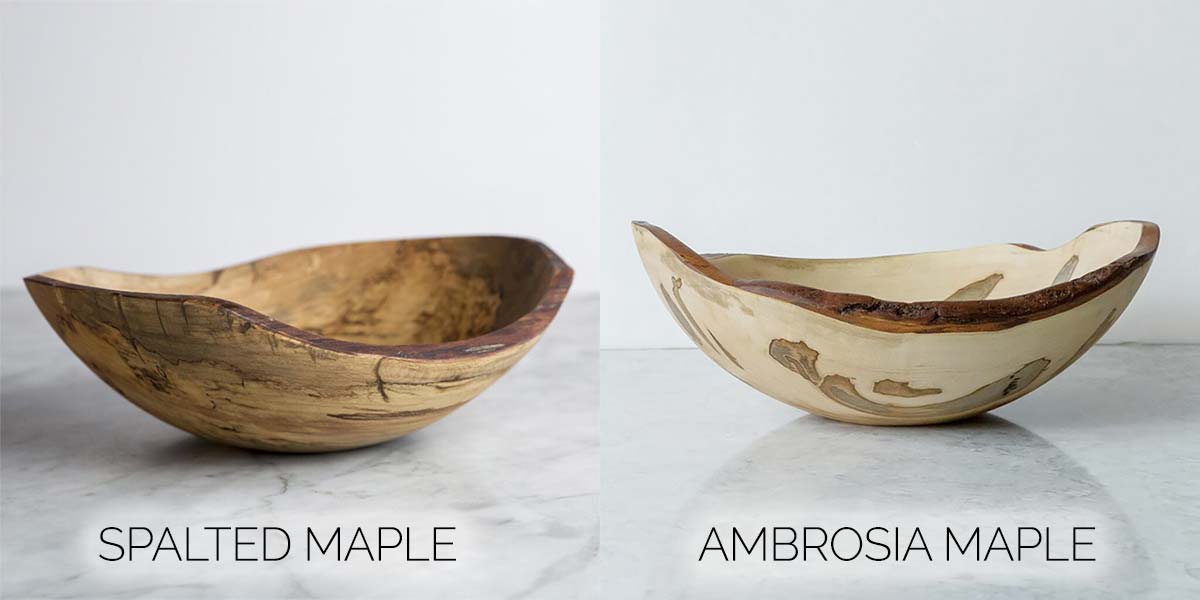
That’s why two spalted maple bowls never look exactly alike. The same goes for walnut, cherry, oak, or burl.
Some people want that variation because it feels more personal. The bowl on their table does not look mass-produced or interchangeable. It carries marks that belong only to that piece of wood.
There is also something quieter happening underneath that.
Natural materials age differently than synthetic ones. They soften. They deepen in color. The surface changes gradually through use and handling. Instead of looking worn out after a few years, a well-made wooden bowl often becomes more interesting over time.
Wooden bowls that become part of daily life
Many bowls start as decorative pieces and slowly work their way into everyday use.
A large walnut bowl placed at the center of the table eventually fills with fruit. A smaller maple bowl ends up beside the stove holding garlic or sea salt. Serving bowls come out during holidays, then stay out longer because people like seeing them on the counter.
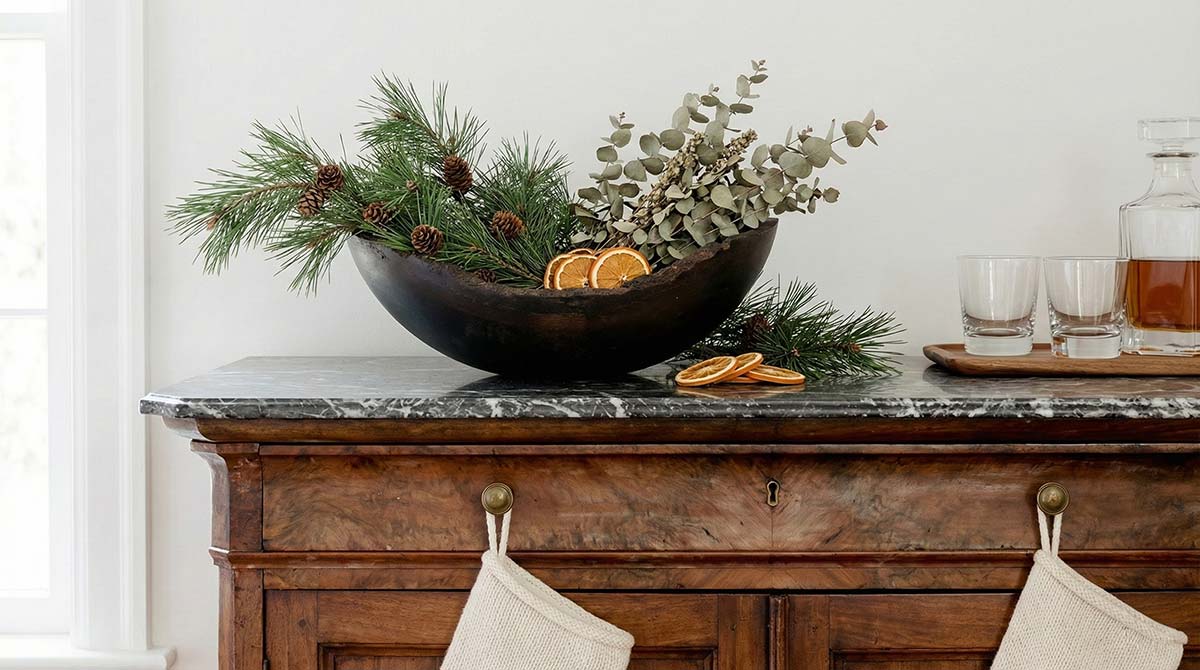
The best handmade pieces tend to settle naturally into a home.
Not because someone planned it that way. Because the object feels good to live with.
Wood changes the atmosphere of a room a little. It brings warmth without demanding attention. The grain catches light differently throughout the day. Even empty bowls still feel substantial sitting on a kitchen table.
Objects made to be used and passed down
Some handmade objects become more meaningful through use instead of less.
A wooden bowl picks up small signs of life over the years. Tiny shifts in color. Areas polished naturally through handling. The surface develops character slowly, especially on bowls that stay in regular rotation around the kitchen or dining room.
That kind of aging feels different than wear on disposable products.
The bowl becomes associated with routines, gatherings, meals, and holidays. People remember where it sat on the table. They remember what it held. Sometimes they remember who gave it to them in the first place.
Over time, the object carries some of that history with it.
That is part of why handmade wooden bowls continue finding their way into homes, even now.
Caring for a Hand-Turned Wooden Bowl
A well-made wooden bowl does not require complicated care, but it does benefit from a little attention now and then.
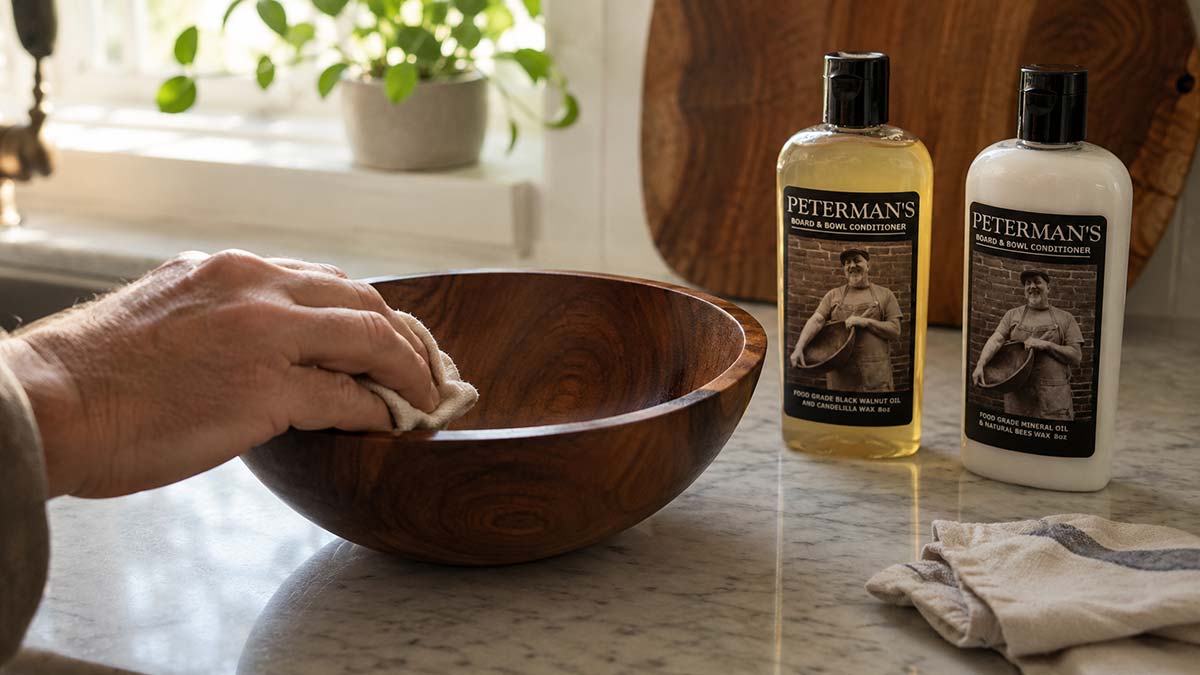
Wood reacts to moisture, temperature, sunlight, and use. A bowl used regularly for salads or fruit will age differently than one displayed on a dining table year-round. Neither is a problem. The important thing is understanding that wood remains a natural material long after the turning process is complete.
Most care comes down to consistency.
A wooden bowl that gets regular care can stay in use for a very long time. Some pieces spend decades moving between kitchens, tables, and family gatherings without much more than occasional oiling and basic cleaning.
How to clean a wooden bowl properly
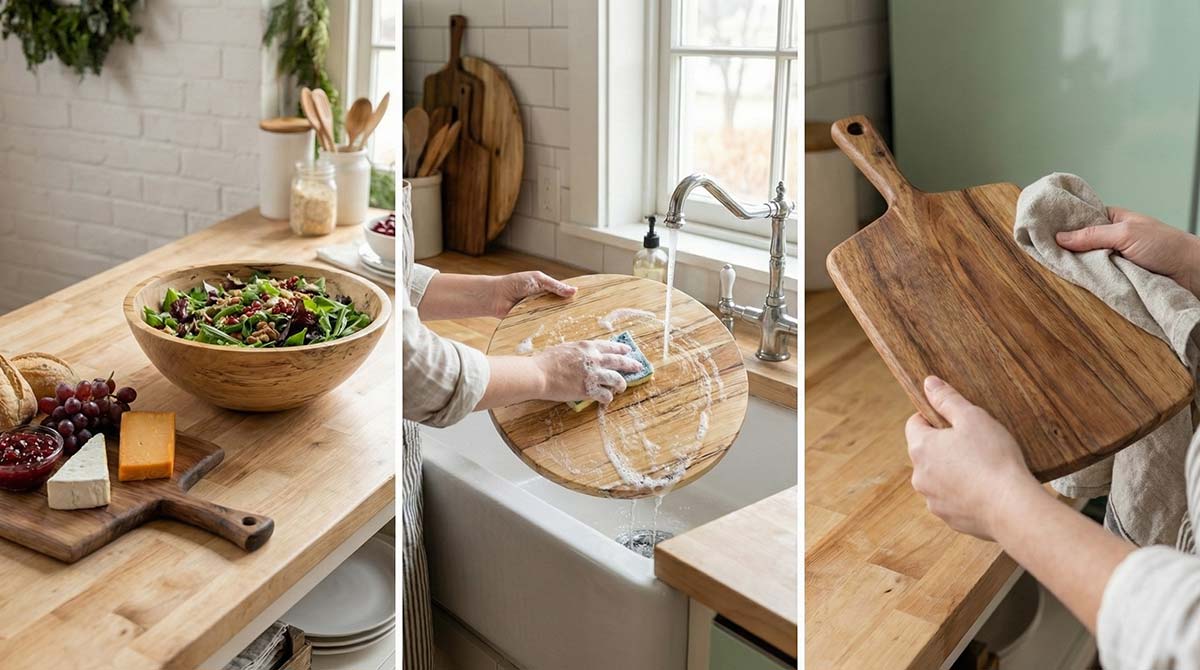
Hand washing is the way to go.
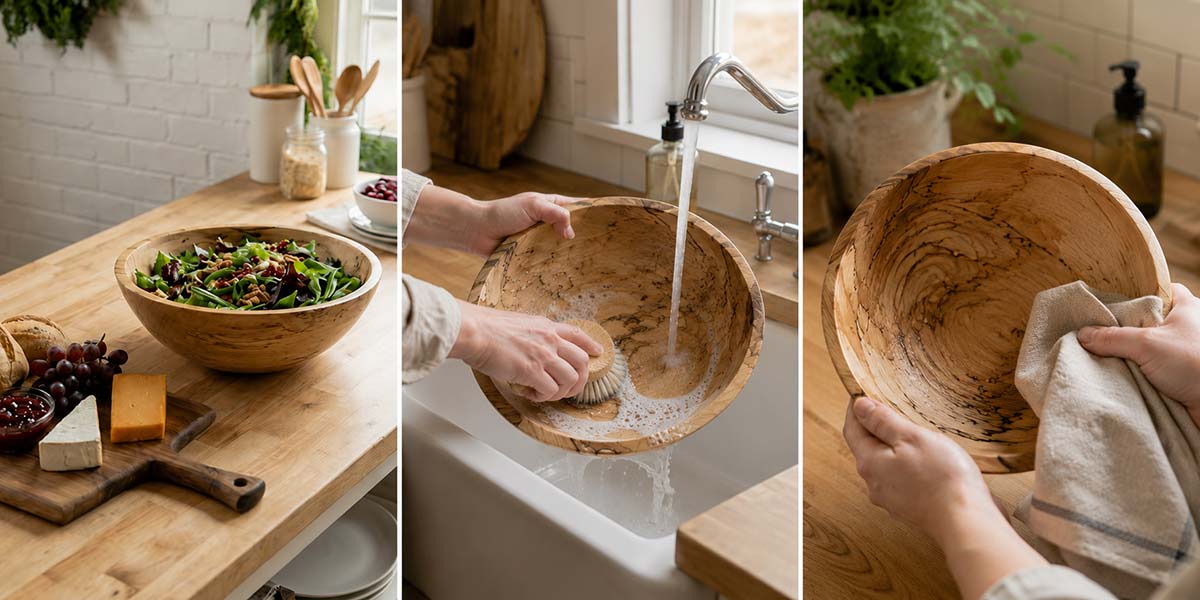
Most of the time, warm water, mild soap, and a dish cloth are enough. After washing, dry the bowl thoroughly and move on with your day. Don’t leave it soaking in the sink or sitting with water pooled inside overnight.
That’s usually where problems begin.
Dishwashers are rough on handmade wooden bowls too. The heat and moisture cycle can pull too much moisture from the wood too quickly, especially around the rim or base where stress tends to show up first.
Daily care does not need to become a whole ritual.
A salad bowl used at dinner can be washed, dried, and back on the counter in a couple minutes. That’s generally all it takes.
When to oil and condition the wood
Over time, wooden bowls can begin looking dry, especially in homes with low humidity or during colder months when indoor heat runs constantly.
That’s usually the sign that the wood is ready for conditioning.
A light coat of food-safe mineral oil or wood conditioner helps replenish moisture near the surface and brings some depth back into the grain. The wood tends to absorb what it needs fairly quickly. After the oil sits for a short time, the excess can simply be wiped away with a clean cloth.
Some bowls need conditioning more often than others.
A frequently used salad bowl may dry out faster than a centerpiece bowl sitting farther from moisture and handling. Maple behaves differently than walnut. Homes near the coast behave differently than homes with dry winter air and wood stoves running every day.
You learn the rhythm of it over time.
What to avoid with handmade wooden bowls
Extreme conditions tend to cause the biggest problems.
Leaving a bowl submerged in water, exposing it to prolonged direct sunlight, or storing it near strong heat sources can all stress the wood unnecessarily. Sudden temperature swings are hard on handmade wooden bowls too, especially larger pieces with thicker walls.
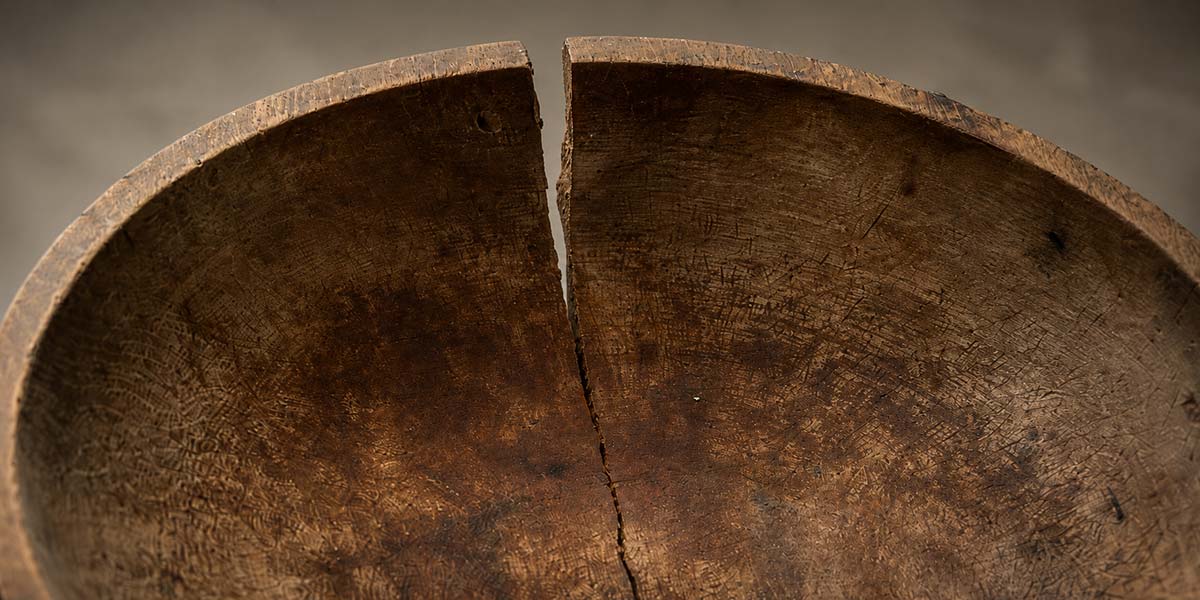
Most issues develop gradually, not overnight.
A bowl may start feeling overly dry. The surface may lose some richness. Small changes in shape can appear during seasonal humidity shifts. In many cases, these are normal signs of wood responding to its environment.
The goal is not to keep the bowl looking untouched forever.
The goal is to let it age well while continuing to use it.
A Bowl That Carries the Story of the Tree
Every hand-turned wooden bowl begins long before the lathe starts spinning.
The shape of the grain was already forming decades earlier while the tree was still growing through New England winters, summer storms, dry seasons, and changing light. Some trees stood at the edge of open fields. Others grew behind old houses or deep along stone walls and wooded roads.
Those years remain visible in the wood.
Spalting lines, color shifts, knots, mineral streaks, and grain movement all come from the life of the tree itself. The turning process does not erase that history. If anything, it makes more of it visible.
From workshop to kitchen table
Once a bowl leaves the workshop, it starts another chapter entirely.
Some become everyday salad bowls. Others sit at the center of long dining tables filled with fruit, bread, or seasonal gatherings. Certain pieces move from house to house over the years. People bring them out during holidays. Children grow up seeing them on the same kitchen counter year after year.
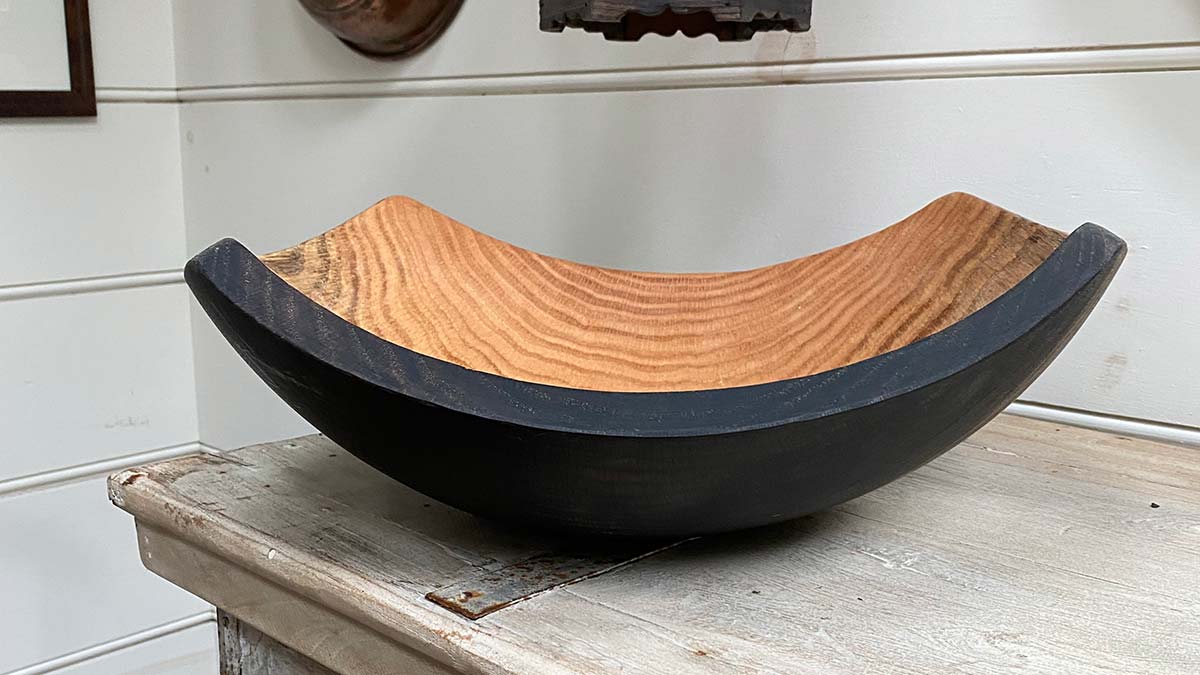
The bowl changes along with the home around it.
Cherry darkens. Walnut softens slightly in appearance through handling and use. Small marks appear that were never part of the original turning process. Those signs of use become part of the piece rather than damage to hide.
That’s one of the reasons handmade wooden bowls continue holding people’s attention when so many household objects now feel temporary.
They stay in use.
Why hand-turned wooden bowls still matter today
There is something reassuring about objects made from real materials by real people.
Not because they are perfect. Usually they are not.
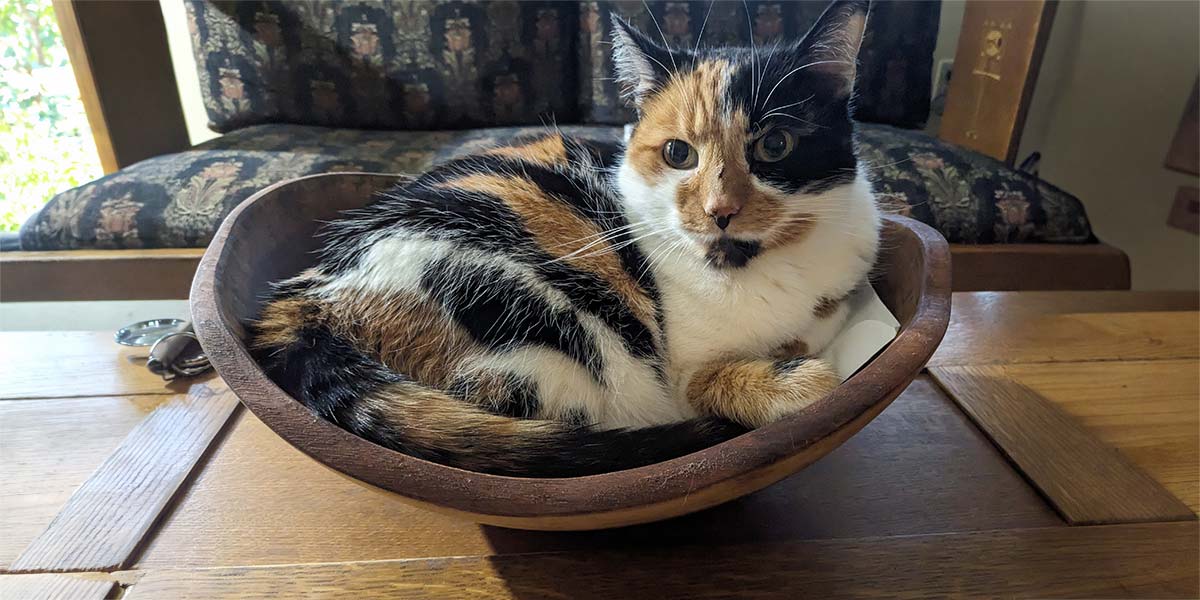
The rim may shift slightly during drying. Grain patterns move unpredictably across the surface. A natural edge bowl may lean into asymmetry because the shape of the tree demanded it. Those details remind you that the piece came from something living rather than a production line.
That connection still matters to people.
Especially now, when so much of daily life feels disposable or manufactured to look identical from one home to the next.
A hand-turned wooden bowl pushes against that a little.
It carries the marks of the tree, the workshop, and the person who shaped it. Then it picks up a few more marks from the people who live with it afterward.
That’s what gives the bowl its character over time.