Snowy Evenings, Simple Boards
February shrinks the map. Most days, it’s the road, the woods, and whatever room you’re standing in. Snowbanks rise along the driveway. The porch light catches the flakes and makes them look heavier than they are.
Most nights, the kitchen ends up doing all the work.
On those nights we don’t think in courses. We pull one wooden board from the stack and see what belongs on it.
What Ends Up on the Charcuterie Board at Our House
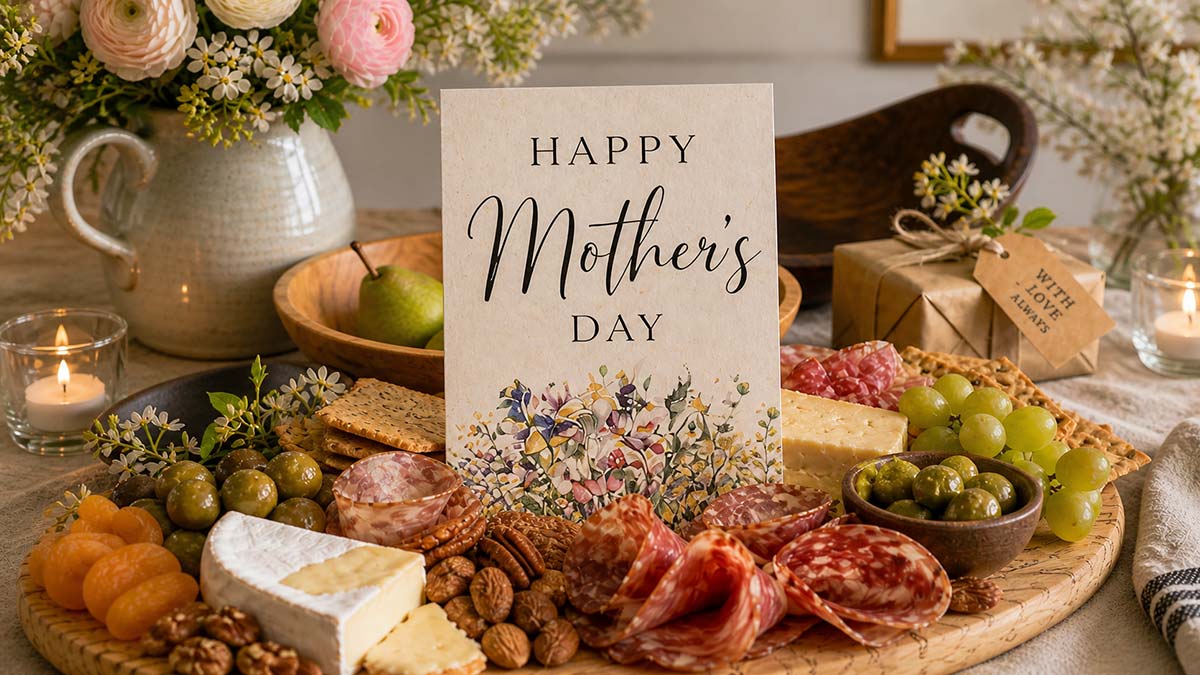
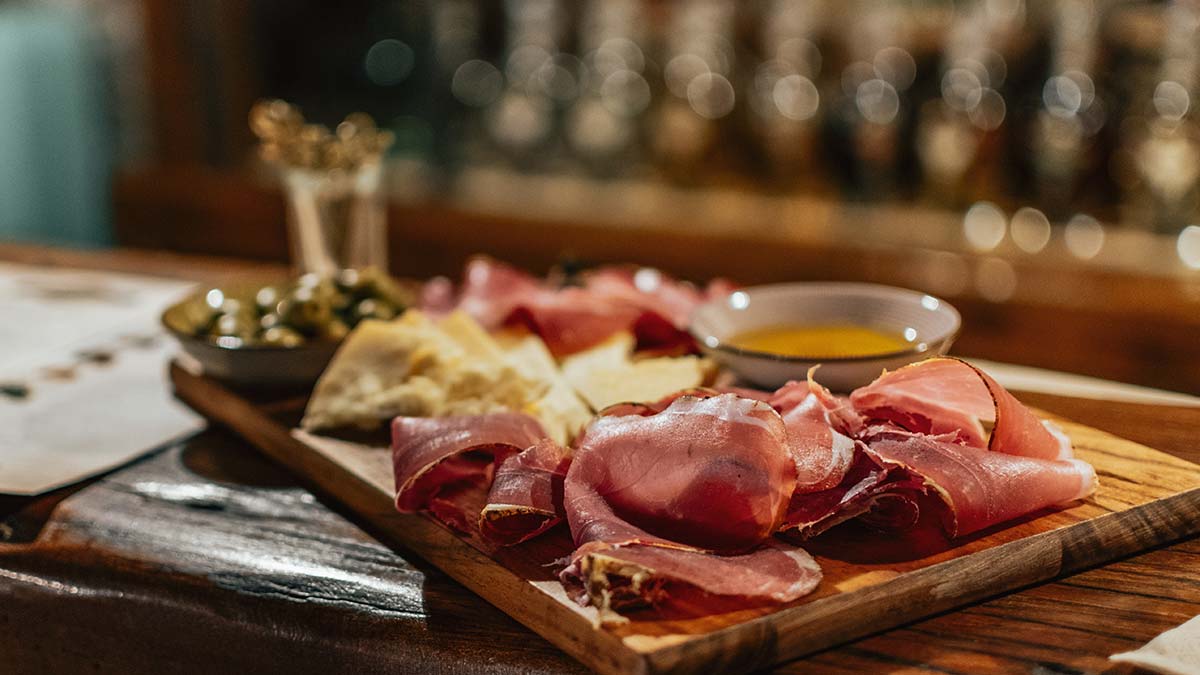
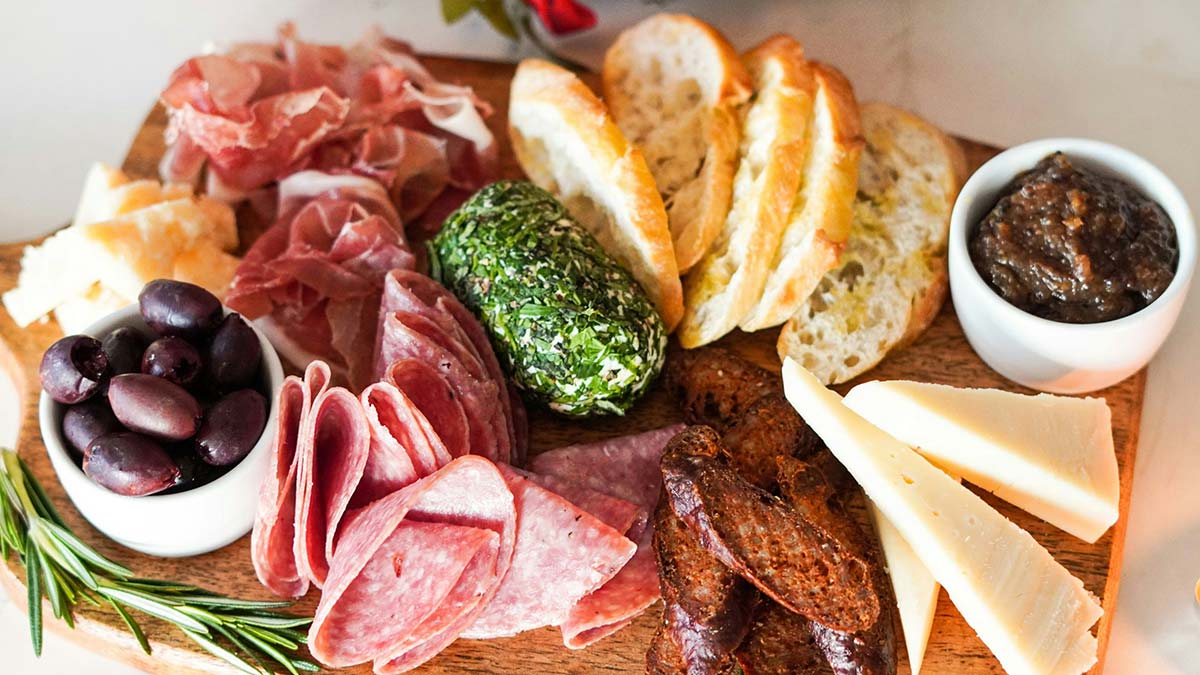
There’s almost always cheese. Not a whole lineup. Just what’s in the fridge and feels like it fits the night. A soft wedge that leans a little as it warms. Something firmer that needs a real cut from the knife. Once in a while there’s a stubborn piece that makes people stop and ask, “What is this one?”
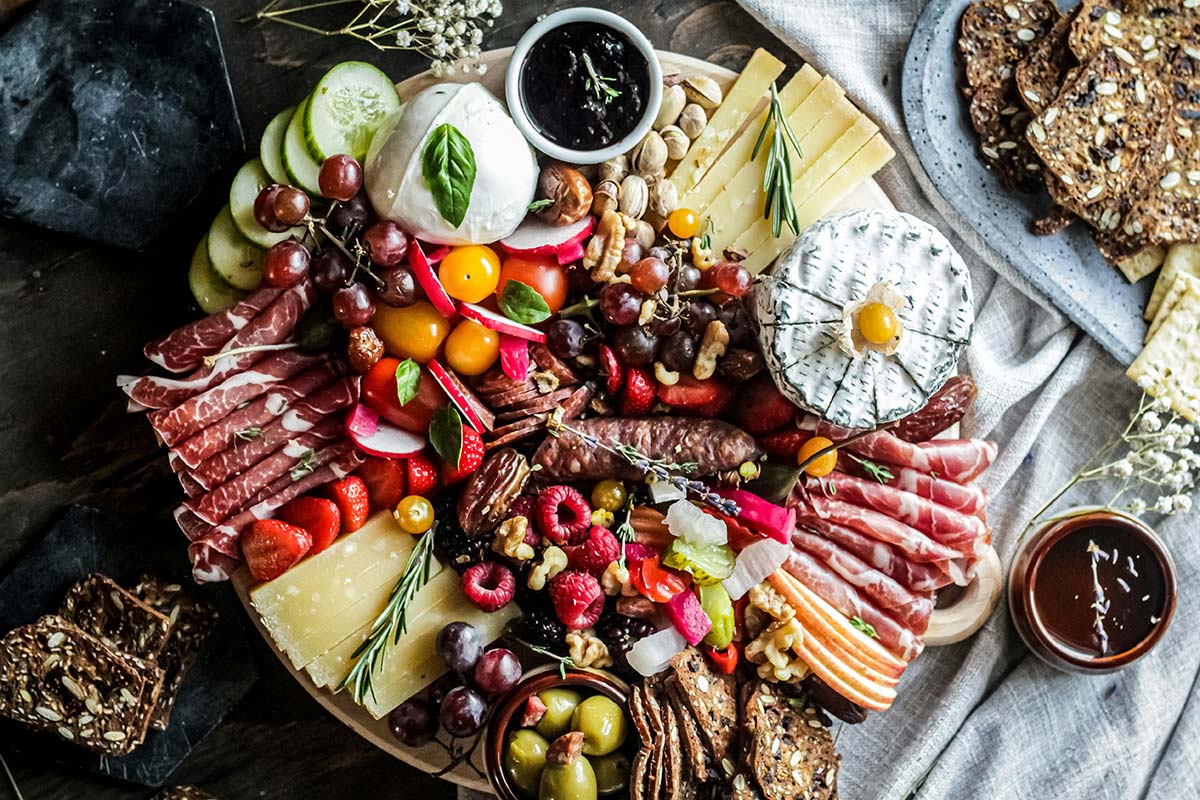
Country Living talks about mixing textures on a charcuterie board, and we’ve noticed the same thing without naming it. Southern Living pays attention to how pieces are cut; they’ll turn one cheese into slices, another into cubes, another into rough chunks, just to keep the eye moving. We’ve learned that a change in shape is often enough. People keep reaching because nothing looks too tidy.
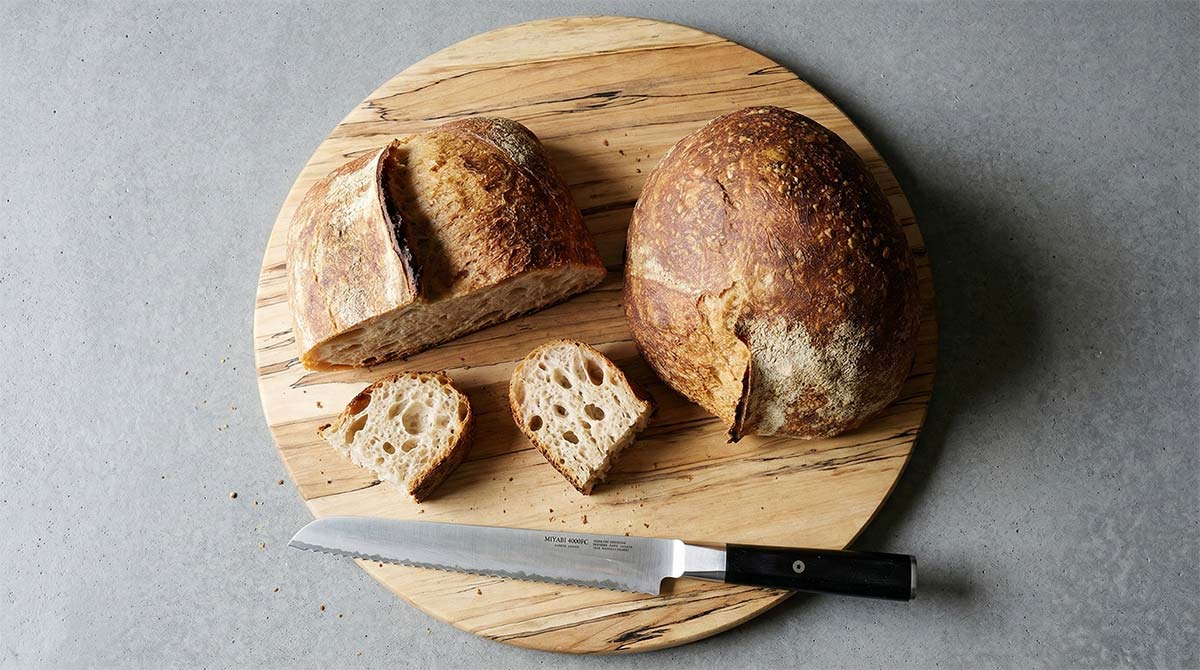
Bread ends up wherever there’s space. A few slices of baguette. Maybe the heel of a sourdough loaf, torn instead of cut. If there’s a plain cracker in the pantry, it lands somewhere and no one thinks much about it.
Fruit fills the holes. Grapes still on the stem. A pear sliced thin and leaning against itself. Dried figs that disappear before anyone admits they like them. Nuts scatter. An olive dish finds a place if there’s one left.
Bon Appétit suggests letting cheese sit out before serving. That part is true. Straight from the fridge, it doesn’t say much. Give it twenty minutes and it opens up. People usually do the same once the boots are off.
When There’s a Pot on the Stove
Some evenings the board isn’t the whole meal. It’s the part that makes a pot of soup feel like an event. The house smells like tomatoes or onions or chicken bones that have been on the stove just long enough. The charcuterie board sits between the bowls and does its work.
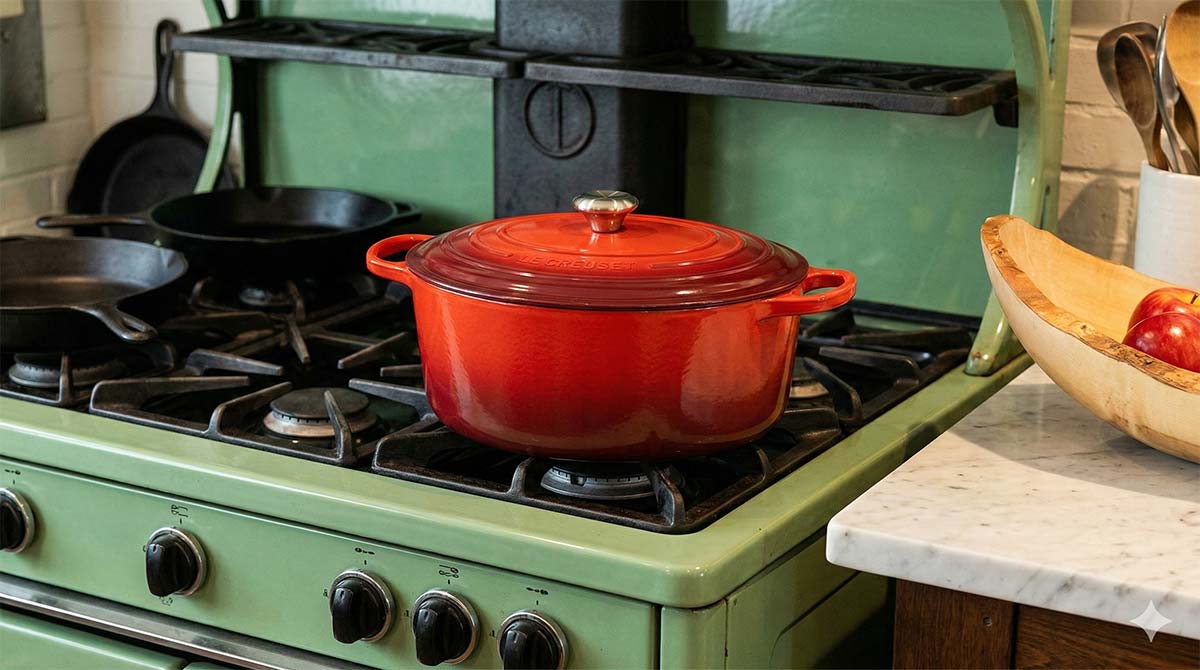
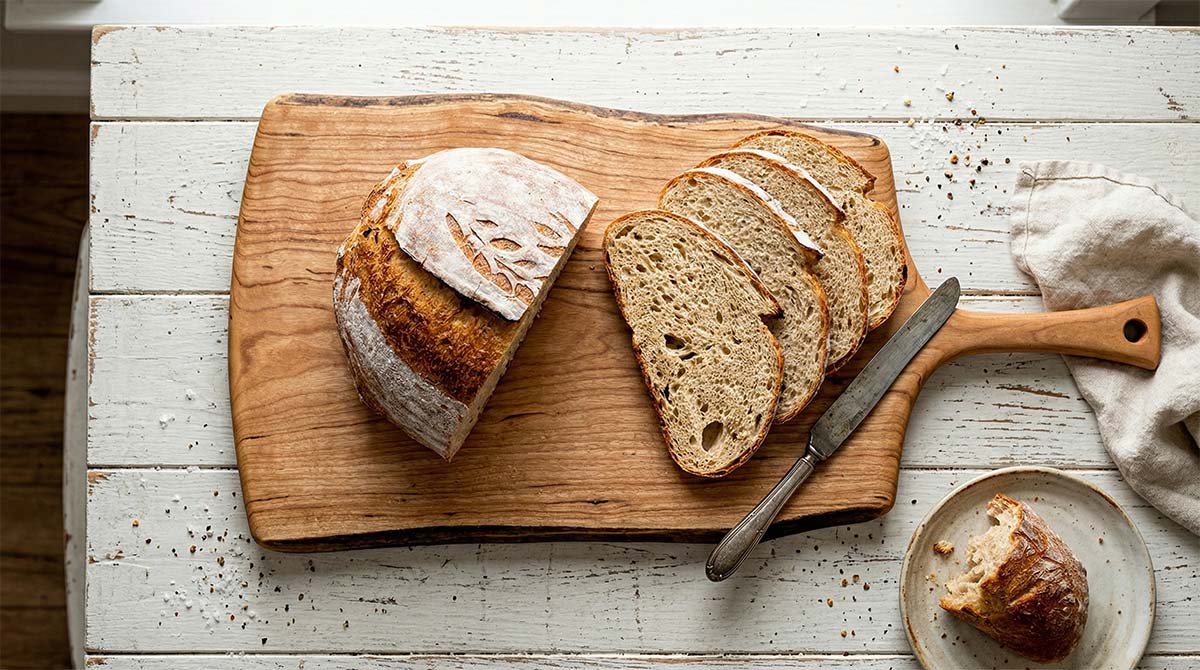
We’ll slice a baguette on a live edge cutting board and not bother to keep the pieces even. A few small bowls land there too: one with grated cheese, another with herbs, maybe some sliced scallions if someone had the energy to chop. Pickles or olives show up more often than not. They cut through the warmth of the soup and wake everything up. If there’s a soft cheese or a bit of cured meat left from another night, it goes on without fuss.
South Mississippi Living writes about grazing tables as if they’re maps of texture and flavor. This is just a smaller drawing of the same idea. One charcuterie board, a few choices within arm’s reach, everyone circling back between spoonfuls. No one asks where the salt is. No one needs you to get up again.
A Winter Board That Still Feels Like Dessert
By late February, the heavy sweets of December feel far away. A scoop of ice cream on the couch is fine, but there are nights when the table wants a little ceremony and not much sugar. A wooden board can handle that too.
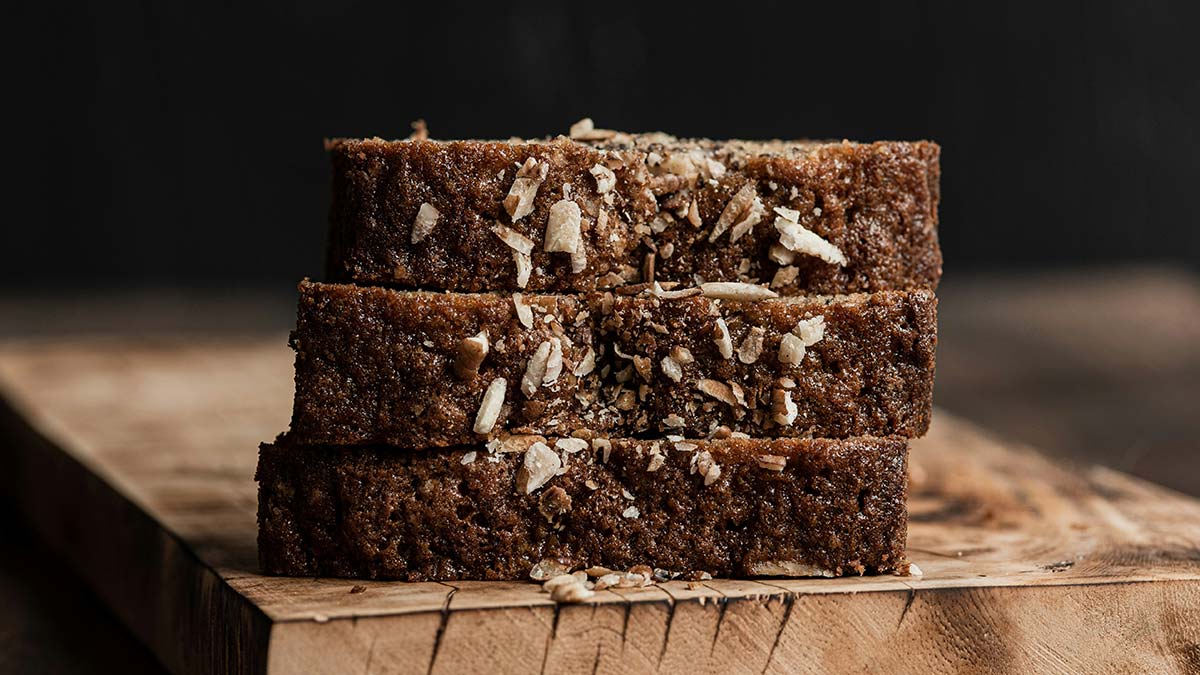
We usually start by snapping a bar of dark chocolate into pieces and dropping them straight onto the wood.
Oranges come next. Sometimes blood oranges, if they’re around. We peel them at the counter and pull them apart by hand. Grapes scatter. A pear gets sliced and tucked wherever it fits.
If there’s brie in the fridge, it goes on. If not, chèvre works just as well. A little honey. Maybe a spoonful of jam. Not much.
Cookies or biscotti lean against the edge. No one measures it.
Entertaining magazines like to explain dessert boards in categories, sweet, crisp, creamy, a bit of salt. We don’t stand there naming parts. We add what feels right and stop when it looks full enough.
Candles help. So does turning off the overhead light.
The Way Charcuterie Boards Change With the Weather
These snow‑season boards don’t have an expiration date. They shift as the slope of the light changes.
When the first sharp greens show up at the market, some of the cured meats quietly give up their place to radishes, snap peas, young carrots, and herbs. When berries and stone fruit arrive, dried fruit steps aside. The wood stays the same. The grain doesn’t care if it’s holding clementines or cherries.
We reach for the same boards on nights when the plow leaves a wall of snow at the end of the driveway. We carry those boards out to the porch in May too.
For now, the view from the window is white and quiet. A board on the table, a small spread, a few people lingering a little longer than they meant to, that’s enough.
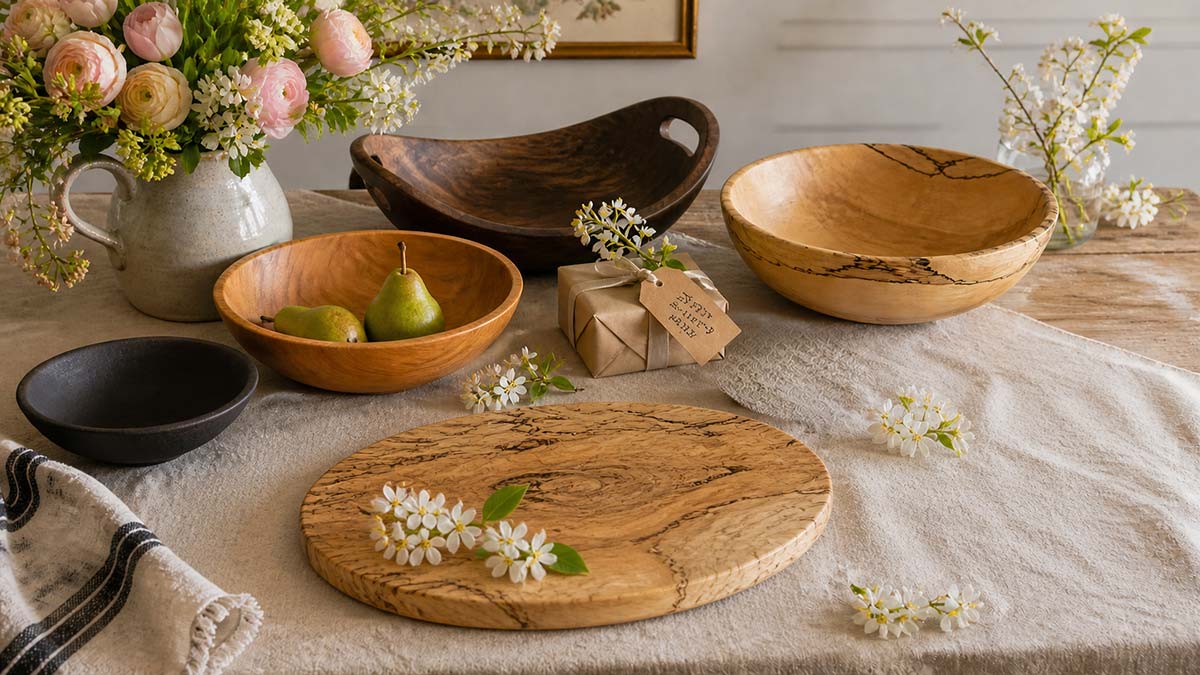
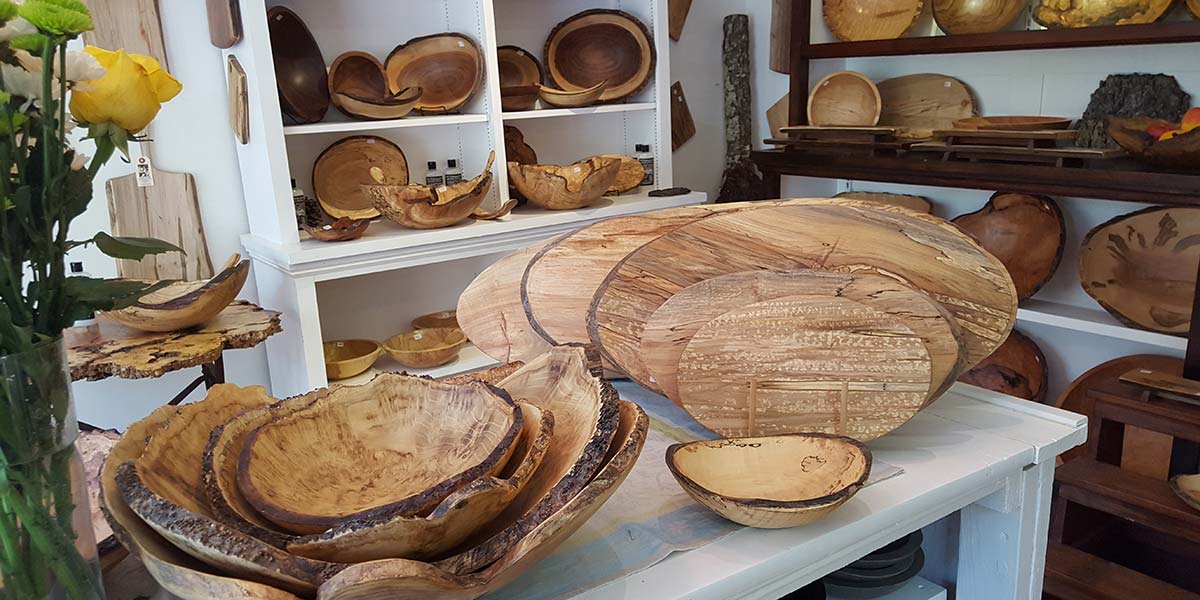
Meet our Wooden Board Collection
Late winter gatherings don’t need to be complicated. A good loaf of bread, a few cheeses, something cured or preserved, and a board that feels right in your hands is often enough. The board becomes the center of the table. Everything else gathers around it.
If you’d like to explore our collection of handmade wooden boards — all designed for everyday use, including as charcuterie boards — you can browse them here:
Each shape brings a different feel to the table, whether you’re hosting a crowd or setting out something simple for two.