How We Think About Wood
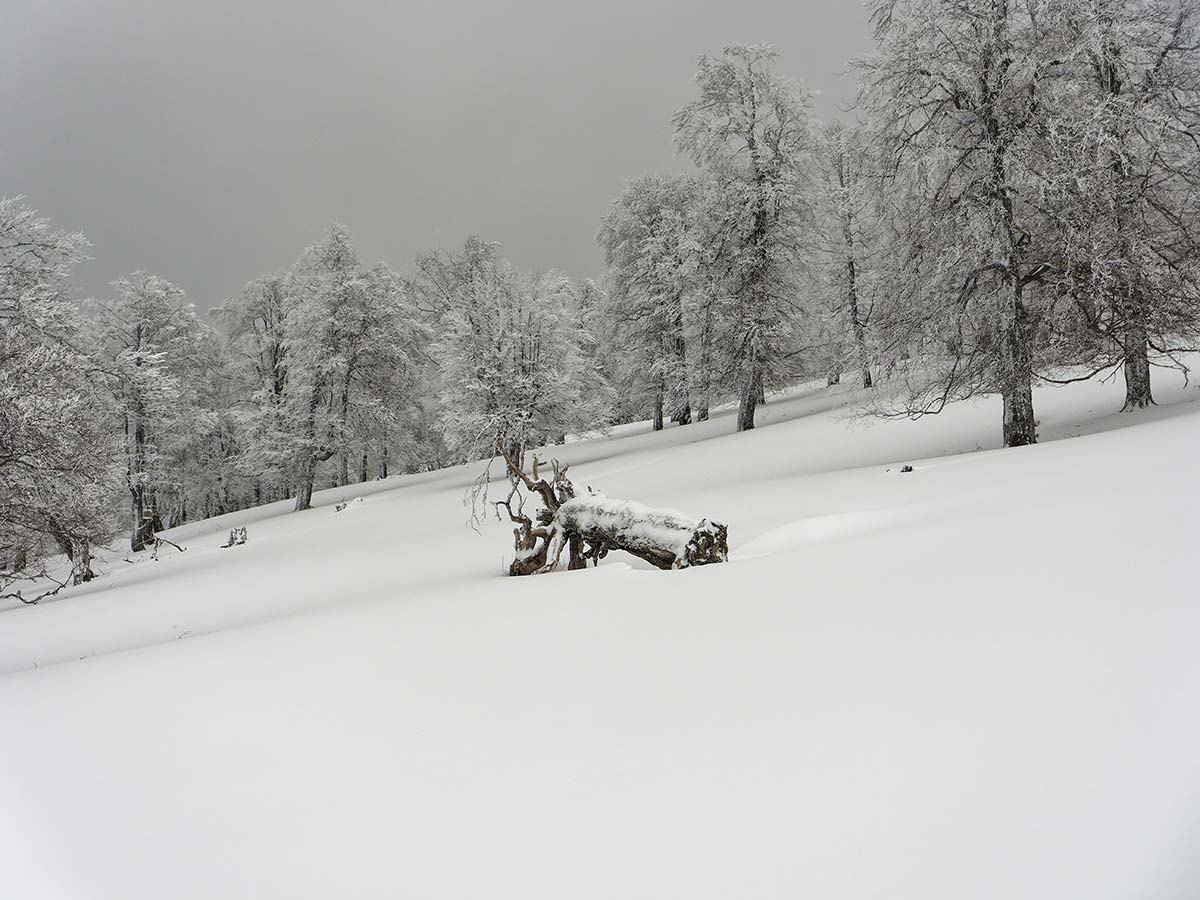
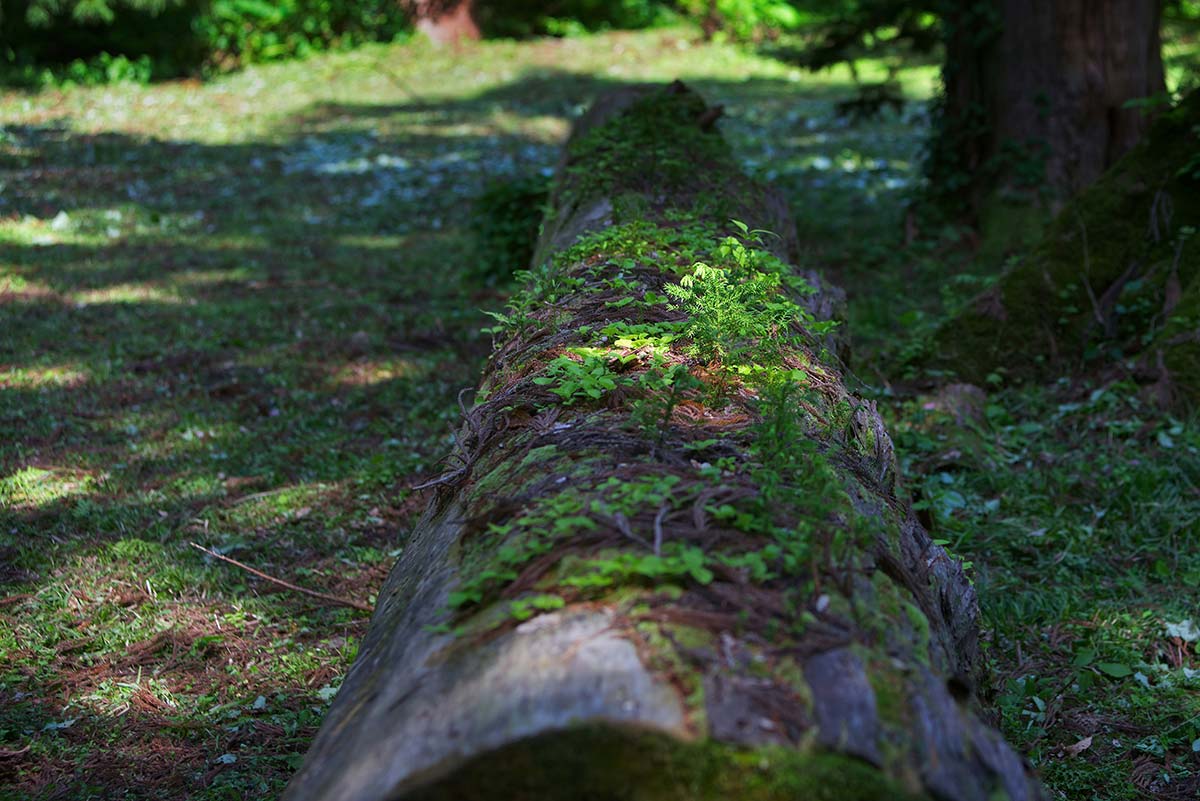
After a storm in Western Massachusetts, the woods look different. Branches that held their ground for years are suddenly leaning against each other. A tree that always stood in the same spot lies on its side with its roots open to the air. You see rings you’ve never seen before.
Most people walk past that. We can’t.
For Spencer, a bowl or board usually starts as a log pulled from the woods or a trunk already cut and stacked at the edge of a yard. It might look like debris to someone else. To us, it’s usable wood. Where someone else sees cleanup, we see grain, color, and the possibility of a piece that might live on a table for decades.
After the Storms in New England
We work with wood that has already had a life. Nearly all of it comes from locally fallen or salvaged trees in New England – maple, cherry, black walnut, oak. Some came down in storms. Some aged out in a backyard and needed to be removed. Some lay in the woods long enough to start changing under the bark before anyone thought to do anything with it.
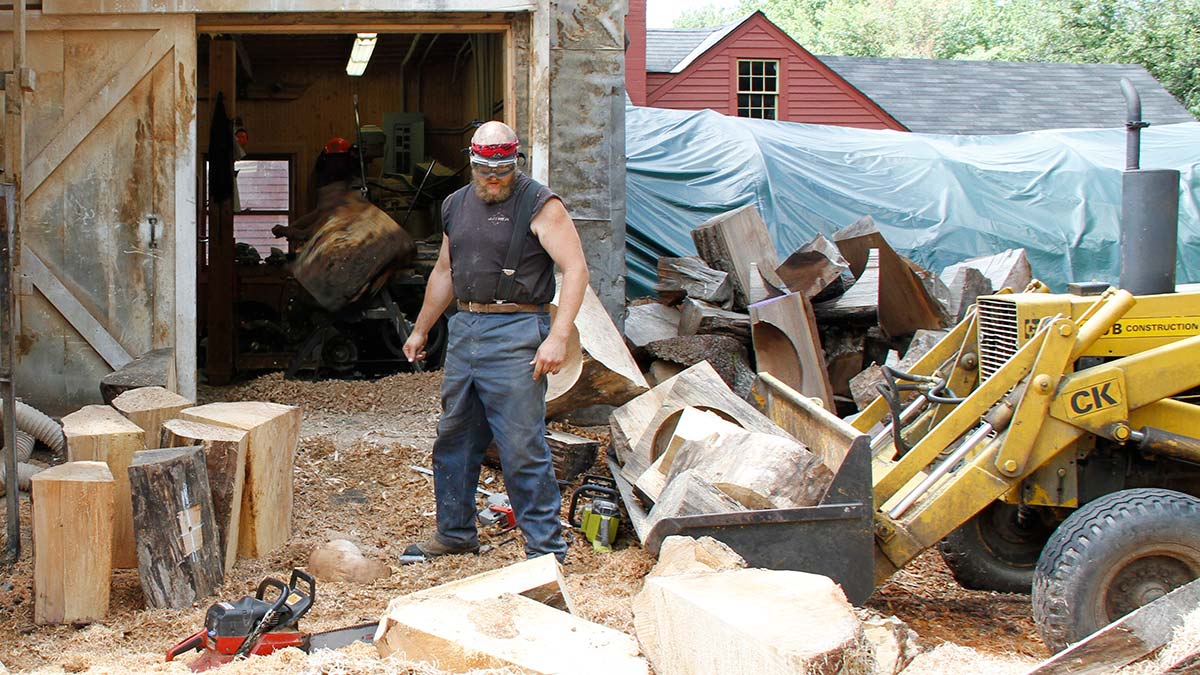
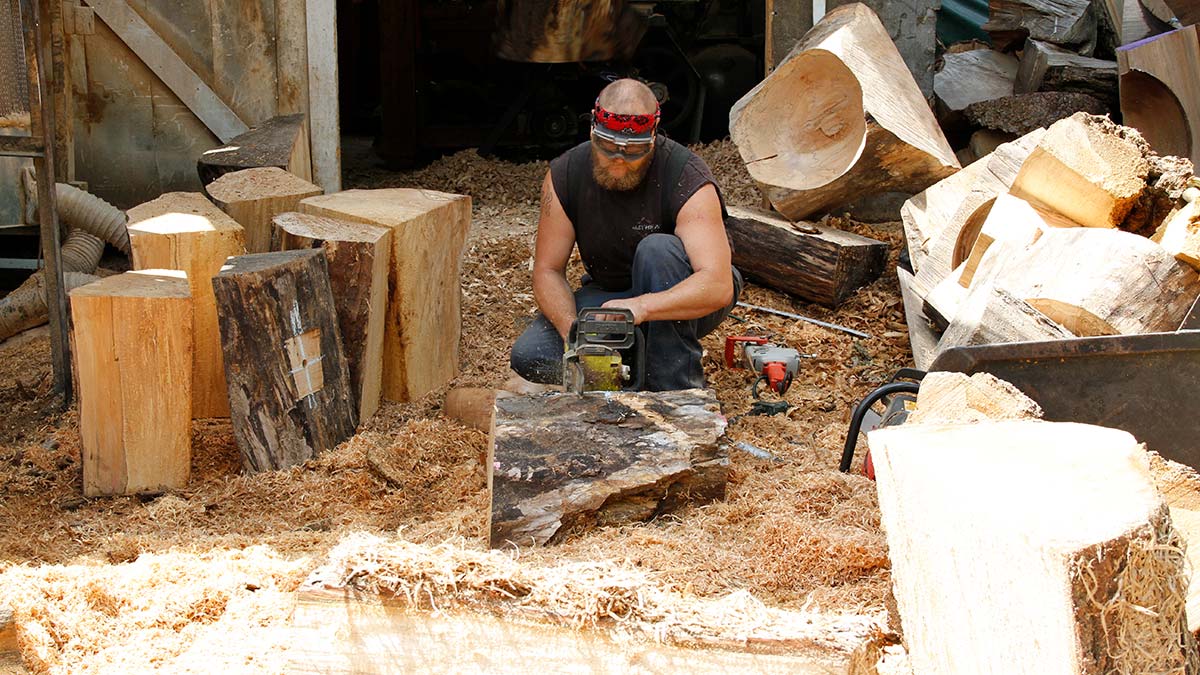
Those are the logs Spencer looks for. The ones most people would pass over. He’s spent years walking the woods, learning which fallen trees are solid enough to cut and which are already too soft to use.
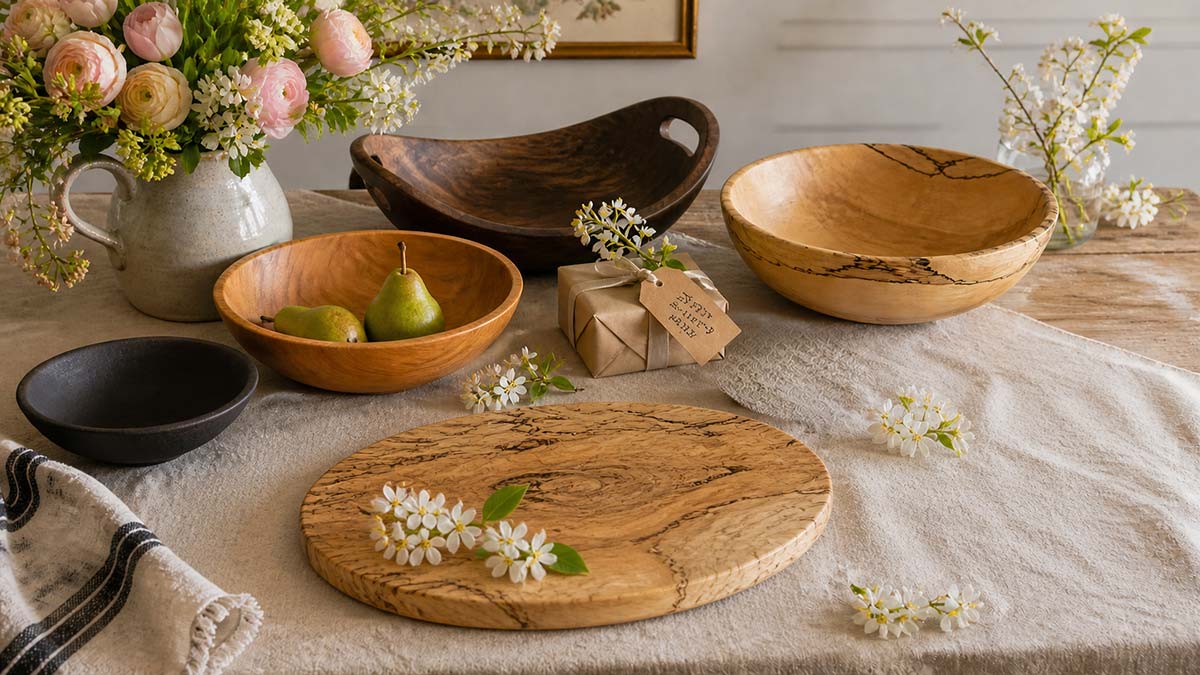
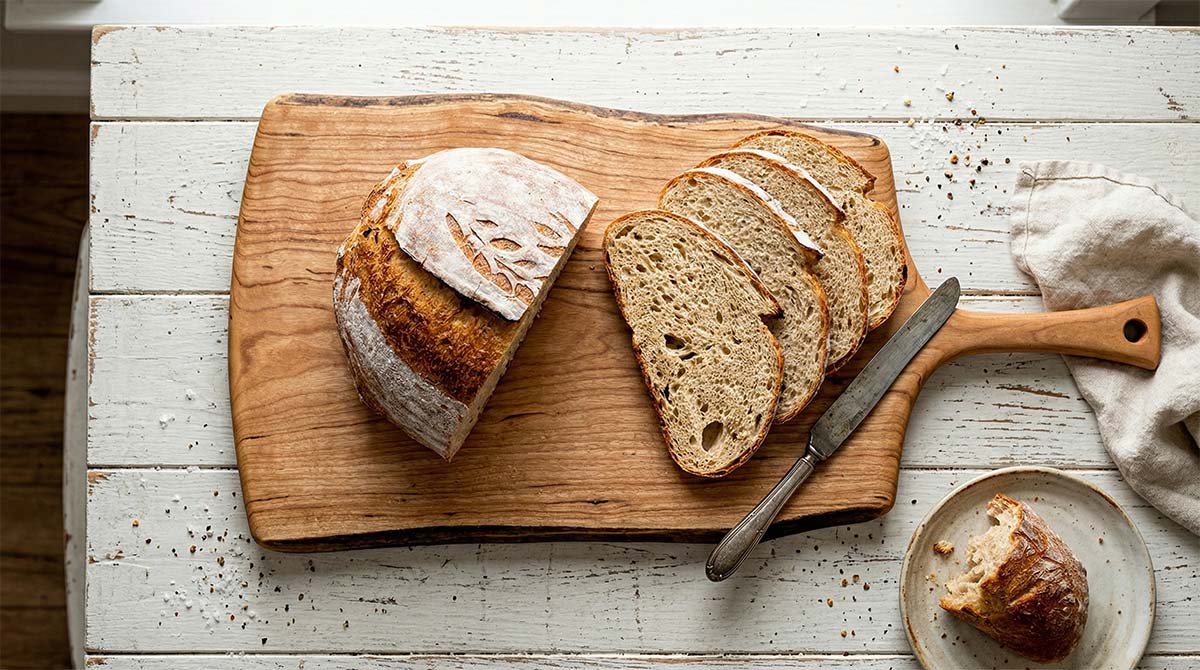
A section of ambrosia maple might turn into a live edge cutting board with a handle, light enough to carry from counter to table. A thicker log might be set aside for a large wooden bowl, something wide and heavy enough to sit steady in the center of a table.
What We Notice in a Log
When we cut into a fallen tree, we don’t know exactly what we’ll find. You can identify the species and estimate the age from the size, but the real character shows once the saw goes through. Some sections are straight and clean. Others twist where branches once grew.
Spalted maple and ambrosia maple usually come from trees that have already started to break down. Spalting begins when fungi move through the wood, leaving dark lines in the pale surface. Ambrosia maple carries marks from beetles that bore into the tree and introduce staining.
Timing matters. Wait too long and the wood turns soft. Cut too early and the lines haven’t developed. Over time, we’ve learned to read the outside of a log for clues. Some of that comes from experience. Some of it comes from mistakes.
Some of those pieces become extra large ambrosia maple bowls. Others become spalted maple cutting boards, where the wandering dark lines spill across a flat surface instead of disappearing into a curve. Either way, the tree that once stood in a New England yard ends up in someone’s kitchen, carrying its history in plain sight.
Bowls, Boards, and the Shape Hidden Inside
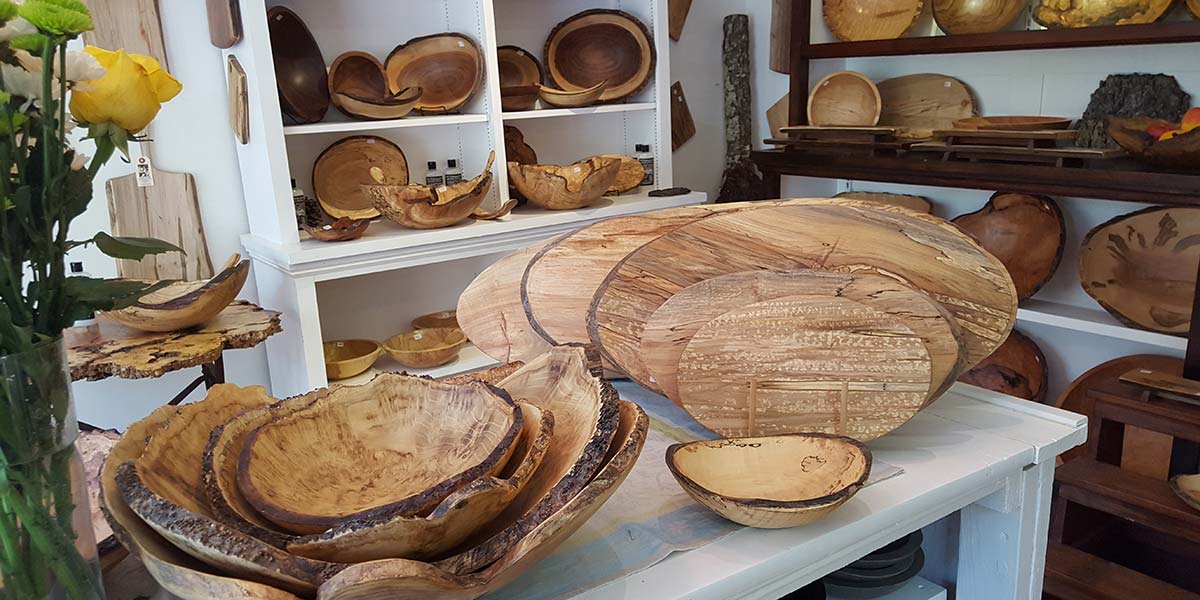
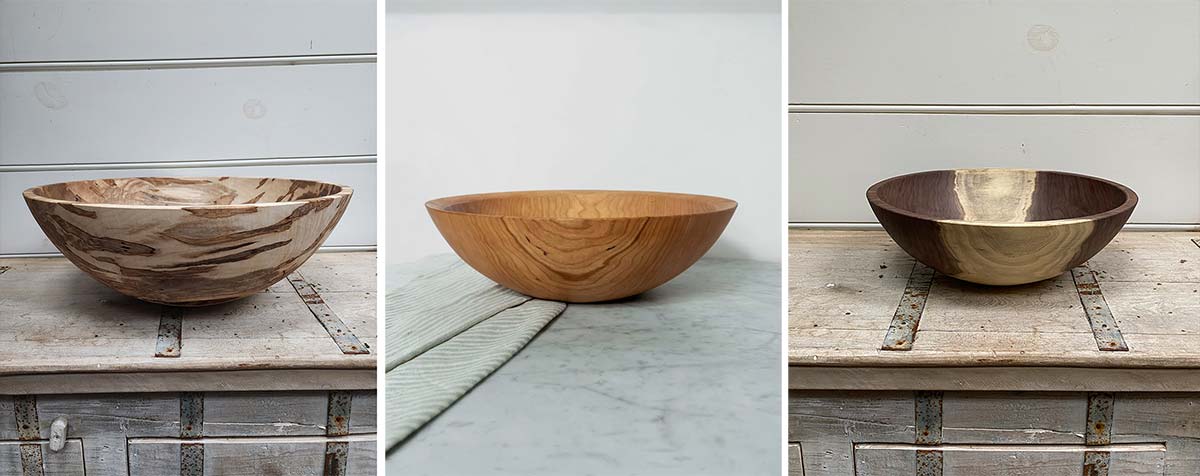
Once the logs are cut into sections, we start to see what they want to be. A length of walnut with strong, even grain and good thickness might be roughed out into an extra large 18‑inch black walnut bowl, deep enough to hold salad for a crowd, heavy enough that you feel the tree in your hands when you carry it.
A different part of that same tree might be better suited to a board. Long, straight grain, a strong edge, enough width for a live edge to feel natural. That’s where pieces like our medium live edge ambrosia maple cutting board with handle come from—sections of log that lend themselves to the lines of a board, not the curve of a bowl. The handle is practical, but it also feels like a reminder that this was once part of something much larger you could not move alone.
Spencer has always liked shapes that follow the tree instead of forcing it into a perfect circle. That’s where our live edge oval bowls come in. They’re turned from blanks that still remember the shape of the trunk, so when you set one on a table it doesn’t feel machine-made. It feels a little wild at the edges, the way the forest does.
And then there are the truly big pieces—the XXL and jumbo bowls that start as serious, heavy logs. A 21‑inch cherry bowl doesn’t come from a polite little tree. It comes from a trunk that took up real space in the landscape. When you see the rings inside that bowl, you’re seeing years of growth that might otherwise have disappeared into mulch.
Spalted, Ambrosia, Ebonized: Letting Wood Age Gracefully
We talk about spalted maple a lot because it doesn’t look like anything else. In our own writing we’ve called it a collaboration with time and fungi: a process that begins in felled or fallen trees that are just starting to break down. The dark lines and zones you see in a large spalted maple bowl or round cutting board are literally the record of that early decay, frozen at a moment when the wood is still strong enough to shape.
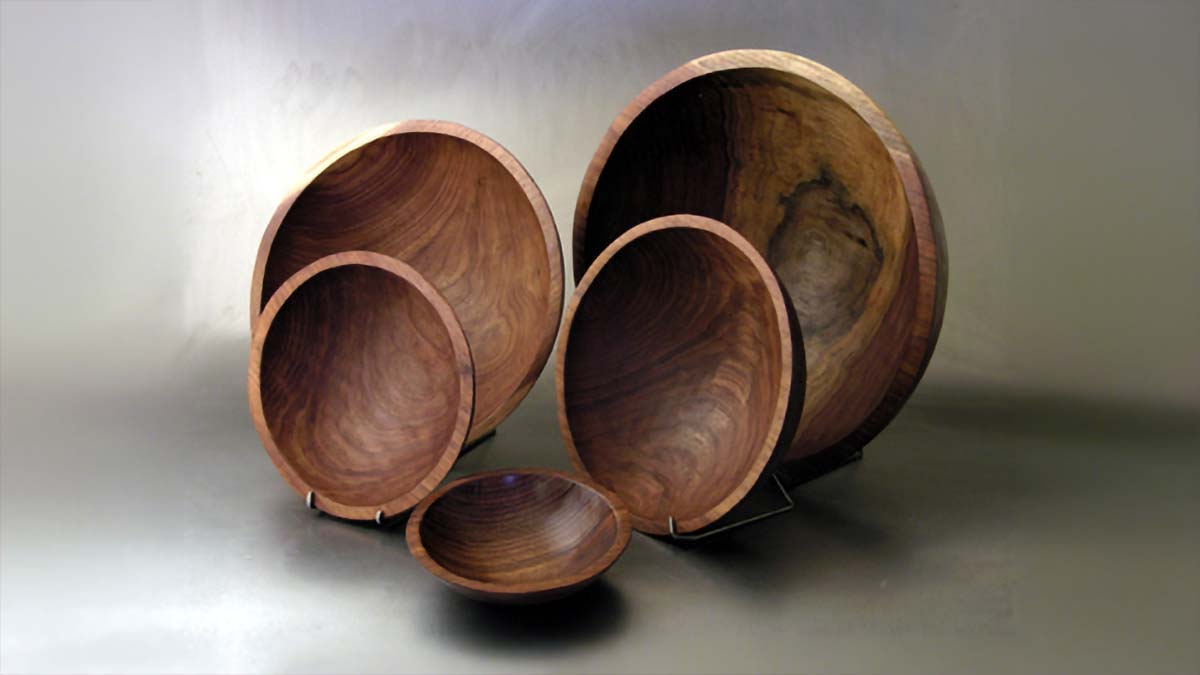
Ambrosia maple is another kind of collaboration. The light and dark streaks and small marks in an extra large ambrosia maple bowl are traces of insects and the microbes they carry—evidence that the tree has already hosted a whole community before it ever reached the lathe.
Ebonized oak is different. It’s about how the wood is treated after it’s cut. Oak contains natural tannins. When it’s exposed to certain solutions, those tannins react and turn the surface dark. That’s what creates the black tone you see in our ebonized oak bowls. The exterior can go nearly black while the grain still shows through.
We don’t try to hide what the wood has been through before it reached the shop. We decide how much of it to keep visible, and how much to shape into something new.
Made to Be Used, Not Just Admired
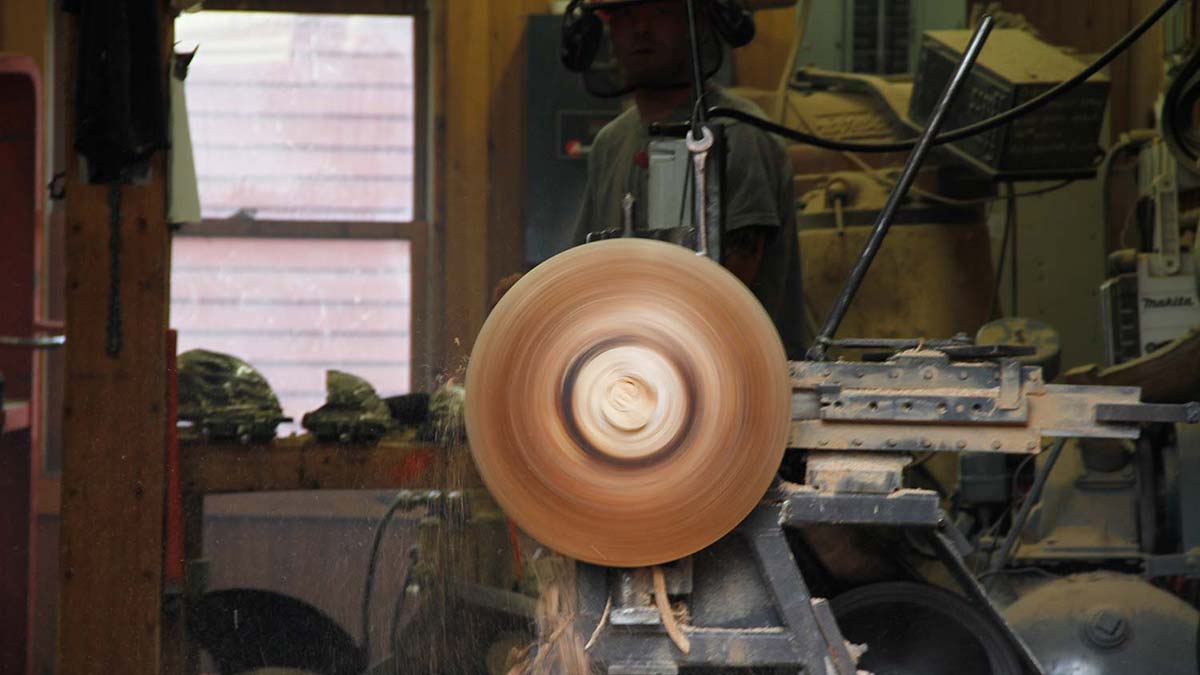
From the beginning, Spencer set out to make bowls that go straight into kitchens. The first pieces came from a small shop, turned on a lathe he built himself. They were made to be used, not displayed. That hasn’t changed.
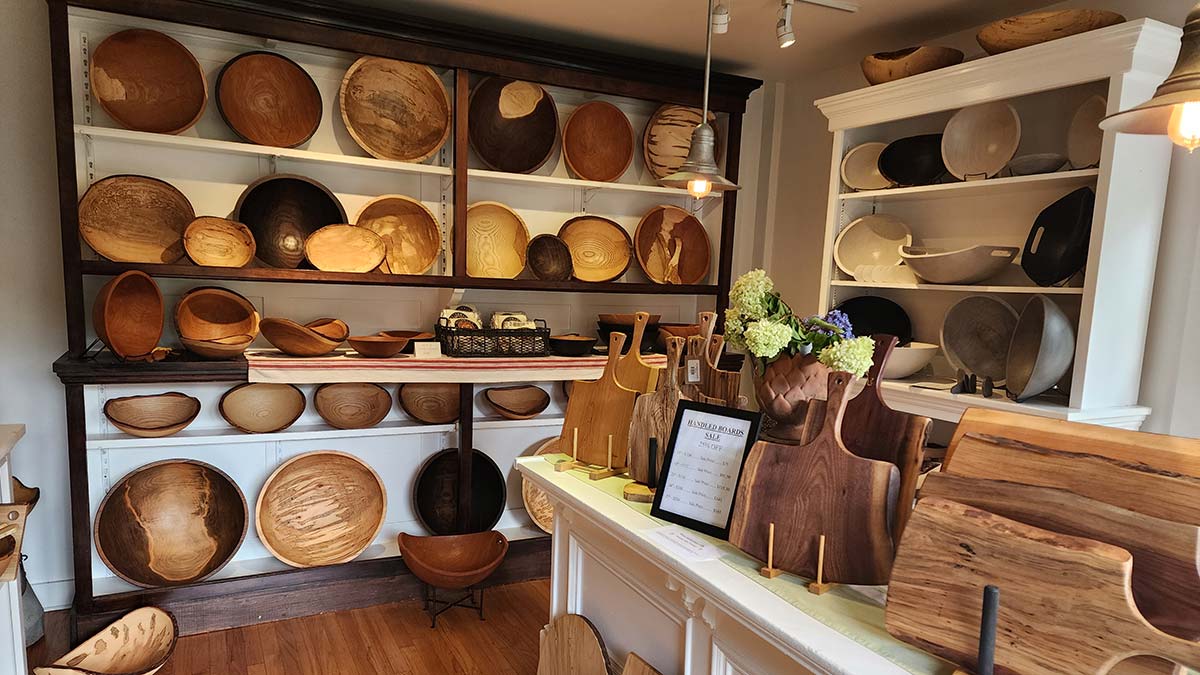
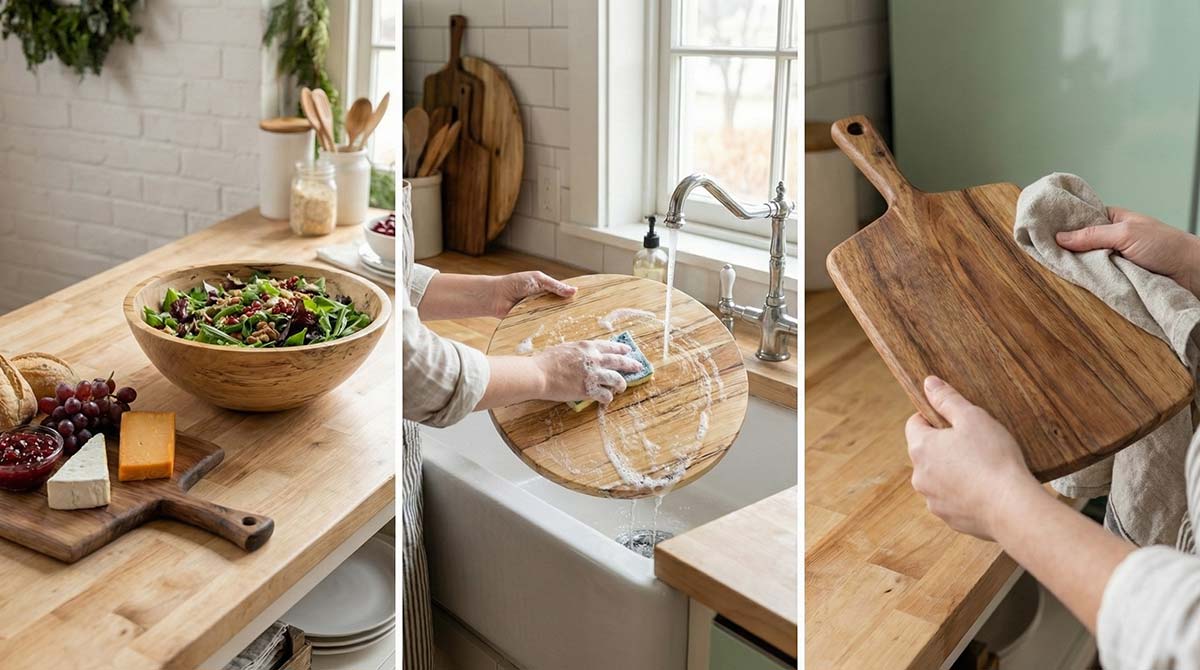
Each bowl and board is finished with a food-safe oil and wax. They’re ready for salad, bread, fruit, or whatever ends up on the table that night. Large walnut bowls sit in the middle of weeknight dinners. Cherry bowls come out for holidays and stay in rotation. Ambrosia maple boards handle onions one day and carry cheese the next.
We care for our own pieces the same way we recommend to customers. Wash by hand in warm water with mild soap. Dry them right away. Oil them when the surface looks dry. Over time, you’ll see knife marks or a faint ring where dressing sat too long. That’s normal. It means the piece is being used.
Why Fallen Trees Matter to Us
Other makers tell storm stories too: bowls turned from trees brought down by hurricanes, campus elms turned into keepsakes, neighborhood trees turned into mementos after a bad season. We love that work. It shows how much people want to stay connected to the trees that have shaped their landscapes.
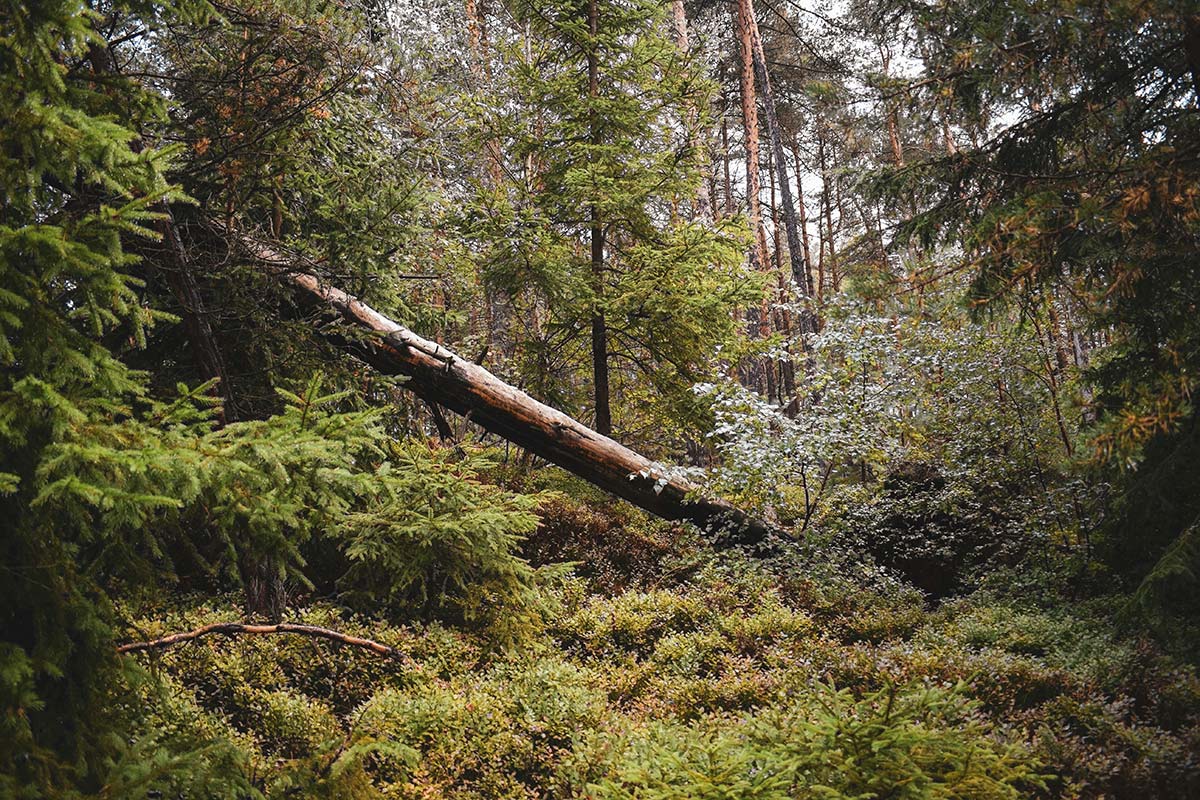
Our version of that story is rooted in New England. We walk the same woods in different weather. We see which trees have come down on their own and which have been removed because they were no longer safe. We look at logs others would pass over and ask what they might become with time, patience, and the right tools.
The result is a workshop full of pieces that carry those decisions. Extra large black walnut and ambrosia maple bowls that started as heavy, awkward logs. Live edge oval bowls that still remember the line of the trunk. Cherry and spalted maple boards with handles that feel familiar in the hand the moment you pick them up.
We like to imagine where they go from here. Onto tables where snow piles up outside. Onto porches in June. Into new kitchens when people move. Into hands that weren’t there when the tree was standing.
A fallen tree could disappear quickly in the woods. Instead, it becomes something that passes through family meals and gatherings for years. That’s the kind of work we want to keep doing—one log, one bowl, one board at a time.