


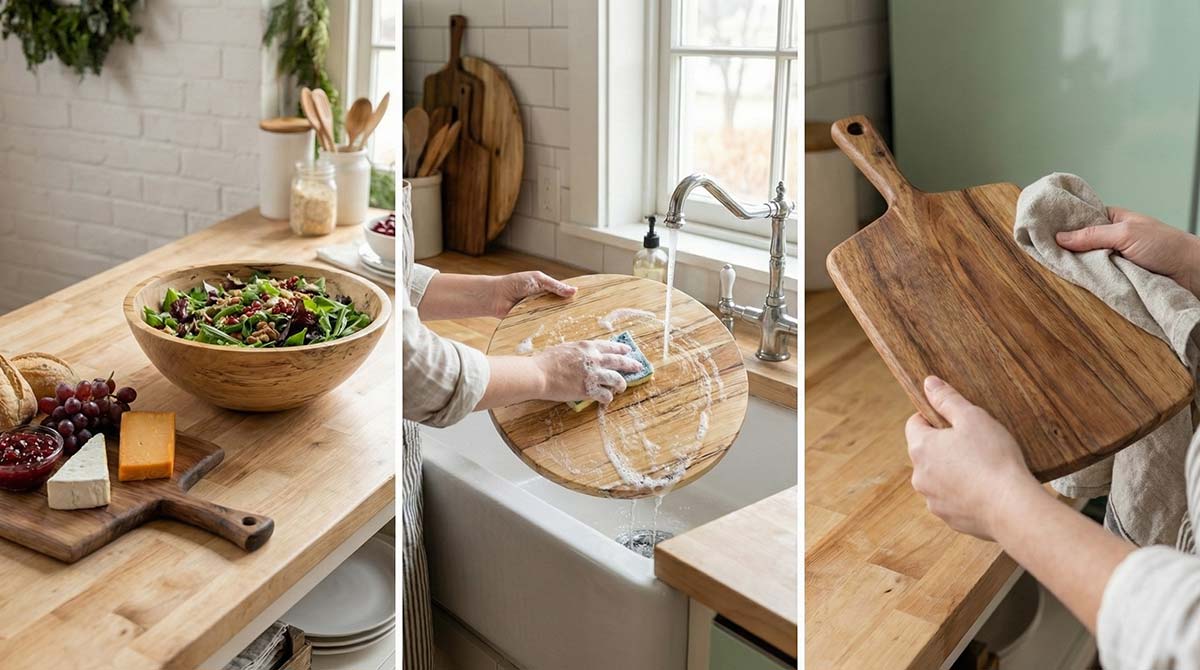
Spencer Peterman’s bowls are kiln dried to a low moisture content to help stabilize the wood and prevent future cracking and checking. Every piece is finished with a food-safe, plant-based finish, so you can use your bowls and boards every day and keep them looking beautiful with a simple routine.
Wooden bowl care really can be that easy—wash, dry, and condition once in a while.
Everyday washing: quick routine
After use, clean your wooden bowls and boards by hand.
-
Rinse in warm water.
-
Add a drop of mild dish soap and wash with a soft, non‑abrasive sponge.
-
Rinse again and towel dry thoroughly.
Avoid soaking, dishwashers, and long sits in the sink. Extended exposure to water and heat can lead to warping, cracking, or raised grain, especially along the rim.
If the surface still feels sticky after washing and drying, simply wash again to remove any remaining food or oil residue.
How often to condition
Oiling is what keeps wood from looking dull or “thirsty” over time.
-
Right after purchase: Condition more often at first so the wood has a chance to fully drink in the finish.
-
Ongoing: Condition about once a month—or whenever the surface looks dry or loses its soft sheen.
For most pieces, we recommend using a food-safe mineral oil or our specially formulated Boards and Bowl Conditioner, which combines mineral oil with beeswax for added protection.
How to apply oil or conditioner
-
Start with a clean, dry bowl.
-
Using a soft cloth or paper towel, apply a thin coat of mineral oil or conditioner over the entire surface.
-
Let it sit for about 10–15 minutes while the wood absorbs what it needs.
-
Wipe away any excess with a fresh cloth so the surface feels smooth, not greasy.
You’ll see the wood darken slightly as the finish sinks in—that’s normal and is part of what brings the grain back to life.
Important note about color-washed finishes
Our color-washed bowls and tossers—Driftwood, White Pearl, and similar painted-wash finishes—do not need wood conditioner. The food-safe finish on these pieces is designed to perform without added oil, so just wash and dry by hand as usual.
Storage and everyday habits
A few simple habits will help your bowls and boards age well:
-
Let air circulate: Store where air can move around the piece, not pressed tightly against other items.
-
Avoid extremes: Keep woodenware away from direct sun, radiators, or the side of the stove where heat and steam are constant.
-
Keep them dry: Make sure bowls are completely dry before stacking or putting them away.
Over time, you may start to see faint fork marks, a soft ring from dressing, or a change in the tone of the wood. That’s normal. It means the bowl is being used, which is exactly what it was made for.
Dealing with odors and sanitizing
Wooden bowls and boards are naturally sanitary and typically harbor less bacteria than plastic, especially when washed and dried promptly. Still, if your bowl develops an off smell (for example, after holding onions or a strong dressing), a simple natural sanitizing step can help.
You can:
-
Rub the surface with half a lemon, let sit for a couple of minutes, then rinse and dry.
-
Wipe with a mixture of one part white vinegar to five parts water, then rinse and dry.
-
Lightly spritz a 50:50 mix of white vinegar and water, wipe off the excess, and let the bowl air dry.
These methods refresh the surface without harsh chemicals and keep the finish intact.
When your bowl looks “thirsty”
If you forget a conditioning session, your bowl will tell you. The surface may look a little dull, feel dry to the touch, or show light, chalky areas in the grain. A fresh coat of mineral oil or conditioner will bring it back.
The goal is not to keep the bowl looking brand new; it’s to help it age well. With regular washing, drying, and occasional conditioning, your Spencer Peterman pieces will develop a soft patina that reflects years of use around your table.
Would