


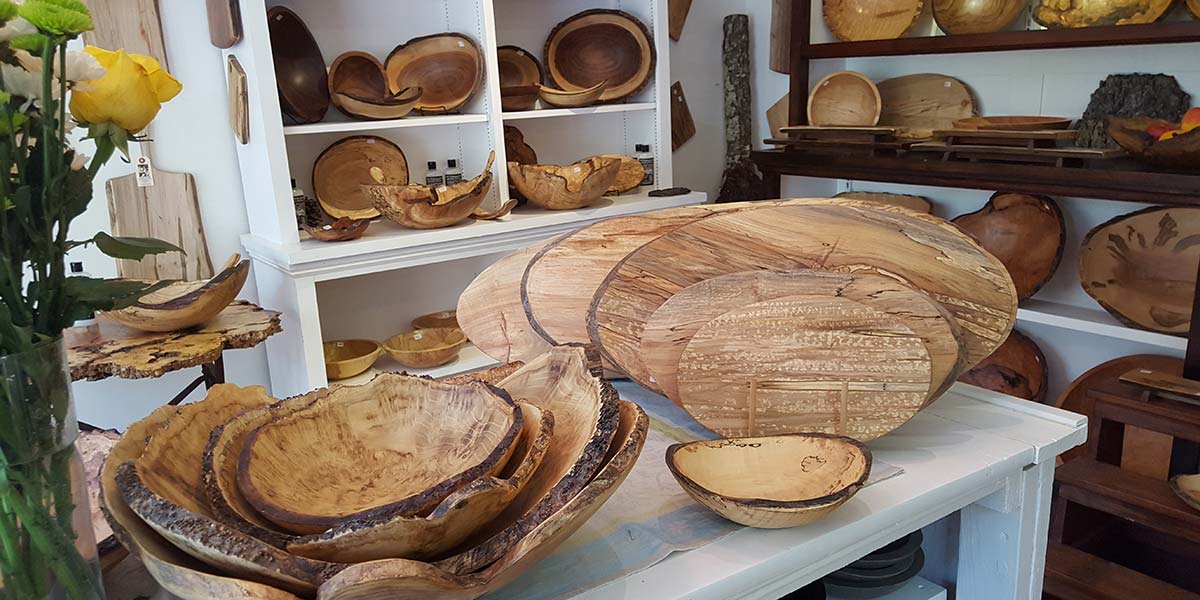
There’s a moment, when you’re looking at a wall of handmade wooden bowls, where the choices all start to blur together. Light and dark. Smooth and sculptural. Spalted, ambrosia, cherry, walnut. They’re all beautiful, but they don’t all feel the same in your home.
At Spencer Peterman, every bowl is turned by hand from reclaimed hardwoods and finished to be food safe, so you don’t have to worry about safety tradeoffs or hidden coatings. Instead, you can choose based on what you’re drawn to: the story in the grain, the tone of the wood, the shape of the rim, and the way the bowl settles onto your table.
This guide walks through how we think about wood, shape, and size in our collection, so you can find the bowl that looks and feels right for the way you live.
How to Choose Your Wood
Choosing a wooden bowl usually starts with the look you want on the table. At Spencer Peterman, all bowls are food safe, so the real decision is usually about wood character, shape, and size.
Start with the look you love
If you are choosing between bowl woods, the easiest place to start is with color and character.

Spalted Maple
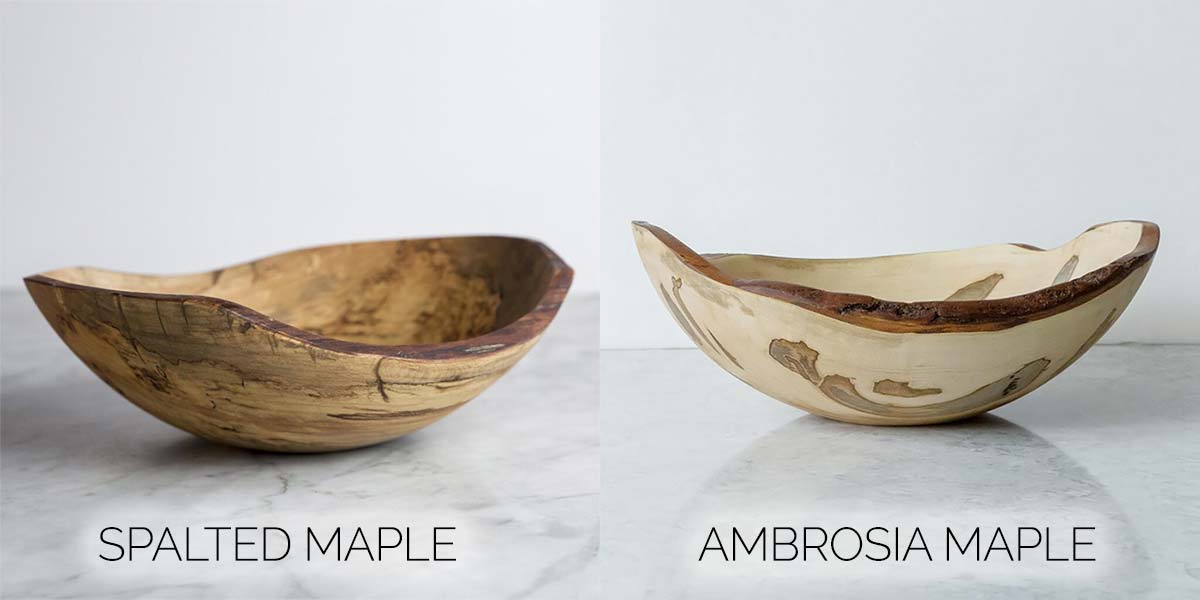
Choose spalted maple if you love bold, organic pattern and want a bowl that feels like a small piece of the forest floor brought indoors. Spalting happens when naturally occurring fungi create inky lines and shifting tones in fallen maple, so each bowl reads almost like a hand-drawn map or watercolor painting in wood.
Because the pattern forms in the tree long before it reaches the workshop, no two pieces will ever be alike, even when they are turned to the same size. Spalted maple is a strong fit for anyone who wants a bowl that feels truly one of a kind and isn’t afraid of a little wildness in the grain.
Ambrosia Maple
Choose ambrosia maple if you like a lighter, brighter bowl with just enough drama to keep it interesting. The pale maple base keeps things airy, while the ambrosia beetle leaves behind soft streaks and markings that run through the grain like brushstrokes.
At Spencer Peterman, those markings are treated as a feature, not a flaw: the team looks for logs with especially promising streaks and worm holes and turns them into bowls where the “imperfections” become the most distinctive part of the piece. Ambrosia maple is a good match for someone who wants a gentle, everyday bowl that still has a story when you look closely.
Cherry
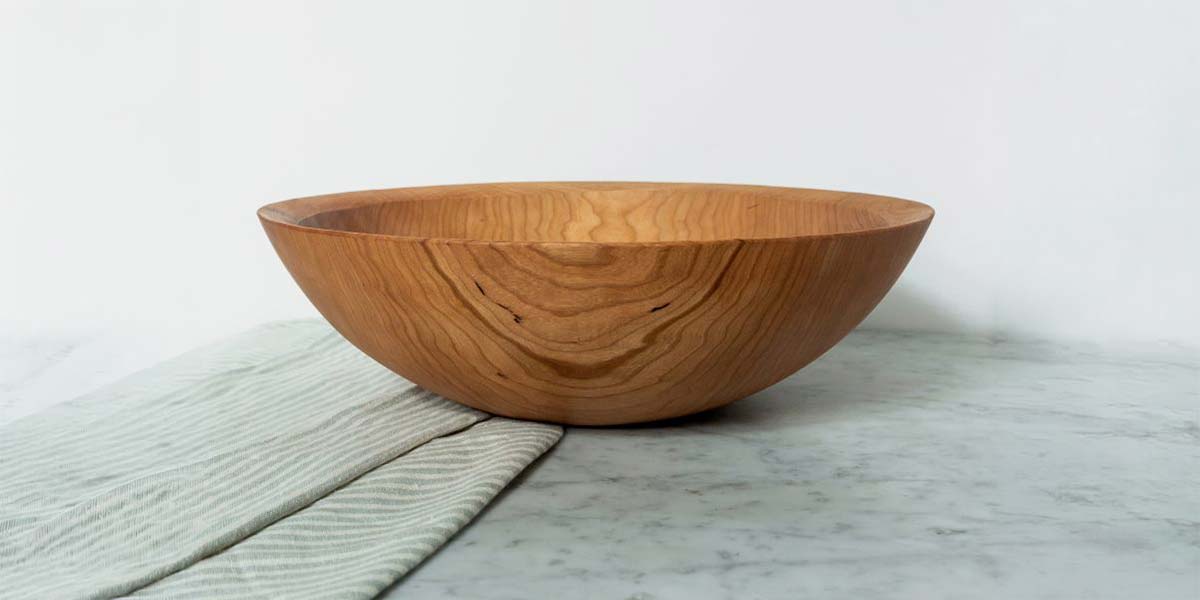
Choose cherry if you want a warm, classic bowl that will deepen in color as the years go by. Freshly turned cherry starts out with a soft, reddish-gold tone, then slowly mellows into a richer, deeper hue with use, light, and time at the table.
Cherry’s smoother, more even grain makes it easy to mix with a lot of different table settings without ever feeling fussy. It’s a natural fit for homes that lean timeless and collected, and for gifts meant to age gracefully right alongside the people using them.
Black Walnut
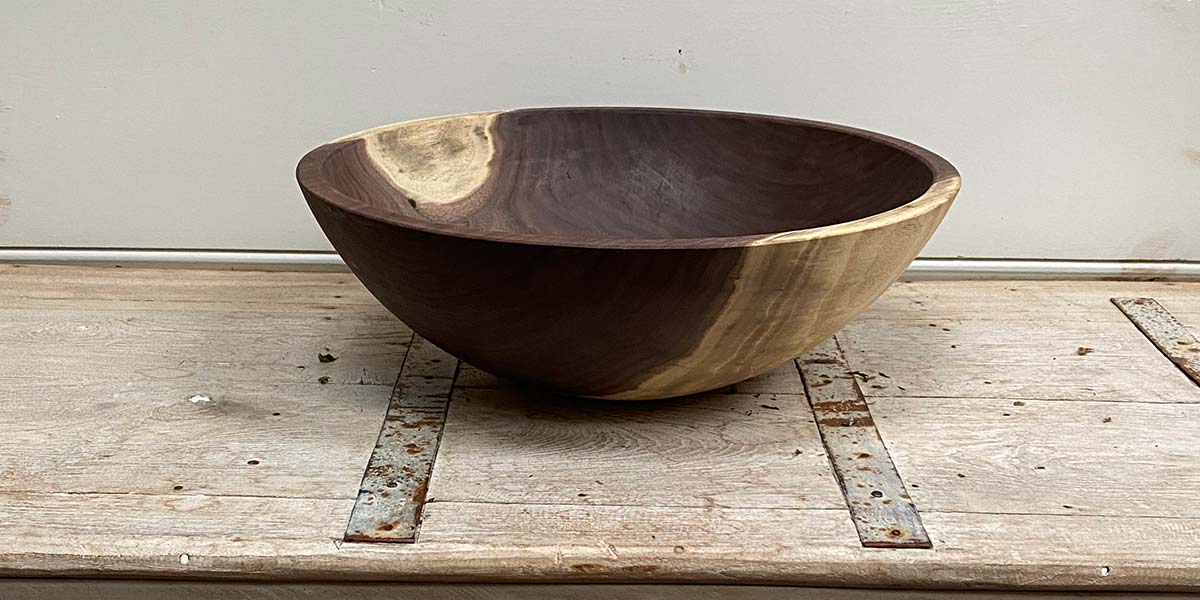
Choose black walnut if you’re drawn to deeper, moodier tones and want the bowl to really stand out against your space. Walnut’s rich chocolate color and fine, straight grain give it a quiet formality that works especially well against light counters, pale linens, and bright salads or fruit.
Because the color is naturally darker all the way through, walnut bowls tend to feel a bit more tailored and dramatic on the table. They’re a strong choice when you want the bowl to read as a centerpiece in its own right, not just a background player.
White Pearl
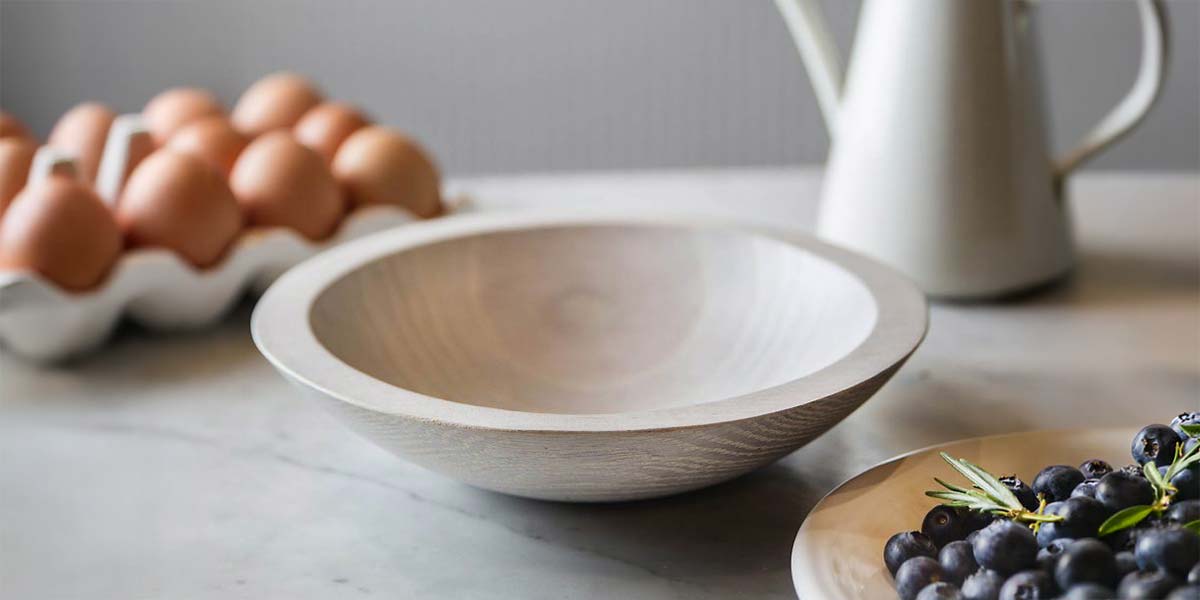
Choose white pearl if you like a lighter, softer look but still want the grain of the oak to show through. White pearl bowls start from sturdy oak and are finished with a pale, food-safe wash that softens the color without turning the bowl stark white.
The result is a finish that feels elevated but easygoing—bright enough for modern kitchens, gentle enough to play nicely with wood, stone, and textiles you already have. White pearl is a good match if you want something that feels a touch dressy without ever feeling precious.
Driftwood
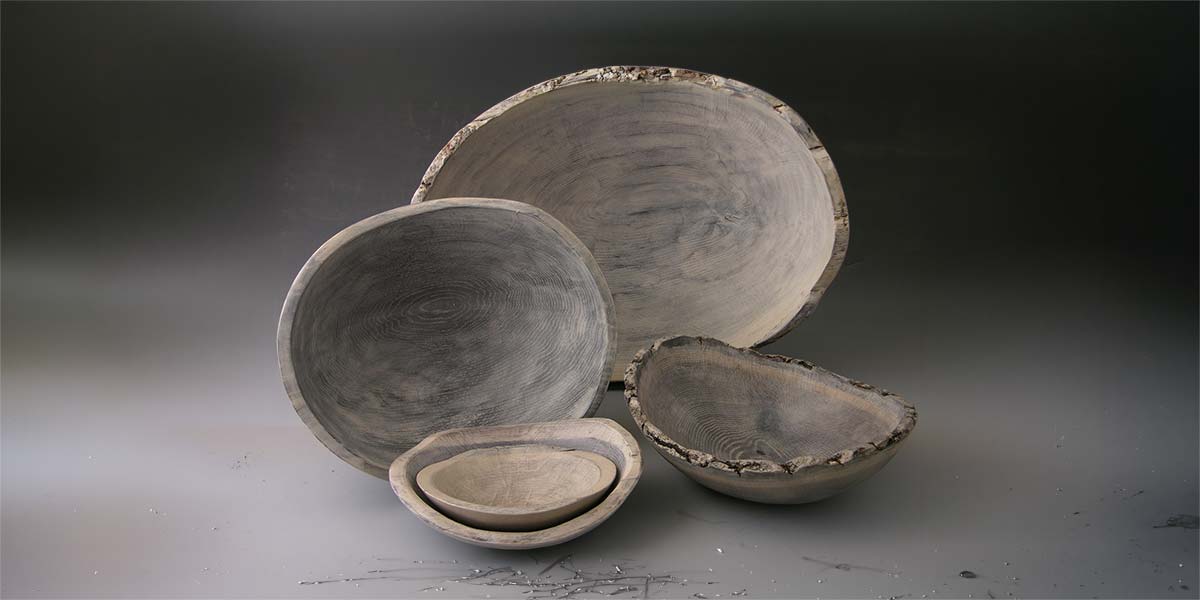
Choose driftwood if you love a soft, weathered gray that still lets the oak grain show through. Spencer Peterman’s driftwood finish is created with a 100% food-safe, all-natural paint wash that gives the bowls a beachy, sun-washed look while keeping the underlying hardwood strong and durable.
Most driftwood bowls are turned from oak, a sturdy, straight-grained wood, then finished with this gray wash so the bowl feels both relaxed and refined. It’s a good fit if you want a neutral piece that works with almost any color palette and has a quietly coastal or “lived-in” feel on the table.
Ebonized Black
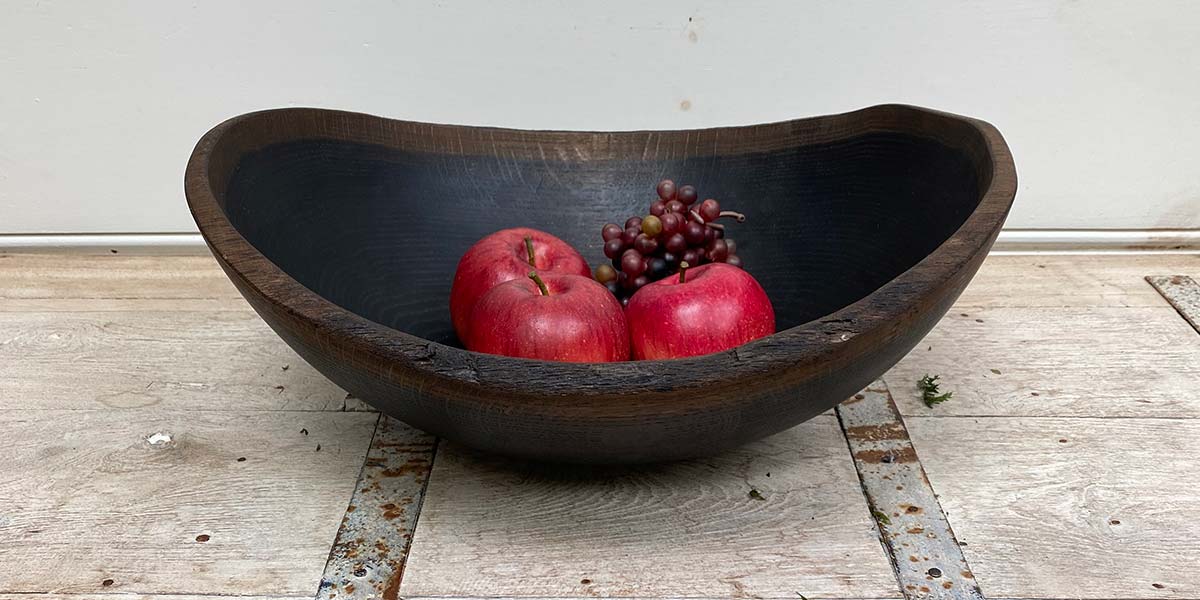
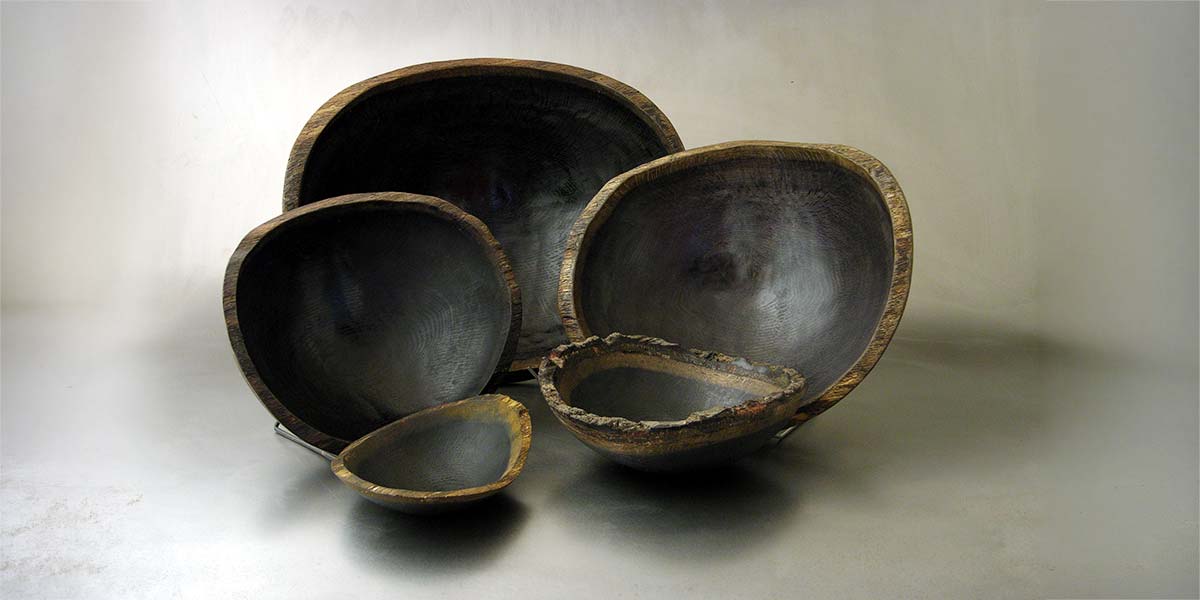
Choose ebonized black if you want the strongest visual statement and a bowl that instantly reads as modern. Ebonizing takes the natural grain of the wood and shifts it to a deep, inky black using an all-natural, food-safe process, so you still see movement in the surface instead of a flat, painted look.
On the table, ebonized bowls bring a graphic, gallery-like feel, especially when paired with simple linens or pale walls and counters. They’re a great choice when you want the bowl to be the boldest object in the room—even when it’s empty.

Choose your shape and style
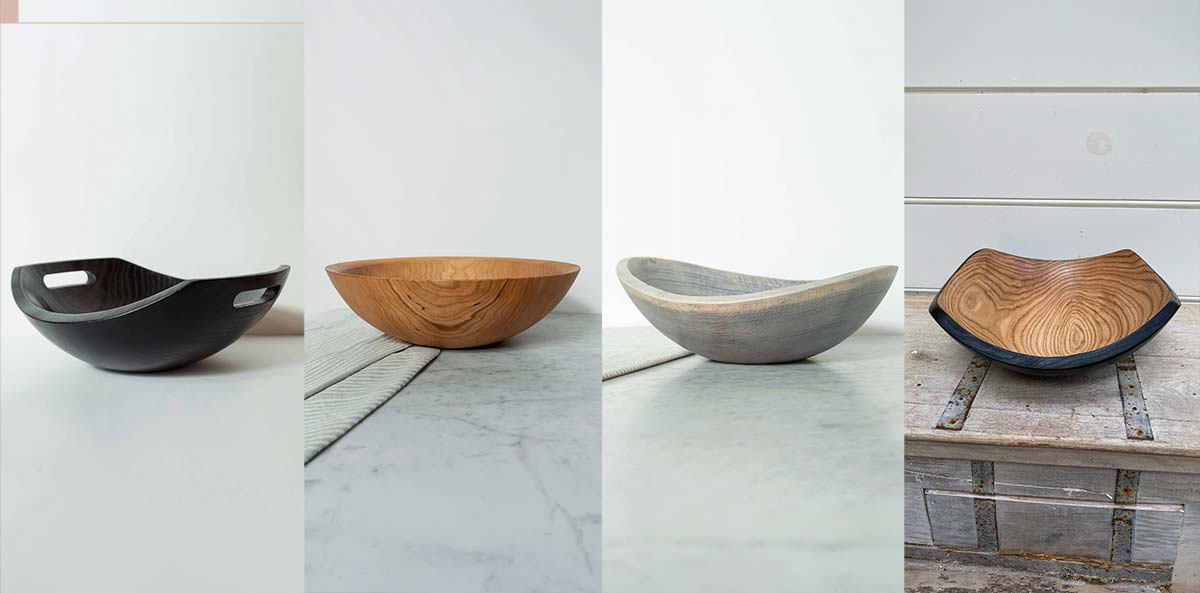
Once you know the wood or finish you’re drawn to, the next step is deciding how you want the bowl to sit and move on the table.
Live edge wooden bowls
Live edge bowls follow more of the tree’s original outline, so the rim is gently uneven rather than perfectly round. In many pieces, you can still see where bark once was, or where the outer edge dips and rises around a knot or curve in the trunk.
They feel organic, rustic, and sculptural—more like a landscape than a simple serving dish. Live edge bowls are a strong fit if you want your bowl to look like it came straight from the woods to your table, with all the little quirks of the tree left in.
Round wooden bowls
Round bowls keep to a classic circular rim and a more symmetrical profile. They feel clean and timeless, and they are usually the easiest shape to picture in almost any kitchen, from very traditional to more modern spaces.
Because the shape is so familiar, the wood and finish do more of the talking: spalted maple patterns, warm cherry, or a deep ebonized finish all read clearly on a round form. Choose round when you want a true everyday bowl that can move from salads to fruit to display without feeling out of place.
Burl bowls
Burl bowls are turned from sections of the tree where the grain has grown in swirling, unexpected ways, often around knots or growths in the trunk. The result is a dense, highly figured surface with ripples, eyes, and shifting tones that feel almost like stone or swirling water in wood form.
Because burl is naturally irregular and rare, each bowl is especially one of a kind. This is the right choice when you want a conversation piece—something that looks as much like sculpture as serveware.
Harvest bowls with handles
Harvest bowls with handles are oval or gently elongated, with carved-in handles at each end so they are easy to carry from kitchen to table. They are designed for passing salads, bread, or seasonal sides down a long table, and the built-in handles make that motion feel natural and secure.
On the table, harvest bowls read as generous and welcoming. They are a good fit if you host often, serve family-style meals, or simply like a bowl that looks ready to be picked up and shared.
Square wooden bowls
Square wooden bowls bring a slightly more modern, graphic feel to the collection while still keeping the warmth of hand-turned wood. The squared corners and straighter lines create a different kind of presence on the table or counter, especially when they’re used for fruit, bread, or as a catch-all near the door.
They pair well with clean-lined kitchens or spaces where you already have a lot of rectangular elements—think counters, shelves, and trays—and you want a bowl that echoes that rhythm without feeling cold.
Natural variation
Whichever shape you choose, no two bowls will ever be exactly alike. Grain, spalting lines, beetle markings, burls, edge contours, and small tonal shifts are all part of the story of each tree and each piece. If you’re drawn to that sense of variation, the best approach is to lean into it—let the unexpected details be the reason you choose a particular bowl, not a flaw to work around.
Finally, choose your size
After you choose a wood and style, size helps narrow the right bowl for how you plan to use it.
10-inch bowls
A 10-inch bowl works well for a large individual salad, pasta, popcorn, fruit, candy, or nuts.
13-inch bowls
A 13-inch bowl is a good size for 2 to 4 servings. It is also a popular choice for couples, small families, and wedding gifts.
15-inch bowls
A 15-inch bowl works well for 5 to 8 servings. It is often the best choice for family meals or small gatherings.
18-inch and 21-inch bowls
These larger bowls are best for entertaining, larger groups, or display. They can anchor a table, hold a generous salad, or work as a statement piece between meals.
A simple way to decide
If you want a quick rule of thumb:
-
Choose spalted maple or ambrosia maple for more visible pattern and natural character.
-
Choose cherry for warmth and a classic look.
-
Choose black walnut for deeper contrast and a more dramatic presence.
-
Choose white pearl for a lighter, softer feel.
-
Choose ebonized black for a bold, modern statement.
-
Choose live edge for a more natural shape, or round for a more traditional one.
Because every bowl is food safe, you can focus on the style that feels most at home in your kitchen and on your table.
In the end, there isn’t a single “right” choice, and that’s part of the appeal. Spalted and ambrosia maple lean into movement and story in the grain; cherry deepens with the years; black walnut, white pearl, and ebonized finishes shift the whole mood of a room. Live edge bowls follow the tree’s own contours, while round bowls keep things a little more classic and easy to place.
Because every bowl in the Spencer Peterman collection is food safe and made to be used, you have permission to trust your eye as much as your practical side. If you find yourself coming back to the same wood, or picturing a particular size on your table, that’s usually your best signal. The bowl that keeps catching your attention is the one that will feel most at home in your kitchen.